
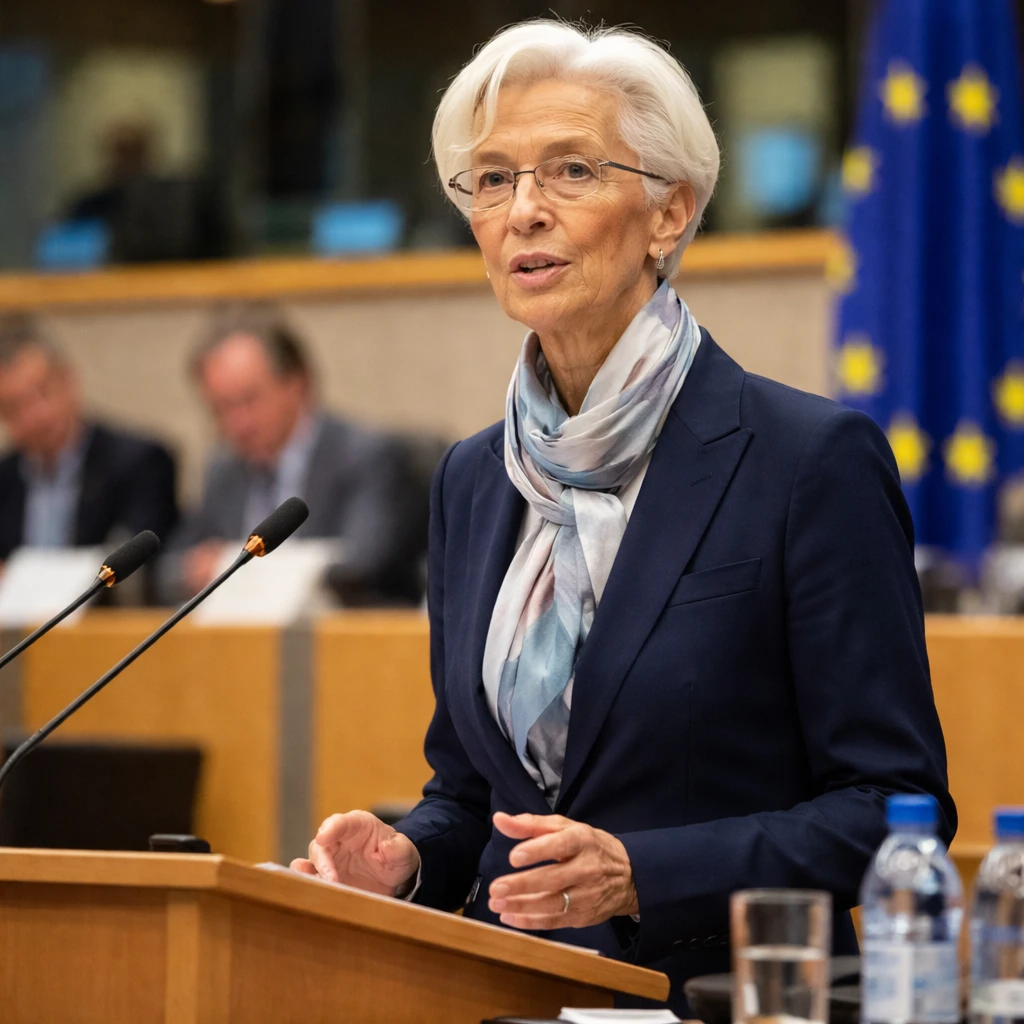
European Central Bank President Christine Lagarde said at a hearing before a European Parliament committee that the recent inflation shock affecting the euro area warrants a measured policy response, but so far there is no clear evidence that price expectations have become unanchored or that second-round effects are underway.
Lagarde noted that the ECB raised interest rates earlier this month after inflation rose above 3%. Market participants are watching closely for any signal that the bank will increase rates again to rein in price pressures and to prevent inflation expectations from drifting away from the ECB's 2% target.
Describing the current episode as a not-too-persistent overshoot, Lagarde said it requires a calibrated policy adjustment rather than inaction. "For now, we are in the second case," she told lawmakers. "The shock is too large to look through without jeopardising our target." She added: "But we see no evidence yet of de-anchoring of inflation expectations or second-round effects that would warrant a more forceful policy response at this stage."
Lagarde contrasted the present shock with the severe inflationary episode of 2021/22, noting that the current disturbance appears smaller than that earlier period when the bank tightened policy at a record pace. She also pointed to differences in the economic backdrop, citing a stronger labour market, higher incomes and lingering post-pandemic supply challenges as part of the current context.
At the same time, Lagarde warned against complacency, saying that recent experience with high inflation could make wage formation more sensitive to new shocks. She highlighted that investment, including into artificial intelligence, has been holding up and that household balance sheets remain strong, providing some resilience for an economy still coping with elevated energy costs.
On the outlook, Lagarde offered a guarded assessment: "The outlook remains uncertain, with upside risks for inflation and downside risks for economic growth." She also said the Iran war is weighing on activity, with data pointing to a slowdown, especially in services.
Summary
Lagarde told a parliamentary committee that the current inflation overshoot in the eurozone requires measured policy adjustment after a recent rate increase when inflation passed 3%. She said there are no clear signs yet of de-anchored expectations or second-round effects that would demand stronger action, while cautioning that wage dynamics and geopolitical developments add uncertainty.
Key points
- The ECB raised interest rates earlier this month following inflation above 3% - monetary policy and banking sectors are directly affected.
- Lagarde sees the present shock as smaller than the 2021/22 episode and calls for a calibrated response - labour market, households and corporate investment are relevant to the transmission of policy.
- Investment, notably into AI, remains robust and household balance sheets provide some buffer against higher energy costs - technology and consumer-facing sectors are implicated.
Risks and uncertainties
- Upside risks to inflation could necessitate further policy tightening - this would affect borrowing costs and real estate financing.
- Downside risks to economic growth, amplified by the Iran war's impact on activity and services, could weigh on services and travel-related sectors.
- Increased sensitivity of wage formation to new shocks could transmit into higher labour costs and affect corporate margins across sectors.