
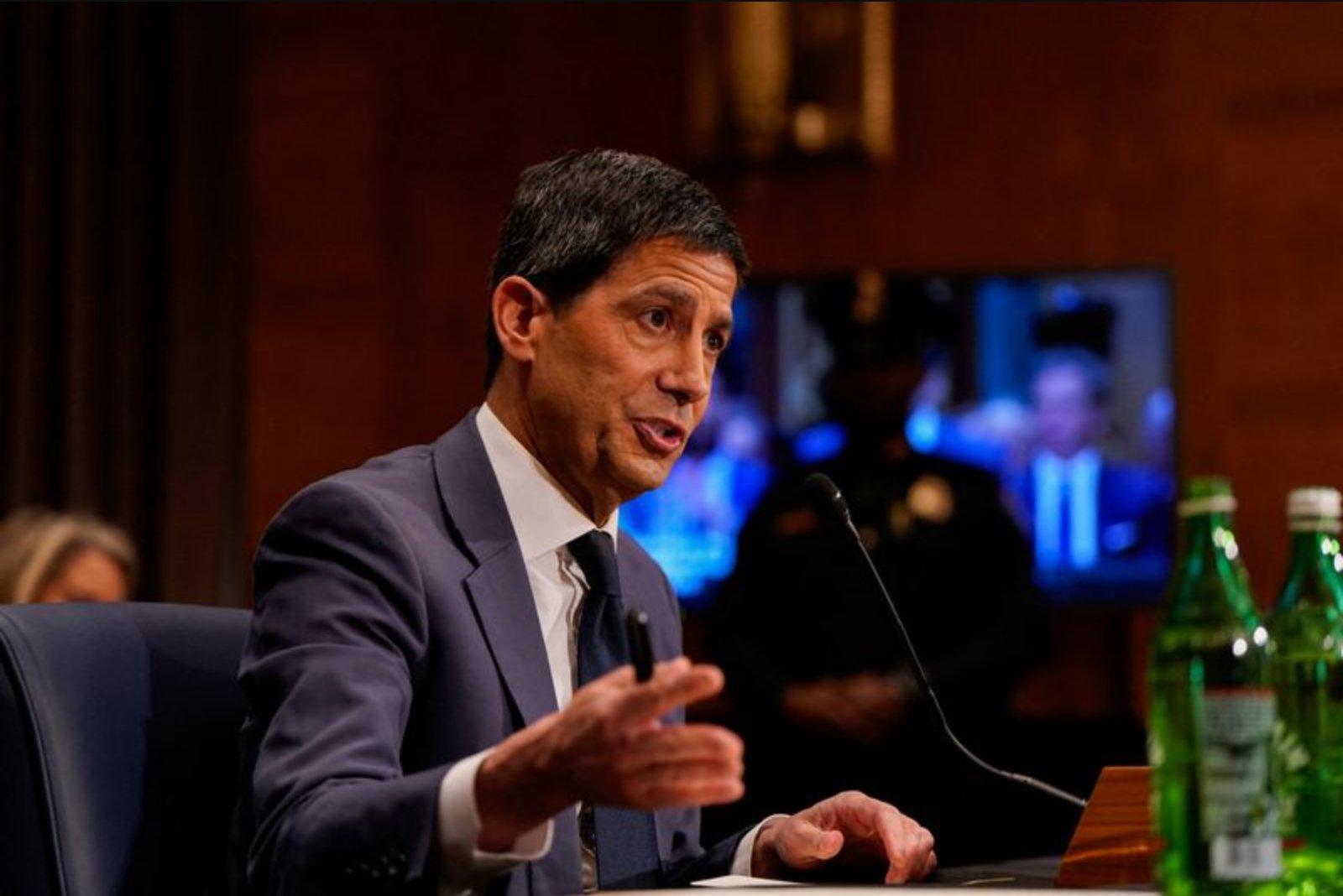
April 21 - Kevin Warsh, President Donald Trump’s nominee to chair the Federal Reserve, spent roughly two and a half hours answering questions from the Senate Banking Committee on Tuesday. The session produced few firm commitments on controversial points, but it clarified several lines of thought that Warsh says would guide his tenure if confirmed.
Politics and the president
Warsh was asked about the fraught intersection of politics and the Fed, including whether he accepted the president’s assertion that the Fed’s policy rate is too high and should be cut. The committee did not pose that question to him directly, and Warsh did not offer agreement with that view. He emphasized a desire to keep partisan considerations out of monetary policy. When Senator Elizabeth Warren repeatedly pressed him about whether President Trump lost the 2020 election - a line of questioning she has used with other nominees to make a point about deference to the president - Warsh did not answer directly. The record notes that President Trump did not win the 2020 election. Warsh replied that, if confirmed, he would work to keep politics out of the Fed and monetary policy out of politics, and referenced the certification of the election by this body as having occurred many years ago.
When asked whether the president had asked him to commit in advance to cutting rates, Warsh said, "The president never asked me to predetermine, commit, fix, decide on any interest rate decision, in any of our discussions, nor would I ever agree," a response he gave while thanking Republican Senator John Kennedy for the question.
On Cook and Powell
Several senators sought Warsh’s views on two legal and procedural issues affecting the Fed. First, he was asked about Governor Lisa Cook, who is contesting attempts to remove her from office over alleged misstatements on a mortgage application. Warsh declined to weigh in, saying it is "inappropriate for me to weigh in on that" and that he believes the Fed should stay in its lane. The article of record indicates Governor Cook has sued to keep her job, and that Fed Chair Jerome Powell described the case as "the most important legal case" in Fed history and attended oral arguments at the Supreme Court earlier in the year. Warsh said he expects a ruling soon and pledged that, if confirmed, he would follow the Constitution, Supreme Court law, and Fed traditions.
Second, senators asked whether Powell could remain as acting Fed chair after May 15 if Warsh had not yet been confirmed, as Powell has asserted is required by law. Warsh declined to define the applicability of the Vacancy Act to the Federal Reserve, saying, "I’m certainly not capable of defining whether the Vacancy Act applies to the Federal Reserve or not." He also noted that Republican Senator Thom Tillis repeated he would block Warsh’s confirmation so long as the Department of Justice keeps open an investigation of Powell related to cost overruns on building renovations. Warsh did not address the specifics of that investigation or the senator’s threat to block his confirmation, beyond reiterating his limited ability to opine on the Vacancy Act’s reach.
Meetings, communications and institutional reform
Warsh described an intent to pursue a set of reforms at the Fed aimed at trimming the balance sheet, improving measures of inflation, and increasing cooperation with the Treasury and other administration elements on matters that fall outside direct monetary policy. He signaled an openness to altering how the Fed structures its policy-setting calendar. The Federal Open Market Committee currently meets eight times a year; Warsh pointed out that the law requires only four meetings, saying, "four is not enough, so having more meetings than that is appropriate. But I’ve not even begun to look at the meeting schedules for 2027."
On public communications, Warsh stopped short of promising to replicate the frequency of press conferences that Chairman Jerome Powell has held since 2018. When asked whether he would commit to holding press conferences after every Fed meeting, Warsh declined to make a categorical promise. He argued that central bankers and Fed chairs "speak quite frequently" and that transparency has not been lacking. He added, "I think truth seeking is more important than repetition." When pressed about whether he would take reporters’ questions, he said, "If a press conference were held, I think it would be incumbent to hear what the reporters of the day had in mind."
A revised approach to measuring inflation
Warsh made clear he wants the Fed to improve how it identifies the underlying trend in inflation. He said one of his earliest projects at the Fed would be a "data project" involving both public and private sector participants to identify a gauge of underlying inflation. He expressed a preference for measures that reduce the influence of extreme observations, specifically referencing "trimmed averages" that remove tail risks. That phrasing corresponded to an apparent nod toward measures like the Dallas Fed trimmed mean, which remove data at the extremes to better capture inflation’s center of gravity. Warsh observed that many current Fed policymakers already consult such measures regularly, and he portrayed the effort as an attempt to provide policymakers a clearer view of inflation’s core dynamics.
Artificial intelligence, productivity and the labor market
Administration officials have argued that rapid adoption of artificial intelligence could produce productivity gains sufficient to push inflation down quickly and justify rate cuts. Warsh accepted that scenario as plausible but did not fully endorse the claim. He said it is important to revisit the Fed’s models to determine whether the current innovation cycle could eventually improve the price level and ease the Fed’s task on inflation. He cautioned, however, that the relationship between output gains and labor market outcomes is uncertain. "I am more confident that there will be improved output than I am certain about when the effects of that would be on the labor market," he said, flagging a concern about the lag between improved output and labor market response. Warsh insisted that the Fed must consider how long that lag might be and how it factors into the Fed’s dual mandate.
What was not said
Notably, Warsh did not commit to specific operational details in several instances. He declined to state whether he personally agrees with the president that rates should be cut, did not opine on legal matters involving Governor Cook beyond a pledge to respect court decisions, and would not define whether the Vacancy Act applies to the Fed. He also refused to promise a fixed schedule of press conferences or to set the meeting cadence beyond noting the statutory minimum and saying he had not examined schedules years hence.
Where this leaves markets and policy
The hearing mapped out priorities without firm commitments. Warsh’s stated interest in refined inflation measurement and an early data project suggests the Fed under his leadership would place weight on statistical approaches to discern underlying price trends. His caution regarding artificial intelligence and labor markets signals a reluctance to take rapid policy action on the assumption that output gains will quickly translate into employment improvements. On communications and governance, Warsh favors preserving transparency while focusing on substantive truth-seeking rather than ritual repetition. On legal and procedural disputes, he positioned himself as constrained by institutional boundaries and constitutional processes.
Taken together, the testimony provided detail on philosophical leanings and procedural preferences while leaving several high-profile questions unresolved pending confirmation, court rulings, and ongoing investigations.