
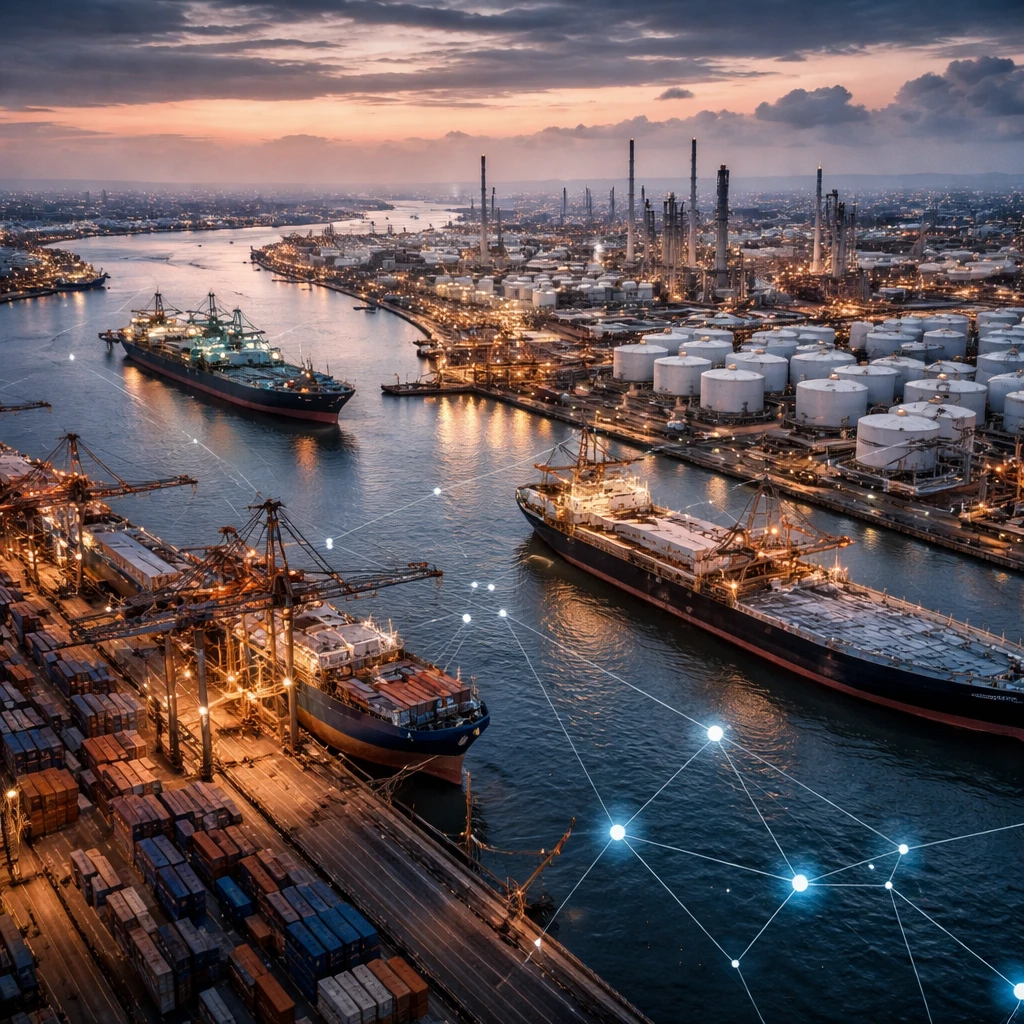
Japan plans to deepen strategic collaboration with Asian partners to ensure crude oil flows that underpin manufacturing across the region, Economy Minister Ryosei Akazawa said in an NHK interview on Sunday.
The initiative is aimed at protecting the production of petroleum-derived goods - including essential medical devices - that are made in various Asian manufacturing hubs and then exported to Japan. Securing the raw energy inputs for those factories, Akazawa said, is critical to safeguarding supply chains that Japan depends on.
Monitoring and logistics challenges
Akazawa reiterated that Japan's national oil stocks remain "ample," but he emphasized that the primary difficulty has shifted from sheer volume to the growing complexity of distribution networks. To address that problem, the government has begun deploying artificial intelligence tools designed to map constraints inside intricate supply chains and to prioritise fixes to logistics until the regional energy picture stabilises.
The minister stressed that Japan's dependence on production centres elsewhere in Asia increases its vulnerability to any disruption in the "flow" of crude. He noted that many finished goods are manufactured across Asia and then shipped to Japan, making reliable crude supply to those regional factories a strategic priority. The move toward high-technology monitoring reflects concern that conventional supply chain techniques may be insufficient given current volatility in the maritime routes linking the Middle East to Asian assembly lines.
Higher prices and policy response
On the economic front, Akazawa warned that the world may be entering a "prolonged period" of higher energy costs. He argued oil prices are unlikely to return to the $60-$70 per barrel range in the near term. To shield households from the immediate impact, Tokyo plans to continue gasoline subsidies for now but he was clear that those supports are not intended to be permanent.
Those comments signal a shift toward fiscal normalisation and an expectation that the economy will need to adjust to structurally more expensive energy inputs. Investors, Akazawa added, are closely watching how Japan's large manufacturers will cope with sustained elevated input costs, particularly as reopening of the Strait of Hormuz remains unresolved after the collapse of talks in Islamabad.
What this means for industry
- Manufacturers that rely on Asian production hubs may face persistent cost pressure from higher crude prices and potential distribution bottlenecks.
- Logistics and shipping sectors could be subject to increased scrutiny and investment as AI tools are used to identify chokepoints and streamline flows.
- Consumer-facing sectors may feel secondary effects if gasoline subsidy rollbacks expose households to higher fuel costs over time.
Until the regional energy situation stabilises, Tokyo's strategy combines technological monitoring, temporary consumer support and diplomatic outreach to neighbouring producers and transit partners.