
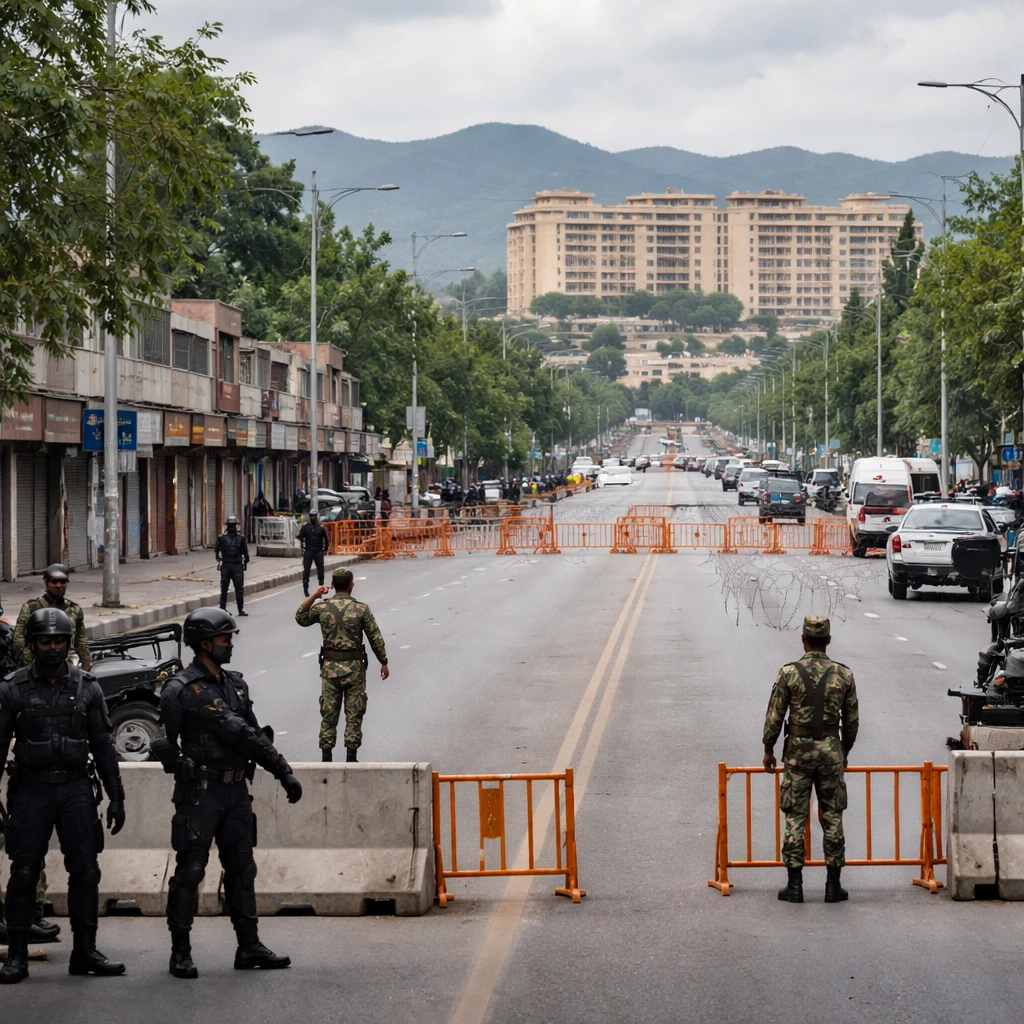
The Pakistani capital was transformed into a near-empty city as senior U.S. and Iranian delegations convened for their first direct talks in years under intense security precautions. Local authorities imposed a citywide lockdown, deployed thousands of security personnel and declared a two-day holiday to safeguard visiting officials while a fragile regional cease-fire holds.
Delegation leaders at the summit included U.S. Vice President JD Vance and Iranian Parliament Speaker Mohammad Bagher Ghalibaf. The meeting took place at the Islamabad Serena Hotel and was conducted within a tightly controlled perimeter.
Major commercial arteries were noticeably quiet. Jinnah Avenue, the city’s main commercial thoroughfare, stood empty with shops closed as SWAT teams and soldiers established security around the 15-acre complex hosting the talks. Organizers and security services took extreme precautions that echoed concerns over recent targeted actions against Iranian leadership and ongoing fears about assassination plots.
Iranian participants, among them Ali Akbar Ahmadian, identified in the delegation for his role in Iran’s asymmetrical naval planning, reportedly voiced worries about their personal safety following a strike that killed the former Supreme Leader. Those safety concerns contributed to the elevated posture of protective measures surrounding the summit.
Beyond the visible security presence, the discussions carry material economic importance. The summit’s central aim is to negotiate the reopening of the Strait of Hormuz, which has been closed for weeks, a disruption that has unsettled energy markets and interrupted the freedom of the seas that supports global trade flows. Pakistan has taken on the role of providing secure, neutral ground to facilitate a potential de-escalation between the two sides.
As the talks extended into the early hours of Sunday, market participants and observers were watching to see whether the diplomatic outreach would culminate in a signed agreement or whether the initiative, referred to in the meeting’s framing as the "Brewed for Peace" effort, would break down and hostilities resume. The outcome of these negotiations has clear implications for energy price stability, shipping routes, and wider market sentiment.
Clear outcome signals remained pending as delegations continued discussions under the heavy security umbrella, and authorities maintained the lockdown and holiday measures through the summit period.