
Economy April 15, 2026 08:59 AM

Hammack: Interest rates 'in a good place' as Fed likely to hold policy for now

Cleveland Fed president points to two-sided risks and flags energy costs, job market balance and inflation persistence

By Derek Hwang
Hammack: Interest rates 'in a good place' as Fed likely to hold policy for now

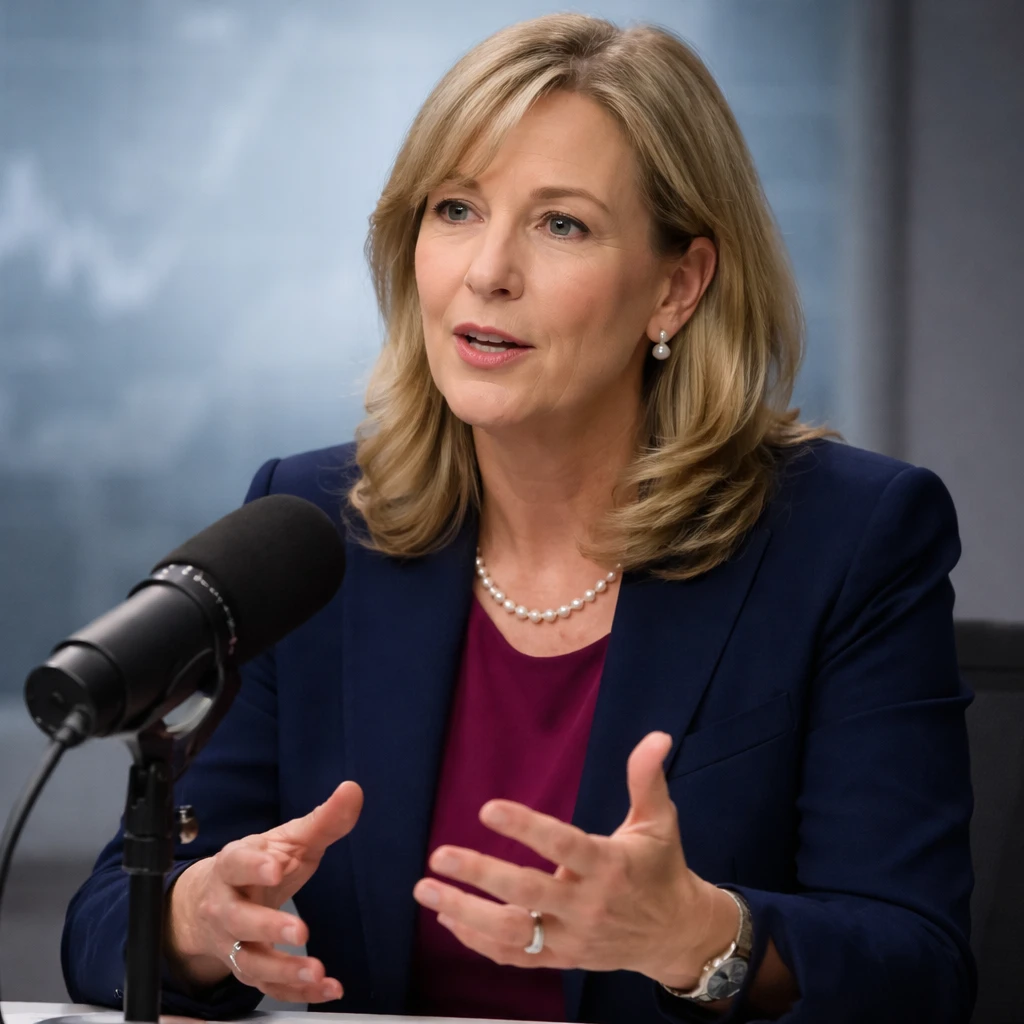
Federal Reserve Bank of Cleveland President Beth Hammack said rates are currently appropriate and that the central bank's baseline is to keep policy unchanged for an extended period. She cautioned, however, that incoming data and energy price developments create two-sided risks for future decisions and described supply shocks as a particular challenge for monetary policy.

Key Points

  • Hammack views current interest rates as appropriate and expects the Fed to remain on hold for an extended period absent new developments - impacts financials and rate-sensitive sectors.
  • She identified energy price movements as a major factor that can simultaneously push inflation higher and slow growth - directly relevant to energy and consumer-facing sectors.
  • Hammack judged the job market to be reasonably balanced and not a current driver of inflation, while noting persistent inflation outcomes over recent years - relevant to labor markets and consumer spending.

Federal Reserve Bank of Cleveland President Beth Hammack told CNBC on Wednesday that current interest rates are appropriately set and that her baseline outlook is for the central bank to maintain its policy stance for an extended stretch.

"I think that rates are in a good place," Hammack said. "My baseline is that we're going to remain on hold for a good while, but I do think that there's two-sided risk to rates."

She added that future changes to policy will hinge on incoming economic readings. "There's risk that we might need to be more accommodative or more restrictive, depending on how the data comes out," Hammack said, emphasizing that new information could push the Fed in either direction.

Energy costs drew particular attention in Hammack's comments. She described high energy prices as a factor that could both accelerate inflation and depress growth, noting that the economic effect will depend on how long elevated energy prices persist and how large the price moves are.

On the labor market, Hammack judged conditions to be roughly balanced. She said the job market does not presently appear to be a source of upward inflationary pressure. At the same time, she pointed to the persistence of inflation over recent years, observing that inflation expectations look reasonably contained while acknowledging that the Fed has missed its inflation target for five years and that consumers have endured a prolonged period of higher inflation.

Describing the current environment as difficult for monetary decision-making, Hammack warned that supply shocks complicate the policy response. "Supply shocks are tricky for monetary policy," she said, portraying the present circumstances as a tough time for the Fed to set a clear path.

Hammack also touched on other broader uncertainties facing the economy. She said it remains unclear what impact artificial intelligence will have on economic activity, and she underscored the importance of central bank independence. She noted that she is focused on performing her duties amid threats to the central bank.


Bottom line: Hammack's remarks underline a tentative policy pause predicated on current data, while singling out energy prices, incoming economic reports and supply shocks as the main variables that could force a change in stance.

Risks

  • Elevated energy costs could both accelerate inflation and weigh on growth depending on their duration and magnitude - a risk to energy, consumer, and manufacturing sectors.
  • Incoming economic data could force the Fed to become either more accommodative or more restrictive, creating uncertainty for interest-rate-sensitive markets such as banking and housing.
  • Supply shocks complicate monetary policy decision-making, making it harder for the Fed to calibrate responses and increasing macroeconomic uncertainty.

More from Economy

Qatar Issues Stark Warning on Global Economic Shock if Strait of Hormuz Stays Closed Apr 15, 2026 Klingbeil: Iran Conflict Dragging on German Growth, Forecasts Awaited Apr 15, 2026 Italy Poised to Trim Growth Forecasts as Middle East Conflict Weighs on Outlook Apr 15, 2026 New York Manufacturing Sees Strongest Monthly Gain in Five Months Apr 15, 2026 Rising Fuel Costs Could Cancel Out Gains From Larger Tax Refunds, Morgan Stanley Warns Apr 15, 2026