
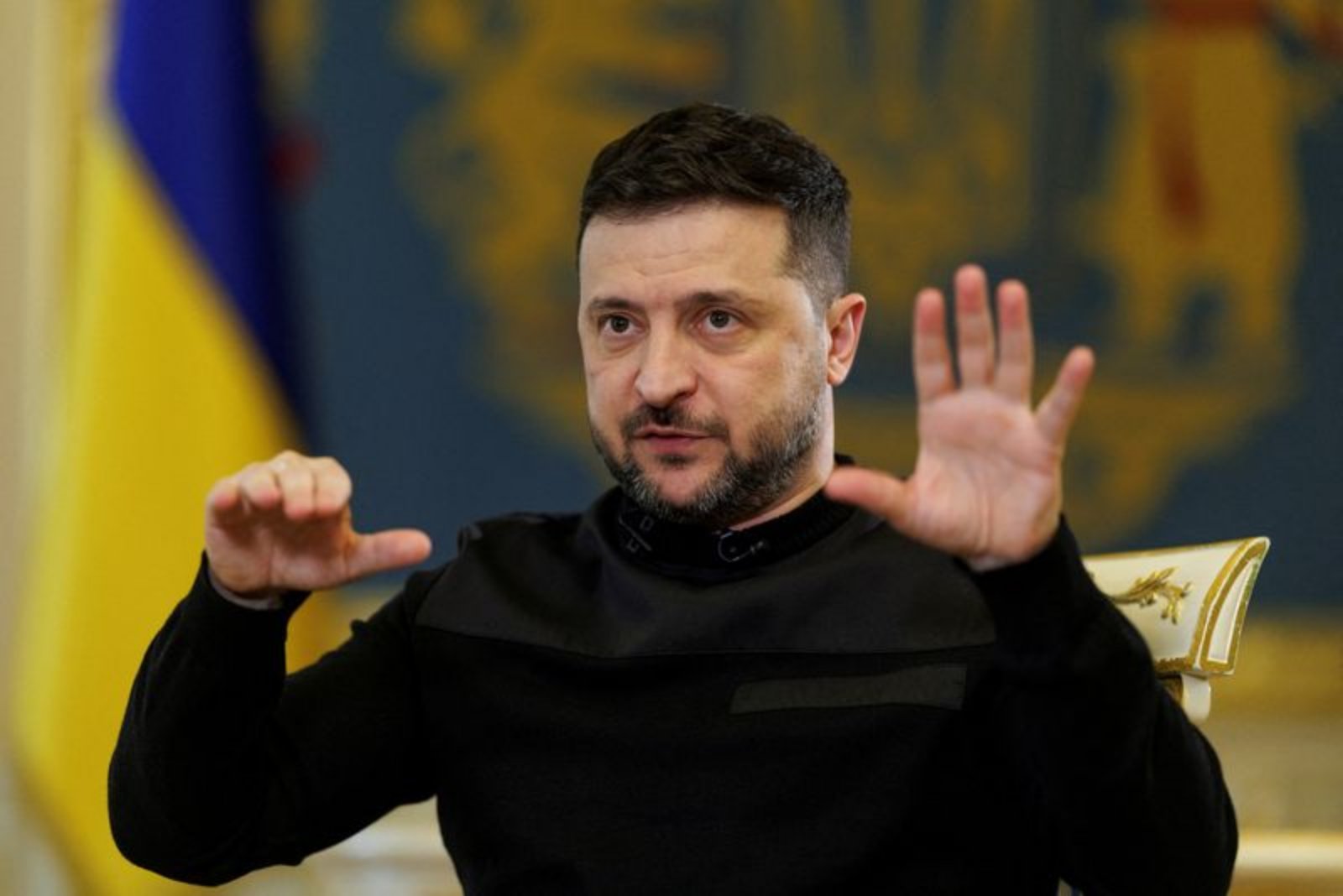
President Volodymyr Zelenskiy said Ukraine will confront heightened challenges this spring and summer, as his government anticipates both intensified combat and diplomatic pressure aimed at ending the war.
Speaking to reporters, Zelenskiy said partners had requested that Kyiv moderate its attacks on Russia's oil sector at a time when global energy prices have been lifted by conflict in the Middle East. He did not identify which countries or institutions had made these requests. At the same time, he stressed that any meaningful movement toward reduced hostilities should begin with Russia halting strikes on Ukraine's energy facilities and consenting to renew trilateral peace negotiations, with Washington serving as mediator.
Zelenskiy also acknowledged limits to U.S. engagement in the peace track, saying the U.S. is currently reluctant to devote substantially more time to the process. "This spring-summer period will be quite difficult politically and diplomatically. There may be pressure on Ukraine," he said, adding that there will be battlefield pressure as well. "I believe it will be very difficult for us until September."
He reiterated calls for stronger international pressure on Russia and voiced hope that U.S. measures on Russian oil, temporarily relaxed during a related conflict, would be reinstated in full. The president referenced a recent two-week ceasefire announced by the U.S. and Iran and noted that earlier in March Washington issued a 30-day waiver permitting some countries to purchase sanctioned Russian oil and petroleum products in an effort to stabilize global markets.
In recent weeks, Ukraine has stepped up strikes against Russian energy infrastructure. Kyiv's forces have said the operations aim to reduce Moscow's oil revenues at a time when elevated global prices, combined with the temporary easing of U.S. sanctions, have benefitted Russia. Ukrainian military statements have taken credit for more than a dozen attacks on Russian oil facilities, with the most consequential damage reported at the Baltic ports of Ust-Luga and Primorsk, which are among Russia's principal petroleum export outlets.
"Russians now have major problems with some of their facilities. After any strike on our energy sector, we respond - and that is entirely fair. If Russians want this to stop, they must stop their strikes, and then we will act in kind," Zelenskiy said, framing Kyiv's actions as retaliatory measures linked to damage suffered by Ukrainian energy infrastructure.
He recalled that during a period when Iran had blocked the Strait of Hormuz, Kyiv's partners had asked Ukraine to reduce attacks on Russian oil facilities. Zelenskiy pushed back on the premise that Russian oil plays a large role in global supply, asserting that it does not have a substantial market-wide influence. Nonetheless, he argued that any Russian willingness to de-escalate should be accompanied by prompt trilateral diplomacy: "If Russia wanted to de-escalate, trilateral talks on how to end the war diplomatically should take place during the next three months," he said.
Previous attempts at trilateral negotiations have not produced significant breakthroughs. Three rounds of trilateral talks held this year yielded no major progress, in part because Ukraine has rejected Russian demands that would require Kyiv to cede the remaining parts of the eastern Donbas region that Moscow has not captured. Fighting continues across a front line that exceeds 1,200 km, and both sides have recently increased drone strikes on targets well beyond the immediate front.
Key points
- Ukraine faces simultaneous diplomatic and military pressure during the spring and summer months, with President Zelenskiy warning of a difficult period through September.
- Unidentified international partners have asked Kyiv to scale back attacks on Russian oil facilities as global prices rise amid Middle East tensions and a temporary easing of U.S. sanctions.
- Recent Ukrainian strikes have targeted major Russian petroleum export hubs, while Kyiv conditions any de-escalation on Russia stopping strikes on Ukrainian energy infrastructure and resuming U.S.-mediated trilateral talks.
Sectors and markets affected
- Energy - disruptions to oil infrastructure and shifting sanctions waivers have direct implications for oil prices and supply channels.
- Defense and security - sustained fighting along a front exceeding 1,200 km and increased long-range drone use affect military planning and procurement dynamics.
- Diplomacy and geopolitics - the prospects for trilateral negotiations with U.S. mediation influence international policy choices and sanction regimes.
Risks and uncertainties
- Diplomatic pressure risk: Partners urging Kyiv to scale back strikes creates uncertainty over Ukraine's operational freedom and could affect diplomatic relations - primarily impacting energy and foreign policy sectors.
- Continued battlefield escalation: Expected pressure on the front lines through the summer raises the risk of prolonged conflict, with implications for defense spending and regional security.
- Energy market volatility: Temporary waivers and attacks on export infrastructure increase the possibility of price swings and supply concerns in global oil markets.
These developments leave Ukraine navigating a complex mix of military retaliation, international diplomacy, and energy-market considerations. The administration's insistence that Russia first stop strikes on Ukrainian energy facilities as a condition for resumed talks sets a clear but contested precondition for any diplomatic breakthrough. With three rounds of trilateral diplomacy this year producing no substantial advances and the front line remaining extensive, the outlook for a swift resolution appears limited within the stated time frame.