
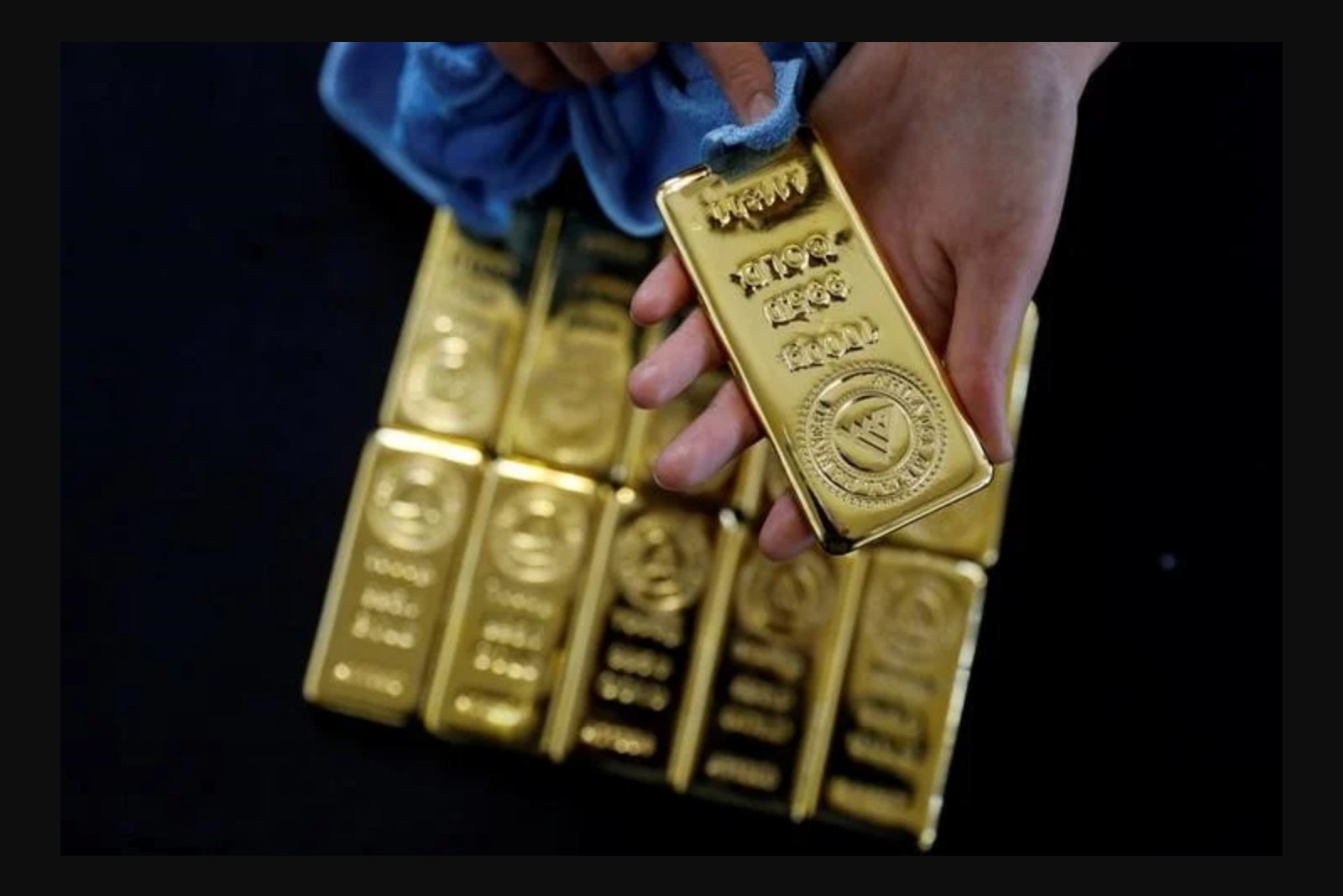
Summary: Gold traded close to $4,400 an ounce as traders awaited U.S. producer and consumer inflation reports that could influence the Federal Reserve's policy decision next week. Short-term pressure from rising Treasury yields and heightened tensions in the Middle East contrasted with a weaker dollar and continued demand for bullion via exchange-traded funds.
Gold showed little movement on Thursday as investors positioned ahead of U.S. inflation data that could offer guidance on whether the Federal Reserve will raise interest rates at its upcoming meeting. At 20:43 ET (00:43 GMT), spot gold (XAU/USD) edged down 0.1% to $4,398.53 per ounce, while gold futures slipped 0.4% to $4,442.00. Silver (XAG/USD) was essentially flat at $67.28 an ounce, and platinum (XPT/USD) fell 0.6% to $1,888.23. The U.S. Dollar Index was little changed at 98.81.
In recent weeks, gold has remained in a relatively narrow band around the $4,400 level after recovering from a low near $4,000 in July. Market participants are balancing the metal's appeal as a longer-term portfolio hedge against immediate pressure from higher bond yields as well as growing unrest in the Middle East.
U.S. 10-year Treasury yields climbed after the government unveiled a plan to purchase as much as $6 billion of longer-dated debt, a move that did not calm the bond market. Because gold does not yield interest, higher Treasury yields can weigh on demand for bullion by increasing the opportunity cost of holding it.
Energy markets also factor into the backdrop. Brent crude moved back to $100 a barrel, marking the first time since July that benchmark reached that level. The rise in oil prices feeds into the broader risk picture that investors consider when weighing safe-haven and inflation-sensitive assets.
Geopolitical risks have remained elevated. The conflict in the region entered its seventh month, and Iran has warned it is prepared for a more intense conflict if the United States continues attacks on its territory and infrastructure. Those developments have been among the elements investors monitor when assessing demand for bullion as a haven.
Market focus this week is squarely on U.S. inflation readings - the producer price index due Thursday and the consumer price index scheduled for Friday - as policymakers at the Fed prepare for their policy decision. Swaps markets were pricing in about a 65% probability of a rate hike this month, reflecting market sensitivity to the forthcoming data.
Tony Sycamore, senior market analyst at IG, said gold finished higher overnight at around $4,402, helped by a weaker dollar even as U.S. bond yields rose sharply. He noted that gold remains well below its 200-day moving average at about $4,537 and needs to reclaim that level to signal that the pullback from the $4,697 high has ended and that the broader uptrend has resumed.
Investor demand for gold has strengthened, according to data from the World Gold Council. Global gold-backed exchange-traded funds attracted $18 billion in inflows in August, their second-largest monthly increase on record. Holdings increased by 121 tonnes to a record 4,189 tonnes, and assets under management rose 16% to $615 billion. The World Gold Council also reported that North American funds recorded their third-largest monthly inflow on record and that European-listed funds posted their largest ever monthly inflow.
With inflation prints imminent and market participants factoring both macroeconomic and geopolitical developments, gold's near-term trajectory may hinge on the upcoming data and whether the metal can push back toward its 200-day moving average. For now, the interplay of higher yields, a softer dollar and robust ETF demand keeps the market finely balanced.