
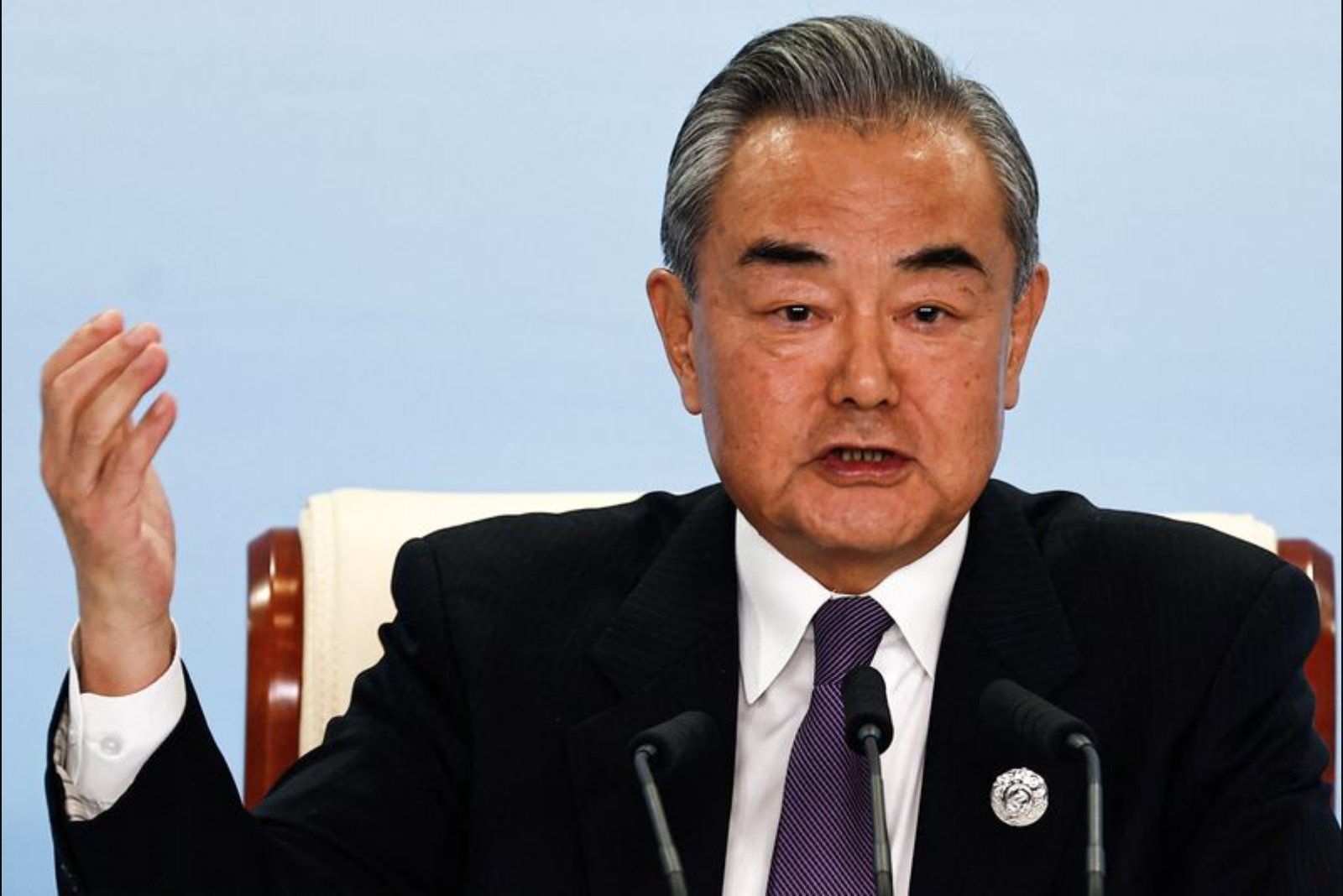
China has voiced opposition to the military strikes carried out by Israel and the United States against Iran and has called for an immediate end to the fighting, the Chinese foreign ministry said on Tuesday.
In a phone conversation with Israeli Foreign Minister Gideon Saar, Foreign Minister Wang Yi said: "Force cannot truly solve problems; instead, it often creates new ones and leaves serious long-term consequences. The real value of military power lies not on the battlefield but in preventing war," the ministry quoted Wang as saying.
The call came as explosions ripped through Tehran and Beirut on Tuesday and financial markets around the world fell, reacting to the prospect of a prolonged disruption to global energy supplies from the U.S.-Israeli air war against Iran.
Wang told Saar that China believes in resolving international and regional issues through dialogue and negotiation and will continue to play a constructive role in easing the situation.
Tuesday’s conversation followed a series of diplomatic contacts. On Monday the top Chinese diplomat held three separate calls with the foreign ministers of Iran, Oman and France, during which he urged Gulf countries to unite to oppose external interference, the ministry said. Wang also spoke with Russian Foreign Minister Sergei Lavrov on Sunday about the Iran crisis.
However, Wang has not spoken to U.S. Secretary of State Marco Rubio since the launch of the U.S. and Israeli strikes on Iran on Saturday, when Supreme Leader Ayatollah Ali Khamenei was among a number of senior Iranian officials killed.
Summary
China has publicly opposed the recent strikes on Iran by U.S. and Israeli forces, demanded an immediate cessation of hostilities, and affirmed its preference for diplomatic resolution while signalling it will act to ease tensions. The strikes have coincided with explosions in Tehran and Beirut and prompted a fall in global financial markets amid concerns about energy supply disruptions.
Key points
- China’s top diplomat told Israel that military force often creates long-term consequences and stressed the preventive value of military power.
- Explosions in Tehran and Beirut and market declines reflected investor concern over potential prolonged disruptions to global energy supplies.
- Wang has been conducting multiple diplomatic calls with regional and global counterparts, but has not spoken with U.S. Secretary of State Marco Rubio since the strikes began.
Risks and uncertainties
- Prolonged disruptions to global energy supplies could continue to affect energy markets and broader financial market stability.
- Escalation of hostilities following the strikes could deepen regional instability and complicate diplomatic efforts.
- Gaps in direct communication between China and U.S. officials may limit immediate diplomatic de-escalation options.