
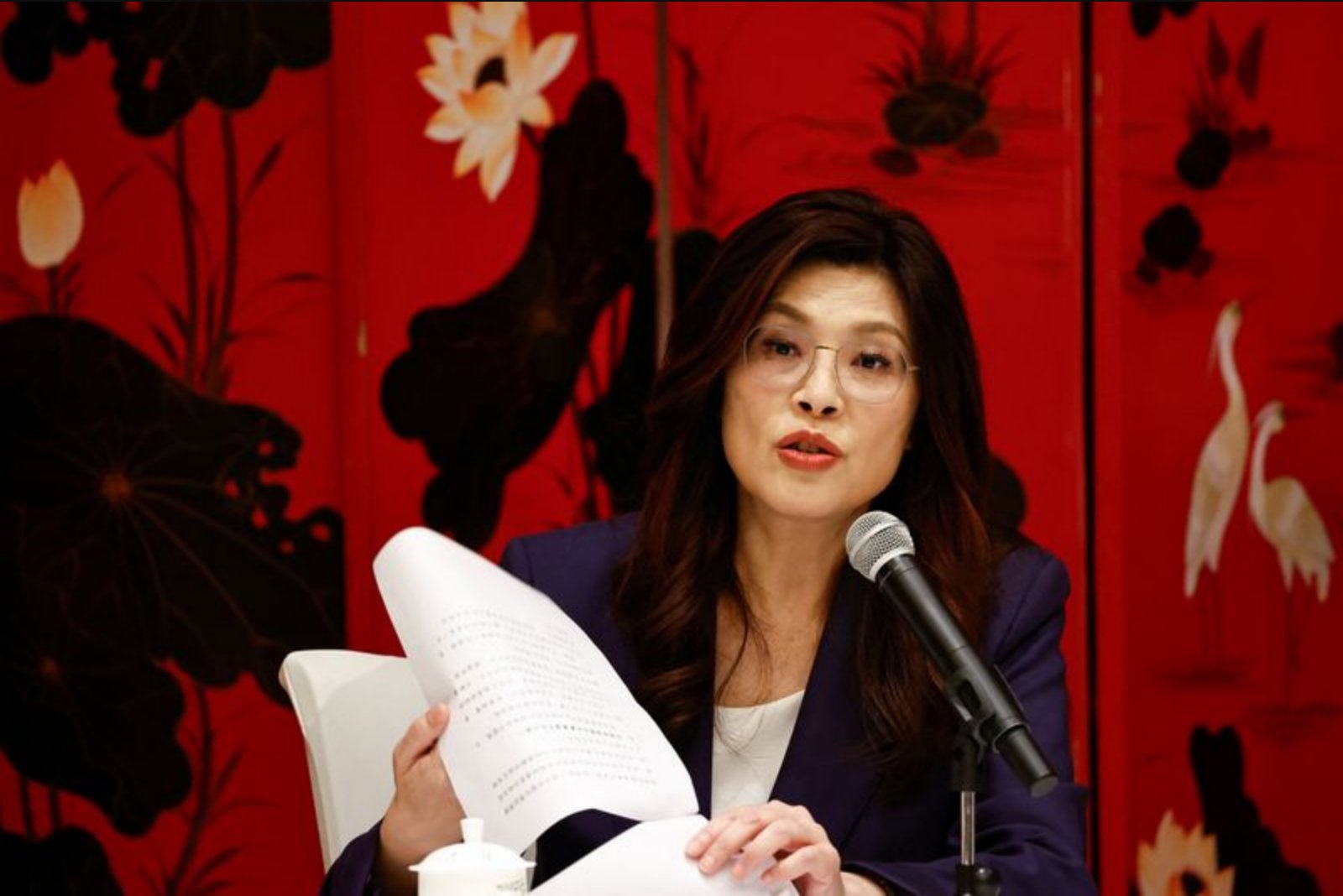
BEIJING, April 12 - China released a package of 10 incentive measures directed at Taiwan on Sunday, announcing steps intended to ease travel, cultural exchange and the cross-strait sale of food products after a visit to the mainland by the chairwoman of Taiwan’s largest opposition party.
The announcement by the official news agency laid out a set of proposals that include exploring a regular communication channel between the Kuomintang (KMT) and China’s Communist Party, the full resumption of flights across the Taiwan Strait, and permission for individuals from Shanghai and Fujian province to travel to Taiwan.
Measures highlighted
- Exploration of a standing communication mechanism between the KMT and the Communist Party.
- Plans to resume full flight services between the two sides.
- Permission for people from Shanghai and Fujian to visit Taiwan.
- Steps to ease inspection standards for food and fishery products, tied to a political foundation.
- Approval for Taiwanese television dramas, documentaries and animation to be shown in China if they meet criteria for orientation, content and production quality.
The measures also include a commitment to facilitate the sale of food items, and the creation of a mechanism aimed at simplifying inspection processes for agricultural and aquatic goods. According to the announcement, easing those inspection standards will be carried out on the political foundation of "opposing Taiwan independence."
On cultural exchanges, Taiwanese TV dramas, documentaries and animated works will be allowed provided they display what the announcement called "correct orientation, healthy content, and high production quality."
These steps followed a visit to China by Cheng Li-wun, the chairwoman of the Kuomintang, who met with Chinese President Xi Jinping and discussed the need for peace and reconciliation, according to the announcement.
There was no immediate response from Taiwan’s government to the measures. The announcement reiterated Beijing’s longstanding stance that it refuses to engage with Taiwan’s President Lai Ching-te, whom it labels a "separatist." Lai rejects Beijing’s claims of sovereignty over the democratically governed island.
Both sides have previously exchanged blame over the absence of a return to large-scale Chinese tourism to Taiwan since the end of the COVID-19 pandemic. Taiwan has also raised concerns about Chinese restrictions on certain agricultural and aquatic imports, saying in some instances Beijing has used what Taipei characterises as unjustified reasons related to pests and diseases to halt shipments.
Note: The announcement lists measures and conditions as presented; effects and timelines were not specified in the release.