
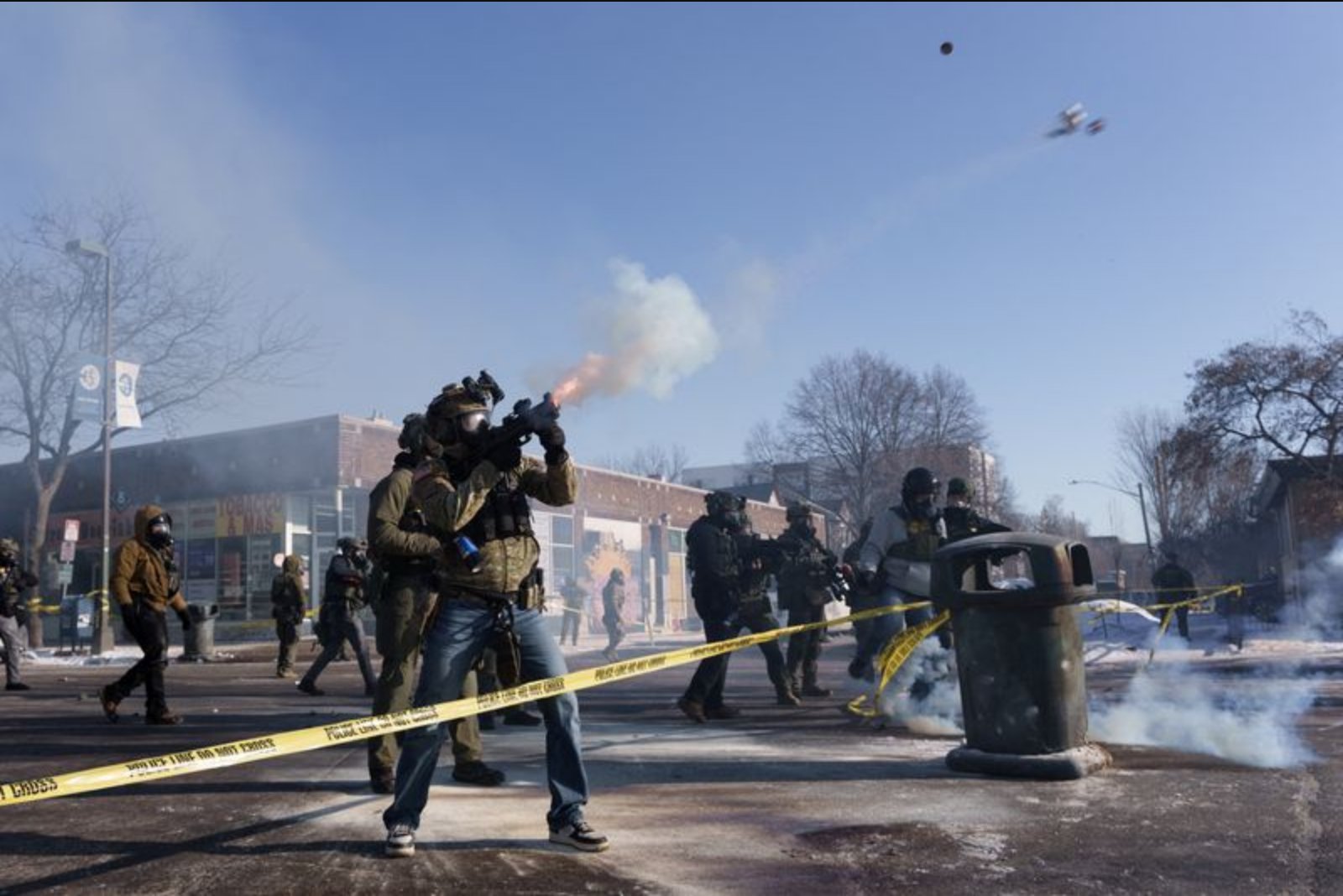
The White House announced a change in leadership of the federal immigration effort in Minneapolis as officials scrambled to contain public outrage over the death of a man shot by federal agents. Tom Homan, a Trump-appointed border czar, was slated to assume command of the broad immigration operation in the city on Tuesday, replacing Border Patrol official Gregory Bovino, according to people briefed on the move.
The personnel shift is part of a wider recalibration by the president and senior aides after the killing of 37-year-old Alex Pretti during protests, an episode that critics say threatens to derail core elements of the administration's immigration agenda. The administration's discussions over the weekend focused on operational and public-relations changes rather than expanding enforcement, people familiar with the talks said.
Among the options weighed by the White House were reducing the number of federal agents in Minnesota, tightening the scope of Immigration and Customs Enforcement's presence in the state to prioritize deportations over broad street-level enforcement, and seeking more coordination with state authorities. Officials also examined whether immigration officers should be equipped with body-worn cameras, a standard increasingly common in many police forces.
The incident that prompted the deliberations occurred on Saturday when Border Patrol agents shot Pretti, an intensive care nurse. Video recorded by bystanders circulated widely and contradicted early official accounts, showing Pretti holding a phone while agents wrestled him to the ground and then officers removing a firearm from his waistband after he had been subdued. While Pretti was a licensed gun owner, witnesses and footage indicate he did not touch the weapon prior to being shot.
The shooting has become a political crisis for the administration, compounding earlier controversy this month when ICE officials were accused in the fatal shooting of 37-year-old Renee Good. The pair of deaths intensified scrutiny of a roughly 3,000-strong federal contingent that had been patrolling Minneapolis streets for weeks as part of a nationwide campaign of enforcement actions in Democratic-led cities.
Court pressure and legal consequences
Federal courts added to the administration's challenges. Late Monday, a federal judge in Minnesota ordered Todd Lyons, the acting head of U.S. Immigration and Customs Enforcement, to appear for a contempt hearing on Friday. Judge Patrick Schiltz wrote that the agency had failed to comply with court orders requiring that certain detainees be afforded bond hearings, and cautioned that "The court's patience is at an end." The contempt proceeding signals mounting judicial impatience with agency compliance even as DHS leadership defends enforcement operations.
Public reaction and political fallout
Public reaction to the Pretti shooting, amplified by widely shared video, undercut initial agency narratives that framed the incident as an attack on officers. That shift in the public record contributed to an erosion of support for the administration's immigration approach, according to public-opinion data cited by officials. Some Republican lawmakers privately expressed concern that the administration's aggressive tactics, if continued, could jeopardize the party's hold on congressional majorities ahead of the November midterm elections.
The political reverberations inside Minnesota were evident as well. A leading Republican candidate for governor, Chris Madel, announced he was ending his campaign, saying in a video statement that the federal crackdown had gone too far: "I cannot support the national Republicans' stated retribution on the citizens of our state, nor can I count myself a member of a party that would do so."
White House response and internal dynamics
Facing the fallout, the president spent the weekend consulting senior advisers to reassess the federal posture in Minneapolis. He convened a two-hour meeting on Monday evening with the head of the Department of Homeland Security, Kristi Noem, after she requested the session. A senior source indicated Noem's position was not at risk.
In public remarks the president adopted a noticeably more conciliatory tone than earlier statements from some aides. He described private conversations with Minnesota Governor Tim Walz and Minneapolis Mayor Jacob Frey as productive, and both state and city leaders offered similarly positive public comments following those calls. Walz's office said the president agreed to direct the Department of Homeland Security to ensure that state authorities could conduct their own investigation into the shooting. Mayor Frey posted on the social platform X that he understood some federal agents would begin leaving the city on Tuesday.
Behind the scenes, senior White House officials urged a change in rhetoric toward the victim. The president made clear he did not want to publicly defend the agents' actions nor to attack Pretti, after a series of sharp comments from administration figures. Deputy Chief of Staff Stephen Miller had labeled Pretti an "assassin," and Bovino returned public comments suggesting Pretti intended to "massacre" officers. Video verified by independent review undermined those characterizations. Senior aides were directed not to launch public attacks on Pretti, and the president discussed distancing himself from inflammatory remarks made by some staff.
Leadership signals and disputed accounts
Bovino, who publicly framed the officers who fired on Pretti as victims of the incident, is expected to leave Minneapolis, along with some of the Border Patrol agents who had deployed with him, a senior administration official said. A separate account asserted Bovino had been stripped of the specially created title of "commander at large" and would resume duties as a chief patrol agent along California's El Centro sector before retiring, though that path was described as pending.
The Department of Homeland Security's public messaging did not mirror every report circulating internally. DHS spokesperson Tricia McLaughlin posted on X on Monday: "Chief Gregory Bovino has NOT been relieved of his duties." The dispute over Bovino's status reflects the larger tension between the administration's internal decisions and the public record.
Evidence and conflicting official descriptions
Initial agency descriptions portrayed the episode as an assault on officers, asserting that Pretti approached agents with a handgun and that they fired in self-defense. Bystander footage that spread widely presented a different sequence. It showed Pretti holding a phone as officers engaged him and then depicted officers removing a firearm from his waistband after he had been subdued. The footage undercut early claims that he had posed an immediate threat while unrestrained.
The unfolding controversy has prompted the White House to contemplate operational changes and to encourage state-level oversight of the shooting, even as the federal agencies involved confront mounting judicial and public scrutiny. The administration's moves to change command and revise enforcement priorities in Minnesota reflect an effort to manage the political and legal fallout while preserving core immigration objectives.