
In a significant diplomatic and security development, the United States will host the first-ever Western Hemisphere Chiefs of Defense Conference on February 11. This meeting will bring together leading military officials from 34 countries within the Western Hemisphere, alongside top commanders from Denmark, Britain, and France, reflecting their territorial interests in the region. The event will be led by U.S. Chairman of the Joint Chiefs of Staff Dan Caine, underlining the strategic importance Washington places on regional cooperation.
The U.S. military emphasized the shared historical connections and aligned values among these nations, highlighting their mutual dependence on sustaining regional stability. According to a statement released by the military, such stability is vital for long-term security and prosperity both within the Western Hemisphere and for the United States itself.
This conference gains additional geopolitical weight due to its timing, occurring mere weeks following the U.S. military's direct intervention in Venezuela, resulting in the ousting of President Nicolas Maduro. This action represents Washington's most assertive engagement in Latin American affairs since the 1989 Panama invasion.
The involvement of European powers with territories in the region signals an inclusive security dialogue aimed at addressing collective concerns. By fostering collaboration among these diverse defense representatives, the conference hopes to create a cohesive approach to the complex and evolving security landscape of the Western Hemisphere.
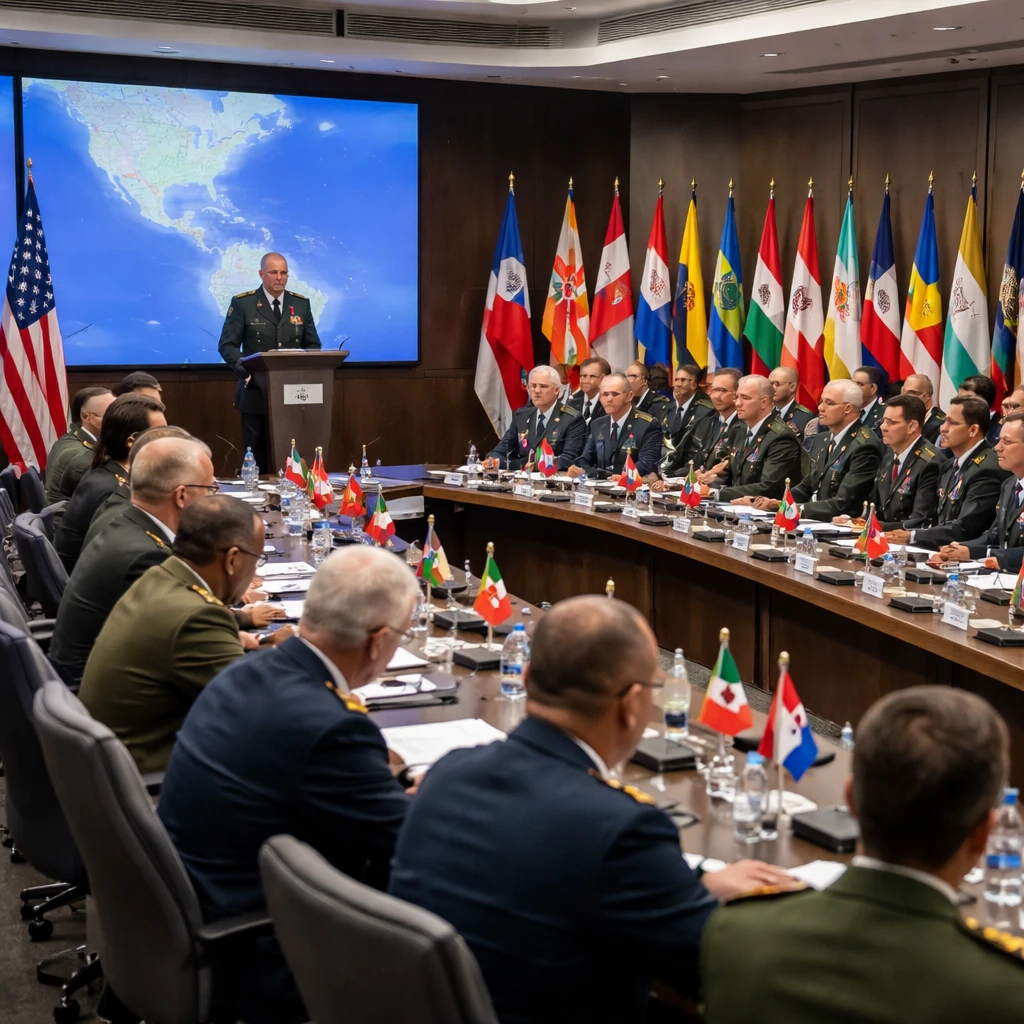
A gathering of top defense officials representing 34 nations in the Western Hemisphere and their overseas territories is scheduled for February 11. Hosted by the U.S. Chairman of the Joint Chiefs of Staff, the conference aims to strengthen regional security collaboration and address common defense priorities. The event occurs shortly after the U.S. military's recent intervention in Venezuela.
Key Points
- A historic first gathering of Western Hemisphere defense chiefs is set for February 11, hosted by the U.S., underscoring a coordinated regional security focus.
- Participation extends beyond Western Hemisphere nations to include European countries with regional territories, indicating a broad coalition approach.
- The timing of the conference is notable given the recent U.S. military operation in Venezuela, highlighting heightened geopolitical tensions in Latin America.
Risks
- The recent U.S. military involvement in Venezuela could intensify regional political tensions, potentially complicating diplomatic and defense coordination efforts.
- Diverse interests among participating countries, including those of overseas territories governed by European powers, may present challenges in forming unified security policies.
- Security dynamics in the Western Hemisphere remain volatile, with potential unsettled situations affecting defense cooperation stability.