
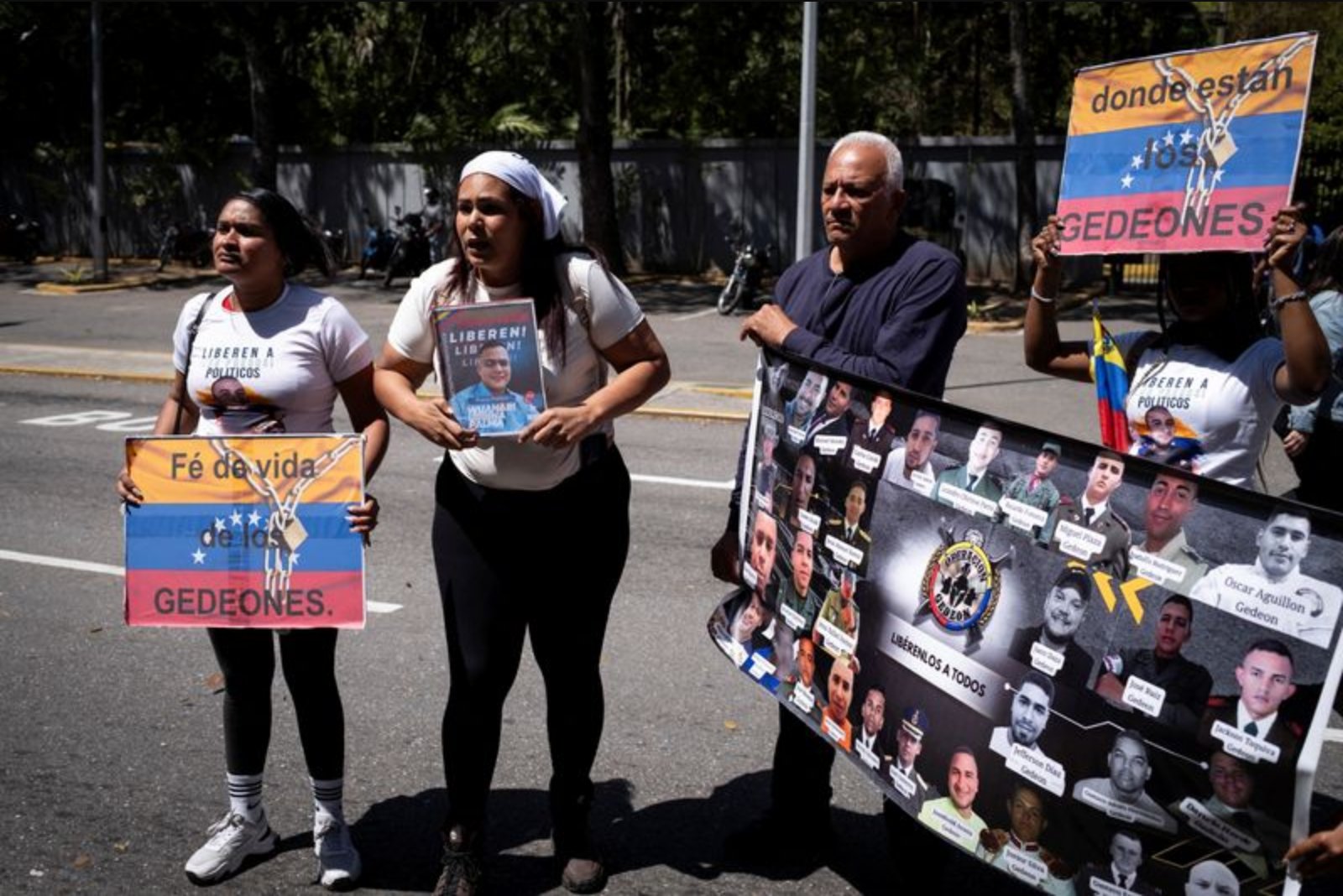
A draft amnesty law now under consideration in Venezuela’s legislature would provide immediate clemency to individuals imprisoned for taking part in political demonstrations or for criticizing public figures, restore assets seized from those detained and annul Interpol or other international measures that currently restrict return to the country, according to a copy of the draft seen by Reuters.
The measure was announced last week by interim president Delcy Rodriguez. In its present wording the law would result in hundreds of releases, though the bill remains subject to debate and must be approved by the National Assembly - which is controlled by the socialist ruling party - to take effect.
Rodriguez, who took office after the U.S. captured and deposed President Nicolas Maduro, has been complying with U.S. demands on oil deals and the government is slowly releasing people classified as political prisoners by human rights groups and the country’s opposition. Her brother Jorge Rodriguez, the head of the assembly, is expected to read the introduction to the amnesty bill at a Thursday session. It must be approved in two debates in order to pass.
The draft law specifies that it would not extend amnesty to persons convicted of human rights violations, war crimes, murder, corruption or drug trafficking. At the same time, the draft lists an extensive set of offenses that would be covered if those acts were committed in the context of political protests.
Offenses to be included under the proposed amnesty cover a broad range of acts often associated with street demonstrations: instigation of illegal activity, resistance to authorities, property damage, rebellion, treason and illegal carrying of weapons, among others, the draft indicates. The coverage would apply when these alleged crimes took place as part of political protests, including mass demonstrations that have occurred in multiple years.
Specifically, the draft references major episodes of unrest that produced fatalities in 2007, 2014, 2017, 2019 and 2024. The most recent protests in 2024 followed a disputed election that the opposition and international observers say the opposition won decisively, but which was upheld by government and judicial authorities, who swore President Nicolas Maduro in for a third term.
If enacted in its current form, the law would also remove international restrictions that prevent some individuals from returning to Venezuela by cancelling Interpol notices and similar measures for those covered by the bill, while enabling the return of assets taken from detainees.
The bill’s progress remains conditional on the National Assembly’s debates and vote. The draft’s exclusions for serious offenses - such as human rights violations and drug trafficking - would prevent amnesty for those categories if they have been adjudicated, according to the document.