
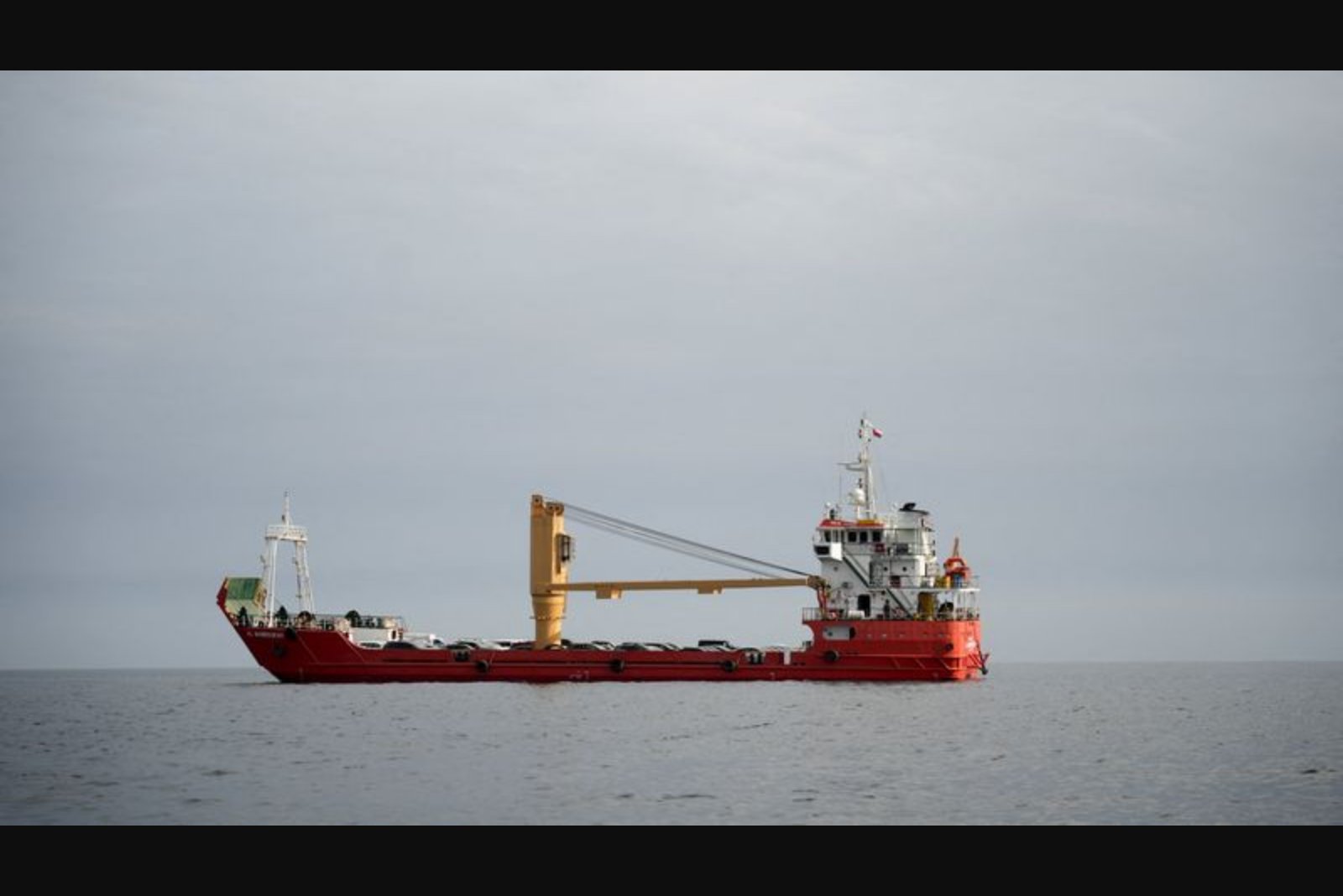
U.S. military commanders said they will begin enforcing a blockade on maritime traffic entering and departing Iranian ports and coastal waters on Monday, a move that followed stalled negotiations in Islamabad and imperils a tenuous two-week ceasefire.
The discussions held in Islamabad over the weekend - the first direct U.S.-Iranian talks in more than a decade and the most senior-level engagement since Iran's 1979 Islamic Revolution - extended from Saturday into early Sunday but did not produce a deal to end the hostilities, officials said.
The ceasefire that began the previous Tuesday aimed to halt six weeks of fighting that has resulted in thousands of deaths across the Gulf, choked off critical energy flows and heightened concern about a broader regional confrontation. In announcing the blockade, U.S. Central Command set a start time of 10 a.m. ET (1400 GMT) for the measure, saying it would be "enforced impartially against vessels of all nations entering or departing Iranian ports and coastal areas, including all Iranian ports on the Arabian Gulf and Gulf of Oman."
At the same time, the U.S. military specified that vessels transiting the Strait of Hormuz to and from ports that are not Iranian would not be impeded. Commercial mariners, the statement said, would receive additional guidance through a formal notice ahead of the blockade's commencement.
President Donald Trump added further detail and pointed rhetoric on Sunday, saying U.S. forces would intercept any vessel in international waters that had paid what he described as a toll to Iran. "No one who pays an illegal toll will have safe passage on the high seas," he wrote on social media, and warned: "Any Iranian who fires at us, or at peaceful vessels, will be BLOWN TO HELL!"
Mr. Trump also said the U.S. Navy would begin destroying mines that Iranian forces had laid in the Strait of Hormuz, the narrow passage that serves as a critical conduit for global energy supplies - a choke point for about 20% of those flows, the U.S. statement noted.
Shipping-tracking information showed three fully laden supertankers passed through the Strait on Saturday. By Monday, however, tankers were avoiding the waterway ahead of the announced U.S. blockade.
Iran reacted sharply to Washington's statements. The country's Islamic Revolutionary Guards warned that military vessels approaching the strait would be treated as a breach of the ceasefire and would be met with harsh and decisive measures, underscoring the risk of a dangerous escalation.
According to a U.S. official involved in the negotiations, Iran rejected U.S. demands that it end all uranium enrichment, dismantle major enrichment facilities and transfer highly enriched uranium. The official also said Iran refused U.S. requests to cease funding for Hamas, Hezbollah and the Houthis and to fully open the Strait of Hormuz.
Iranian state media reported there had been agreement on a number of issues during the Islamabad talks, but said the status of the strait and Iran's nuclear program remained the principal sticking points. Iran's foreign minister, Abbas Araqchi, said Tehran had "encountered maximalism, shifting goalposts, and blockade" when it was reportedly just inches from an "Islamabad MoU." He added: "Zero lessons learned. Good will begets good will. Enmity begets enmity."
The six weeks of fighting has exacted a heavy human toll, with thousands killed, and has disrupted the global economy by curtailing traffic through the Strait of Hormuz and lifting commodity prices. Financial markets responded to the collapse of talks: the U.S. dollar and oil rose in early trading on Monday, while stock indexes in Asia softened.
President Trump acknowledged the potential political consequences of sustained high fuel prices, telling Fox News' "Sunday Briefing" that oil and gasoline prices may remain elevated through November's midterm elections, a rare public recognition of the domestic political stakes tied to the conflict.
Political reactions in Tehran added to the public narrative. Mohammad Bagher Ghalibaf posted an image of gasoline prices around the Washington area on social media, commenting: "Enjoy the current pump figures. With the so-called 'blockade'. Soon you'll be nostalgic for $4-$5 gas." Other Iranian officials framed the breakdown in terms of mistrust and international law. Ghalibaf blamed the United States for failing to win Tehran's trust despite his delegation's "forward-looking initiatives." Meanwhile, Iran's president, Masoud Pezeshkian, told Russian President Vladimir Putin that Tehran sought "a balanced and fair agreement" and said: "If the United States returns to the framework of international law, reaching an agreement is not far off," according to Iranian state media.
Despite the collapse of the Islamabad talks, President Trump expressed differing views within hours of each other about Iran's willingness to continue negotiating. He told Fox News he believed Iran would return to the table, calling the discussions "very friendly" and saying: "I do believe they're going to come to the table on this, because nobody can be so stupid as to say, 'We want nuclear weapons,' and they have no cards." Later the same day, after returning to the Washington area from a trip to Florida, he told journalists: "If they don't come back, I'm fine," referring to a "desperate" Iran and signaling a readiness to proceed without further negotiations.
Context limitations
This report reflects information provided by U.S. military statements, comments attributed to U.S. and Iranian officials and market movements recorded after the talks. Where the source material was limited or provided only partial detail, that limitation is reflected rather than supplemented with outside information.