
Summary: At the Singapore Airshow, U.S. drone manufacturers elevated their pitch to Asian governments seeking new tools to counter a growing Chinese military presence. The companies showcased both small, expendable attack drones and larger, autonomous combat aircraft designed to operate alongside manned fighters, and highlighted battlefield-proven platforms and software that they say can perform when GPS and communications are degraded.
Companies that have drawn attention because of their roles supplying Kyiv and recent Pentagon backing used the airshow this week to make the case for accelerated purchases and local partnerships. The surge of interest follows heightened investment from Silicon Valley in drone and military artificial intelligence startups after the lethal use of unmanned systems in Russia’s war in Ukraine boosted valuations and investor attention for U.S. firms.
At the exhibition floor, the shift in focus from traditional airshow attractions - large commercial airliners, high-speed fighter demonstrations and troop-carrying helicopters - was clear. Unmanned systems, which just a few years ago occupied the margins of defense displays, were now a principal draw for military delegations, intelligence officials and defense industry executives looking for technologies that may matter in a future conflict in the Pacific.
Several U.S. firms with varying degrees of battlefield exposure or Pentagon contracts were prominent at the show. California-based Anduril and Shield AI, Neros Technologies of El Segundo, California, and Virginia-headquartered AeroVironment are among those that have supplied weapons to Ukraine, while pursuing sales to governments across Asia.
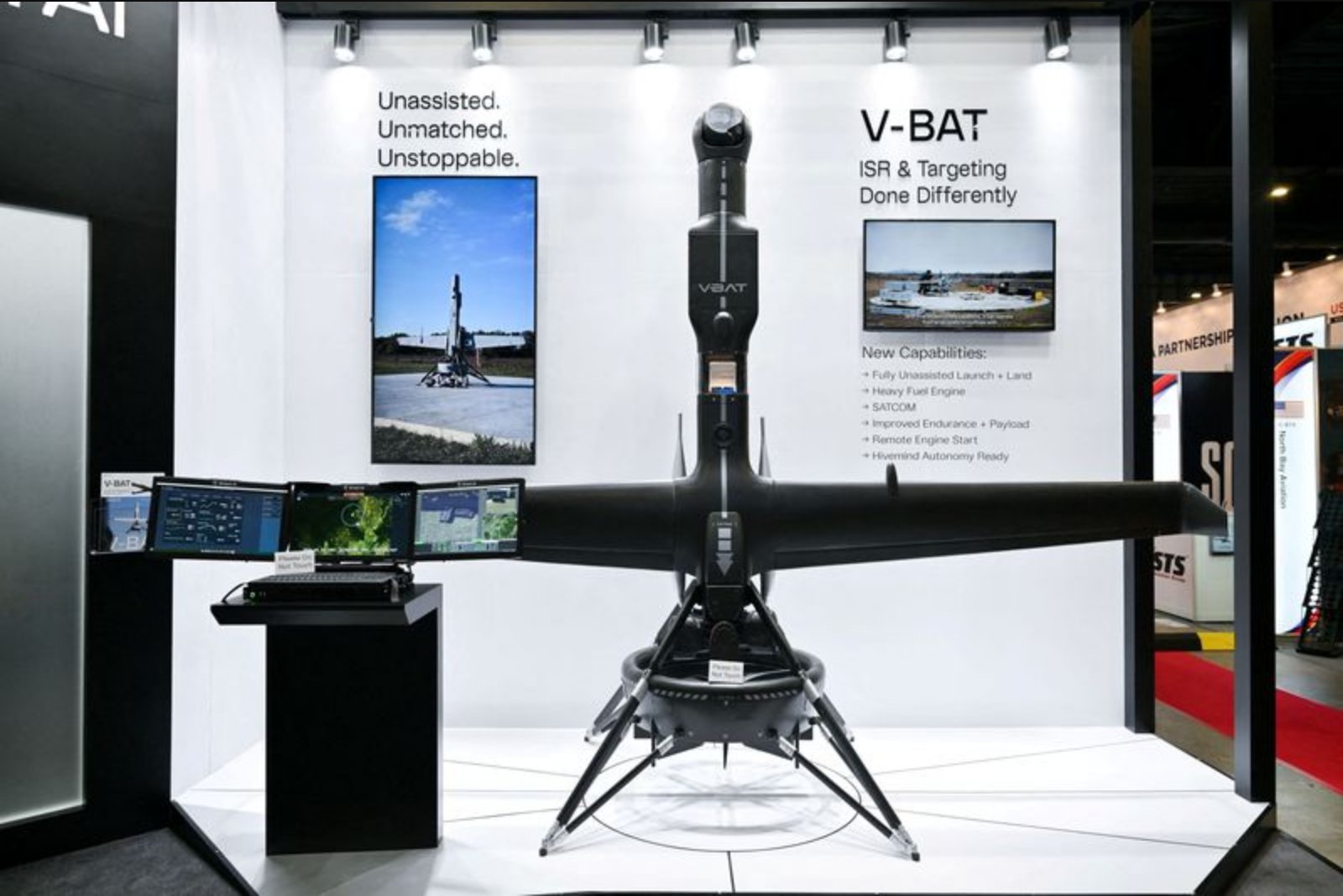
Shield AI emphasized systems designed to operate in contested electronic environments. "They’re looking for the ability to conduct intelligence, surveillance, reconnaissance operations while GPS and communications are jammed ... it’s what we’re offering to a number of different countries in the region," said Shield AI co-founder Brandon Tseng at the Singapore show. The company noted that its 9-foot-long (2.7 m), roughly $700,000 V-BAT reconnaissance drone has accumulated hundreds of hours in Ukraine. At the airshow Shield AI also announced it will supply Singapore’s ST Engineering with Hivemind, its AI autonomy software suite for unmanned systems.
Anduril, which reported multiple Pentagon contracts and was valued at $30 billion in a private fundraising last year, has been expanding in Asia. The company opened offices in Taiwan, South Korea and Japan in 2025 and has confirmed sales of its Altius loitering munition drones to Taiwan. Anduril, together with other U.S. firms, displayed concepts and models of Collaborative Combat Aircraft - autonomous or semi-autonomous 'loyal wingman' jets targeting integration with next-generation manned fighters. These CCA platforms were described as costing around $30 million per unit.
Major U.S. defense contractors are also pursuing similar aircraft. Boeing, General Atomics, Lockheed Martin and Northrop Grumman were identified as developers of comparable collaborative combat aircraft concepts.
Smaller, high-volume producers are framing their offerings as a means to create defensive depth through large numbers of low-cost, expendable systems. Neros, which holds a U.S. Marine Corps contract for its small Archer quadcopter attack drone, said it plans to set up factories in South Korea, the Philippines, Singapore and Japan to build stockpiles of explosive-laden drones that could be used to blunt an amphibious assault. "Imagine you’re a (Chinese) trooper. You’re about to board your landing craft ... 5 kilometres (3 miles) away, your landing craft gets hit by 30 Neros Archers. Some of them (below) the water line. Your landing craft sinks like a few kilometres away from the beach," said Kenneth Inocencio, Neros’ Asia growth lead, at the show.
Neros reported production capacity of up to 200 drones a day at its El Segundo factory and said it won a contract last year from a coalition of countries to supply 6,000 Archer drones to Ukraine.
Other U.S. firms made announcements of their own. Red Cat, which has a contract to supply the U.S. Army with its Black Widow short-range reconnaissance quadcopter, said at the Singapore Airshow that it has received an order for the drone from an unnamed Asia-Pacific country. "Because of regional conflicts and uncertainty with China and their intentions, a lot of Asia-Pacific allies are tooling up, a handful of them in a big way," said Stayne Hoff, Red Cat’s director of business development, Asia-Pacific.
The companies’ messages at the airshow focused on two linked themes: combat-proven or combat-tested performance in Ukraine, and the capability to operate under electronic attack or in GPS-denied settings. To different degrees, each firm is also pursuing on-the-ground industrial presence in the region through offices or planned factories to support sales, logistics and potentially local production.
Key points
- U.S. drone companies used the Singapore Airshow to court buyers across East and Southeast Asia amid concerns over China’s military expansion. - Impacting defense procurement and aerospace manufacturing sectors.
- Battlefield experience in Ukraine and Pentagon backing have raised investor and buyer interest in companies such as Anduril, Shield AI and Neros. - Implications for technology and defense supply chains, and for firms focused on AI autonomy.
- Products on display ranged from small, mass-producible attack quadcopters to high-value collaborative combat aircraft priced around $30 million per unit. - Affects procurement budgets and capabilities planning in regional militaries.
Risks and uncertainties
- Uncertainty over adoption: Companies are actively trying to persuade regional militaries that battlefield experience and Pentagon ties mean their systems will meet local defense needs; whether those governments will buy and deploy these systems at scale is not guaranteed. - Relevant to defense contractors and government procurement plans.
- Operational challenges in contested environments: Firms emphasize the ability to operate when GPS and communications are jammed, but the effectiveness of systems under sustained electronic attack remains a central concern. - Relevant to military operations and autonomy software providers.
- Production and stockpiling logistics: Plans to establish factories and produce large numbers of expendable drones highlight questions about manufacturing scale-up and supply chain execution to meet potential demand. - Relevant to aerospace manufacturing and logistics sectors.