
World January 26, 2026

U.S. and South Korea Pledge Closer Collaboration on Nuclear-Powered Submarine Program

Talks between top U.S. defense policy official and South Korea’s defence minister emphasize deeper cooperation and faster transfer of wartime control

By Marcus Reed
U.S. and South Korea Pledge Closer Collaboration on Nuclear-Powered Submarine Program

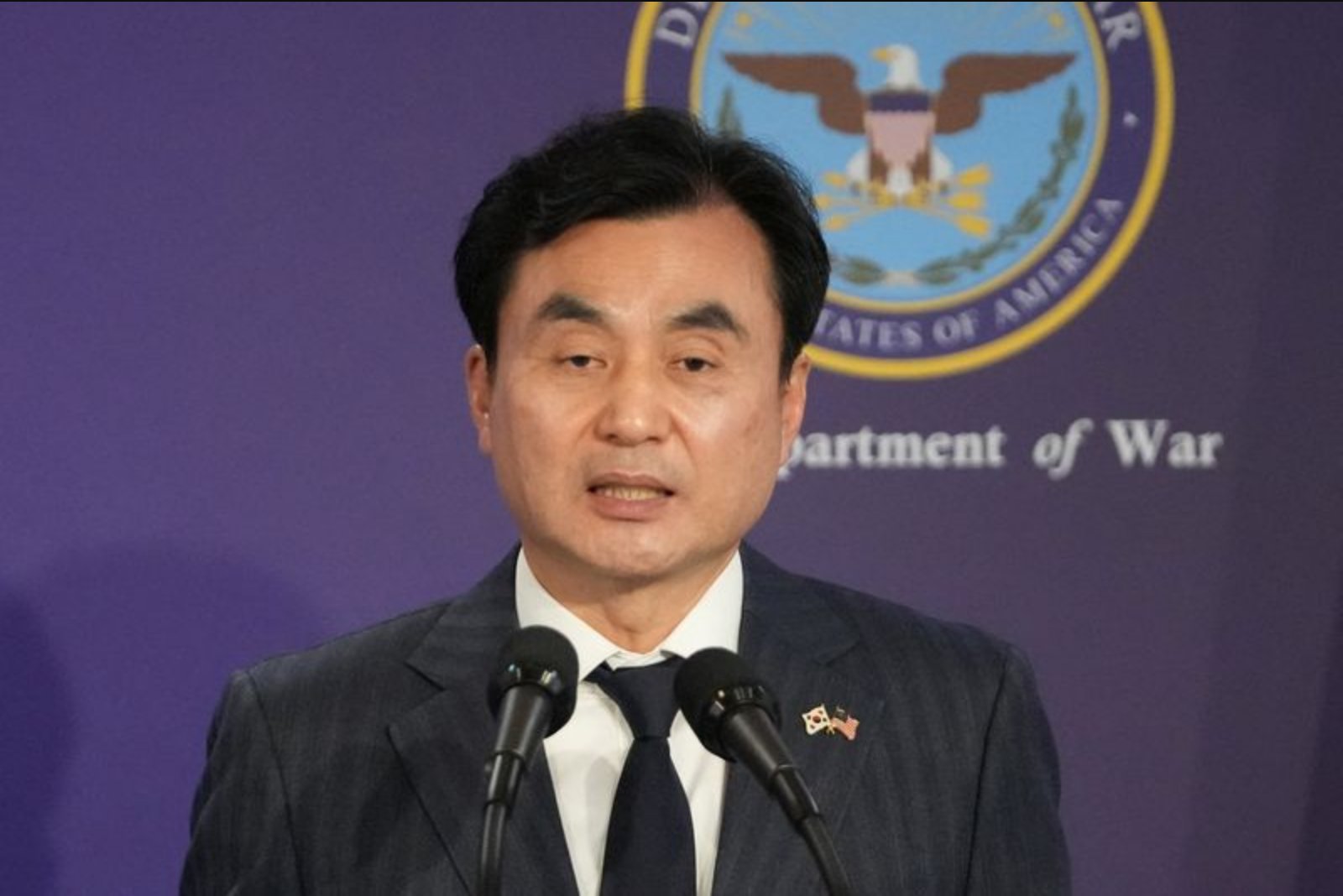
U.S. Under Secretary of Defense for Policy Elbridge Colby and South Korean Defence Minister Ahn Gyu-back agreed to strengthen collaboration on Seoul’s pursuit of a nuclear-powered submarine during meetings in Seoul. Both sides framed cooperation as a means to enhance South Korea’s capacity to lead peninsula defence and to elevate the bilateral security alliance, while Seoul urged quicker progress on the transfer of wartime operational control and requested closer coordination on alliance follow-up measures.

Key Points

  • U.S. Under Secretary of Defense for Policy Elbridge Colby and South Korean Defence Minister Ahn Gyu-back agreed to deepen cooperation on South Korea’s pursuit of a nuclear-powered submarine.
  • Both governments view collaboration on a nuclear-powered submarine as strengthening Seoul’s ability to lead peninsula defence and elevating the security alliance.
  • Seoul pressed for faster transfer of wartime operational control and closer coordination on alliance follow-up measures; South Korea hosts about 28,500 U.S. troops and pledged last year to increase defence spending to 3.5% of GDP.

U.S. Under Secretary of Defense for Policy Elbridge Colby met with South Korean Defence Minister Ahn Gyu-back in Seoul on Monday, and the two officials agreed to deepen cooperation surrounding South Korea’s efforts to develop a nuclear-powered submarine, South Korea’s defence ministry said.

The meeting took place as Colby makes his first trip abroad since assuming his current post. The ministry said both governments saw enhanced cooperation on a nuclear-powered submarine as strengthening South Korea’s ability to lead the defence of the Korean peninsula and as a measure that would elevate the security relationship between the two countries.

In its statement, the ministry also reported that Ahn pressed for faster progress on the transfer of wartime operational control to Seoul and urged closer coordination on follow-up measures within the alliance. The officials discussed the steps needed to synchronize policies and timelines, though the ministry’s account did not provide a detailed schedule.

The meeting followed the release on Friday of the Pentagon’s new National Defense Strategy, which the ministry referenced in describing the talks. The strategy states it expects a "more limited" U.S. role in deterring North Korea, with South Korea taking the primary responsibility for deterrence.

Colby, who is the Pentagon’s senior defense and foreign policy official, posted on X upon his arrival that South Korea is a "model ally" committed to increasing defence spending in line with U.S. regional strategy.

South Korea currently hosts about 28,500 U.S. troops. The ministry noted that last year Seoul pledged to raise defence spending to 3.5% of GDP, a move that Colby and other U.S. officials have praised as enhancing South Korea’s deterrent role on the peninsula.

The ministry statement said Colby will continue his Asia trip with a visit to Japan, according to media reports. The public account of the Seoul meeting focused on the shared view that closer collaboration on advanced submarine capabilities and clearer timelines for operational control transfer and alliance coordination would be mutually reinforcing.


Context and implications

The talks underscored a bilateral push to expand defense cooperation at a time when Washington signals increased expectations of allied responsibility. South Korea’s pursuit of a nuclear-powered submarine and its commitment to higher defence spending were highlighted by both sides as central to a recalibrated deterrence posture.

Risks

  • Uncertainty over the timeline and pace for transferring wartime operational control to Seoul, which Ahn urged to accelerate - impacts defence planning and military-readiness sectors.
  • A shift toward a "more limited" U.S. role in deterring North Korea, as described in the Pentagon’s new National Defense Strategy, creates uncertainty in alliance burden-sharing and regional security arrangements - impacts security and defence markets.
  • Coordination on follow-up alliance measures remains an open item, indicating potential procedural or policy gaps that could affect implementation of cooperative defense initiatives - impacts defence procurement and strategic planning.

More from World

U.S. Olympic hospitality site renamed 'Winter House' after protests over ICE shootings Feb 2, 2026 Greenland’s premier says U.S. still aims for control despite ruling out military action Feb 2, 2026 Kremlin says Russia has long offered to process or store Iran’s enriched uranium Feb 2, 2026 Long-Awaited Rafah Reopening Prompts Hope and Anxiety Among Palestinians Stranded Across Border Feb 2, 2026 Rafah Reopens but Core Questions Persist Over Implementation of Trump’s Gaza Blueprint Feb 2, 2026