
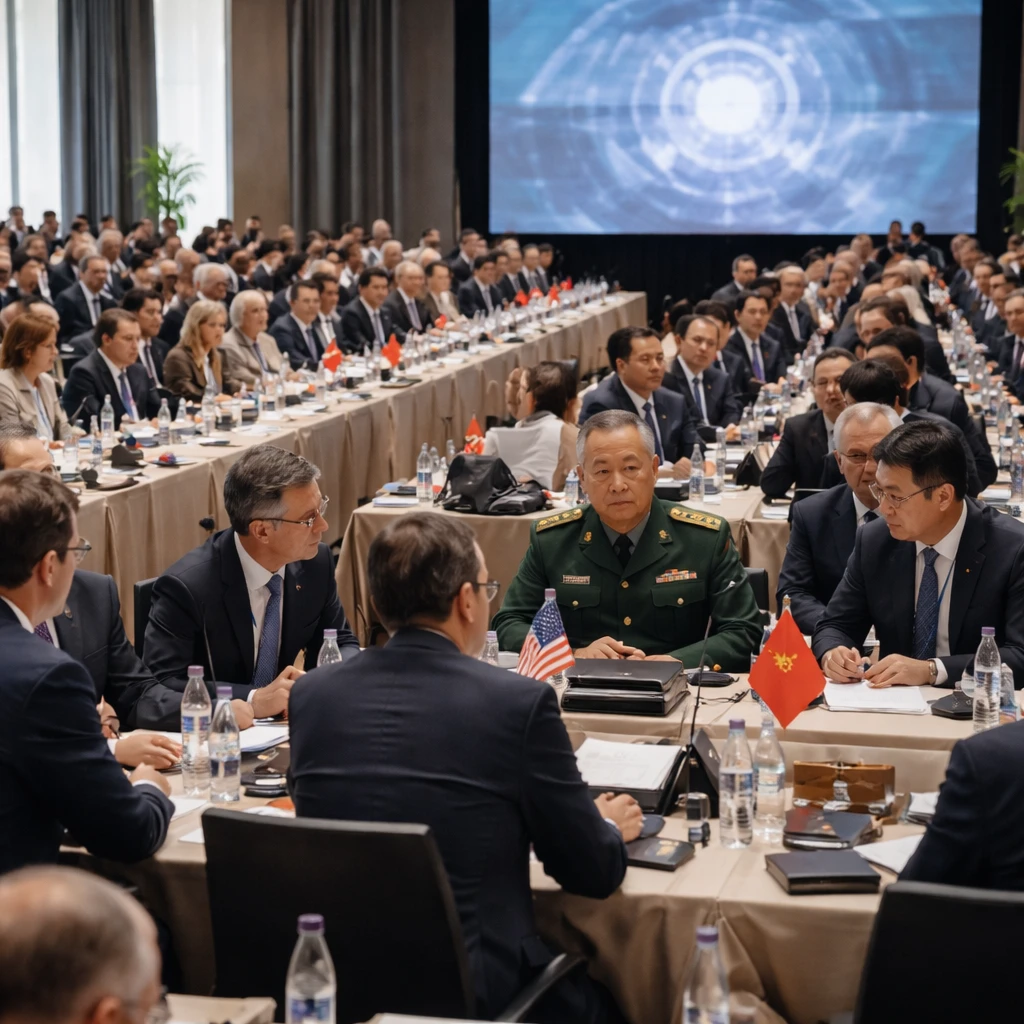
Delegations meeting in A Coruna, Spain, produced a modest, non-binding declaration on the military use of artificial intelligence on Thursday, but only around a third of attendees signed on and two major military powers - the United States and China - opted not to endorse the pledge.
The Responsible AI in the Military Domain, or REAIM, summit was attended by 85 countries. By the end of the day, 35 had put their names to a document outlining 20 principles intended to guide how states govern AI in warfare. The text reiterates that humans must retain responsibility for AI-enabled weapons, calls for clear chains of command and control, and urges the sharing of information about national oversight systems when consistent with national security.
The declaration also stresses the role of risk assessments, robust testing regimes, and training and education for personnel entrusted with operating military AI capabilities. While the document does not create legal obligations, delegates said some governments were reluctant to endorse more specific policies given strategic uncertainties.
Delegates and officials at the conference pointed to tensions between the United States and some European allies, and to broader uncertainty about the future shape of transatlantic relations, as factors that made countries cautious about committing to a joint text. That reluctance was reflected in the comparatively low number of signatories.
"Russia and China are moving very fast. That creates urgency to make progress in developing AI. But seeing it going fast also increases the urgency to keep working on its responsible use. The two go hand-in-hand," Dutch Defence Minister Ruben Brekelmans told reporters.
Brekelmans framed the situation as a balance between moving quickly to keep pace with rivals and the need to pursue responsible controls. Several attendees described the position facing governments as a kind of "prisoner’s dilemma" - where putting restrictions in place could be viewed as a handicap if adversaries do not follow suit.
Major signatories to Thursday's text included Canada, Germany, France, Britain, the Netherlands, South Korea and Ukraine. Observers noted that the picture contrasts with two earlier military AI gatherings: meetings in The Hague and in Seoul in 2023 and 2024, when roughly 60 nations - excluding China but including the United States - backed a modest, non-binding "blueprint for action." The current document likewise stopped short of legal commitments.
Yasmin Afina, a researcher at the U.N. Institute for Disarmament Research who advised on the process, said some participants remained uneasy about endorsing more concrete measures despite the non-binding nature of the text. That hesitancy, she said, contributed to the lower turnout of signatories.
Supporters of the declaration emphasized that the pledge was an attempt to respond to fast-moving advances in AI technology and to reduce the risk that deployment in military contexts could lead to accidents, miscalculation or unintended escalation. At the same time, the summit highlighted the political and strategic frictions that complicate multilateral attempts to set common standards.
The resulting division at the REAIM summit underlines ongoing challenges for governments seeking to reconcile national security priorities with efforts to promote responsible practices for military AI.