
World January 26, 2026

U.S. Aircraft Carrier, Escorts Enter Middle East, Boosting Operational Options Against Iran

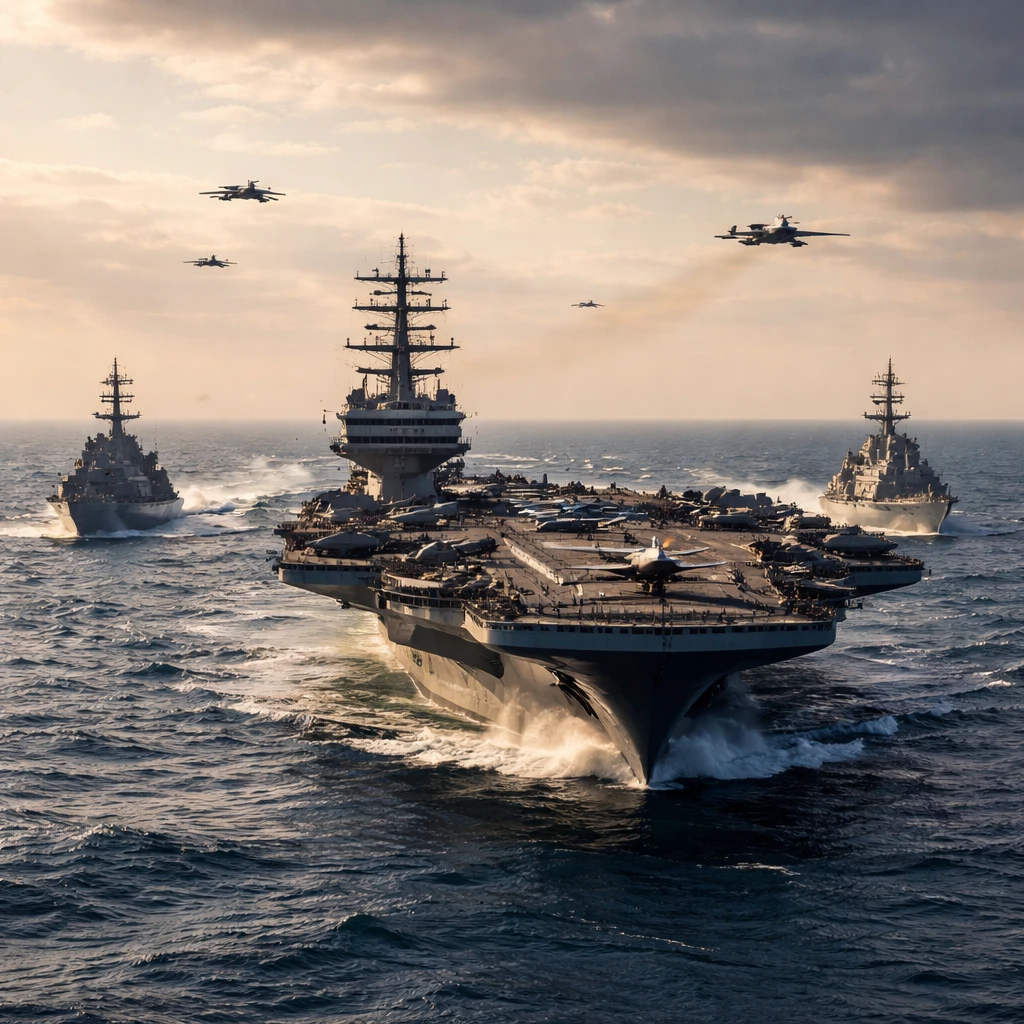
USS Abraham Lincoln and guided-missile destroyers deploy to CENTCOM area as Pentagon shifts air and air-defense assets to the region

By Sofia Navarro
U.S. Aircraft Carrier, Escorts Enter Middle East, Boosting Operational Options Against Iran

The aircraft carrier USS Abraham Lincoln, accompanied by multiple guided-missile destroyers, has moved into the Middle East region under U.S. Central Command, U.S. officials said. The deployment expands U.S. military options to protect forces or to take action against Iran amid recent tensions tied to nationwide protests in Iran. Additional fighter aircraft and air-defense systems are being positioned in the region, and the U.S. announced a combat airpower exercise. Regional reactions include Iran warning any attack would amount to an all-out war and the UAE saying it will not permit its territory to be used for hostile actions toward Iran.

Key Points

  • The USS Abraham Lincoln carrier strike group, including guided-missile destroyers, has entered the Middle East area of responsibility under U.S. Central Command.
  • The Pentagon is also moving fighter aircraft and air-defense systems to the region and announced an exercise to demonstrate deployment and sustainment of combat airpower - sectors impacted include Defense and Aerospace.
  • Regional statements underscore heightened tensions: Iran warned any attack would be treated as an all-out war, while the UAE stated it will not allow its territory or airspace to be used for hostile actions against Iran - this affects Aviation and regional military logistics.

The U.S. Navy's aircraft carrier USS Abraham Lincoln, together with several guided-missile destroyers, has entered the Middle East region that falls under the authority of U.S. Central Command, two U.S. officials told Reuters on Monday. The movement of the carrier strike group expands American military options to defend U.S. forces in the region or to conduct military action against Iran if ordered.

President Donald Trump had said last Thursday that an "armada" was heading toward Iran, while expressing a hope that the force would not need to be employed. The naval vessels now in the CENTCOM area began deploying from the Asia-Pacific earlier in the month as tensions between Washington and Tehran rose following a crackdown on protests across Iran.

Officials say the deployment of the carrier and its escort ships is accompanied by other force movements. The Pentagon is reportedly shifting fighter jets and air-defense systems into the Middle East to augment the naval presence. Over the weekend, U.S. military authorities announced plans for an exercise in the region intended to demonstrate the ability to deploy, disperse, and sustain combat airpower.

President Trump had issued repeated warnings that the United States might intervene if Iran continued to kill protesters, though U.S. officials say that nationwide demonstrations have since abated. The president added that he had been informed the killings were subsiding and that, based on the information he received, he believes there is currently no plan for the executions of prisoners.

U.S. forces have a history of surging military assets into the Middle East during periods of heightened tension - moves that have often been cast as defensive - but officials noted that last year the U.S. mounted a significant buildup ahead of its June strikes against Iran's nuclear program.

Regional reactions to the current U.S. deployments were swift. A senior Iranian official warned last week that Tehran would view any attack as an "all-out-war against us." The United Arab Emirates announced on Monday that it would not permit its airspace, territory, or territorial waters to be used for hostile military actions against Iran.

The strategic footprint of U.S. air operations in the Gulf includes Al Dhafra Air Base, located south of Abu Dhabi. That installation has served as an important U.S. Air Force hub, supporting missions against the Islamic State as well as reconnaissance sorties across the region.

The arrival of the USS Abraham Lincoln and supporting warships, coupled with the relocation of additional air and air-defense assets and the scheduled combat airpower exercise, reflects a deliberate repositioning of U.S. capabilities in response to evolving regional dynamics. Officials have framed the moves as efforts to protect U.S. personnel and interests, while also preserving a range of operational options should policymakers authorize further action.

Risks

  • Potential for military confrontation: Iranian officials have said they would view any attack as an "all-out-war," indicating a risk of broad escalation that could affect Defense sector stability.
  • Operational and logistical constraints: the UAE's restriction against allowing its airspace, territory, or waters to be used for hostile actions could complicate regional basing and deployment plans, affecting Aviation and Aerospace operations.
  • Uncertainty around protests and internal Iranian dynamics: while U.S. officials say demonstrations have abated and reports indicated killings were subsiding, the situation remains fluid and could influence future U.S. force posture decisions, impacting defense sector planning.

More from World

Greenland’s premier says U.S. still aims for control despite ruling out military action Feb 2, 2026 Kremlin says Russia has long offered to process or store Iran’s enriched uranium Feb 2, 2026 Long-Awaited Rafah Reopening Prompts Hope and Anxiety Among Palestinians Stranded Across Border Feb 2, 2026 Rafah Reopens but Core Questions Persist Over Implementation of Trump’s Gaza Blueprint Feb 2, 2026 Rafah Crossing Reopens on Foot with Strict Limits as Gaza Remains Under Strain Feb 2, 2026