
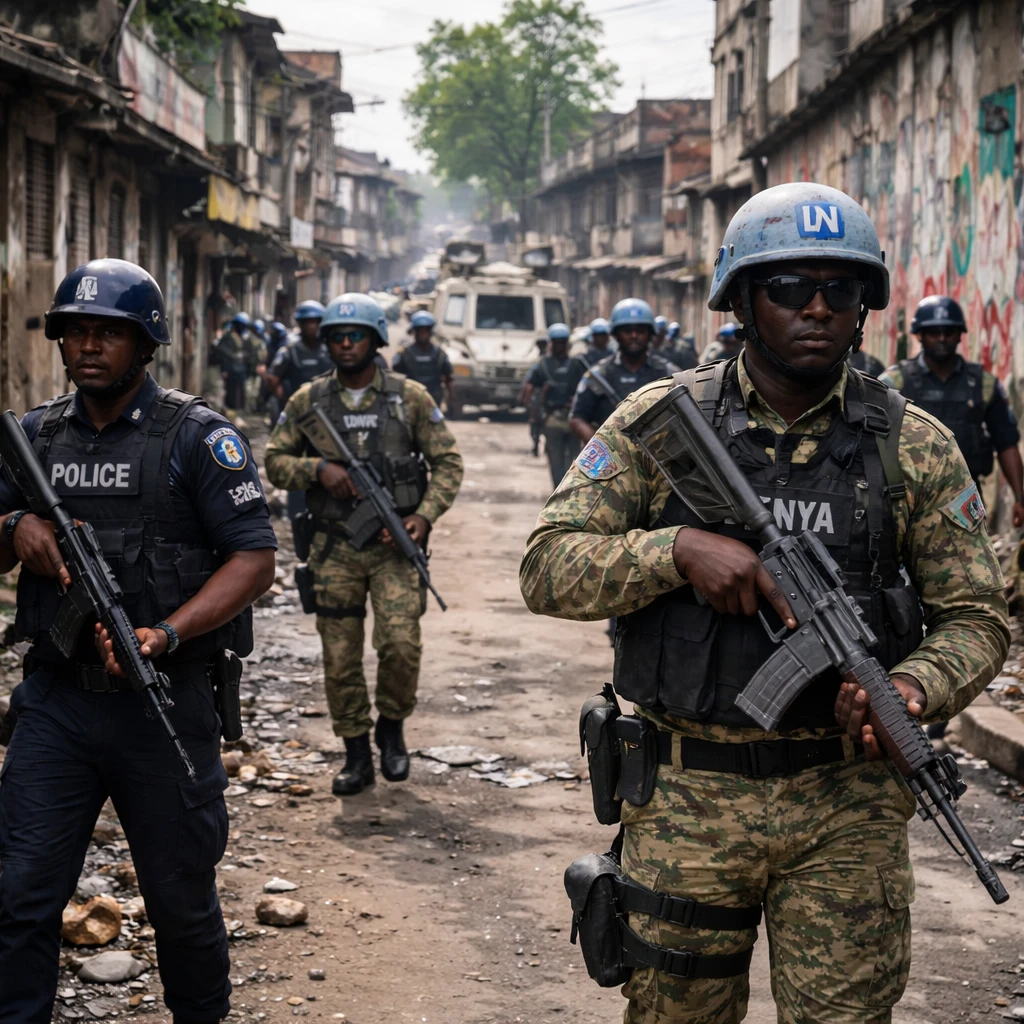
The United Nations-backed security contingent assigned to assist Haiti’s local police in countering the pervasive threat posed by armed criminal gangs is projected to reach its intended full complement of troops by this summer, according to the U.N.’s special envoy for Haiti. This announcement coincides with intensifying political uncertainty in Haiti in the lead-up to February 7—the expiration date of the current transitional government’s mandate—without any official plan for leadership succession.
Carlos Ruiz, the U.N. envoy, detailed that additional personnel are expected to arrive by April, with the total force strength planned to be approximately 5,500 troops. Currently, some 1,000 officers, primarily from Kenya, are deployed in Haiti as part of this international security effort. Despite its intended support role, the force has encountered setbacks including delays and significant funding shortages. Since its initial deployment in June 2024, the influence and territorial control of armed gangs have grown substantially, extending over large areas in central and rural regions of Haiti.
For perspective, Haiti’s police forces number roughly 12,000 officers, which is estimated to be comparable to the size of the various armed groups operating within the country. These gangs are heavily armed, with substantial quantities of firearms and ammunition reportedly trafficked predominantly from the United States.
Ruiz’s statement followed reports indicating that a majority faction within Haiti’s transition presidential council, known as the CPT and effectively the top executive body, has attempted to remove Prime Minister Alix Didier Fils-Aime from office just days before the government’s mandate expires. This action would mark the second prime ministerial dismissal by the CPT since its appointment in April 2024. Throughout its tenure, the CPT has been plagued by political disputes and allegations of corruption. The country’s deteriorating security situation has repeatedly delayed plans for the first national elections in a decade.
"The country cannot endure further internal conflict," Ruiz emphasized. He urged the current leadership to utilize the remaining weeks of their administration effectively to serve the nation’s interests. In the absence of an agreed plan for governance beyond February 7, Ruiz highlighted that the constitution allows the prime minister to continue in office, stressing the necessity of having a stable government authority.
The United States has also voiced concerns regarding the reported political maneuver to oust the prime minister. U.S. Deputy Secretary of State Christopher Landau cautioned against such disruptive actions undertaken by non-elected members of the CPT so near the expiration of their mandate, stating that it would undermine U.S. efforts to enhance security in Haiti. Landau remarked on X that "the U.S. would regard any supporters of such destabilizing measures favoring gang interests as acting against the welfare of the United States, the region, and the Haitian people, and would respond accordingly."
Haiti faces a severe security crisis. Armed gangs have been responsible for thousands of deaths and have taken control of vast areas within the capital, Port-au-Prince, as well as expanding into central regions and the country’s agricultural heartlands. These groups have perpetrated massacres, mass sexual violence, kidnappings for ransom, and widespread arson. The ongoing violence has displaced approximately 1.4 million Haitians internally.