
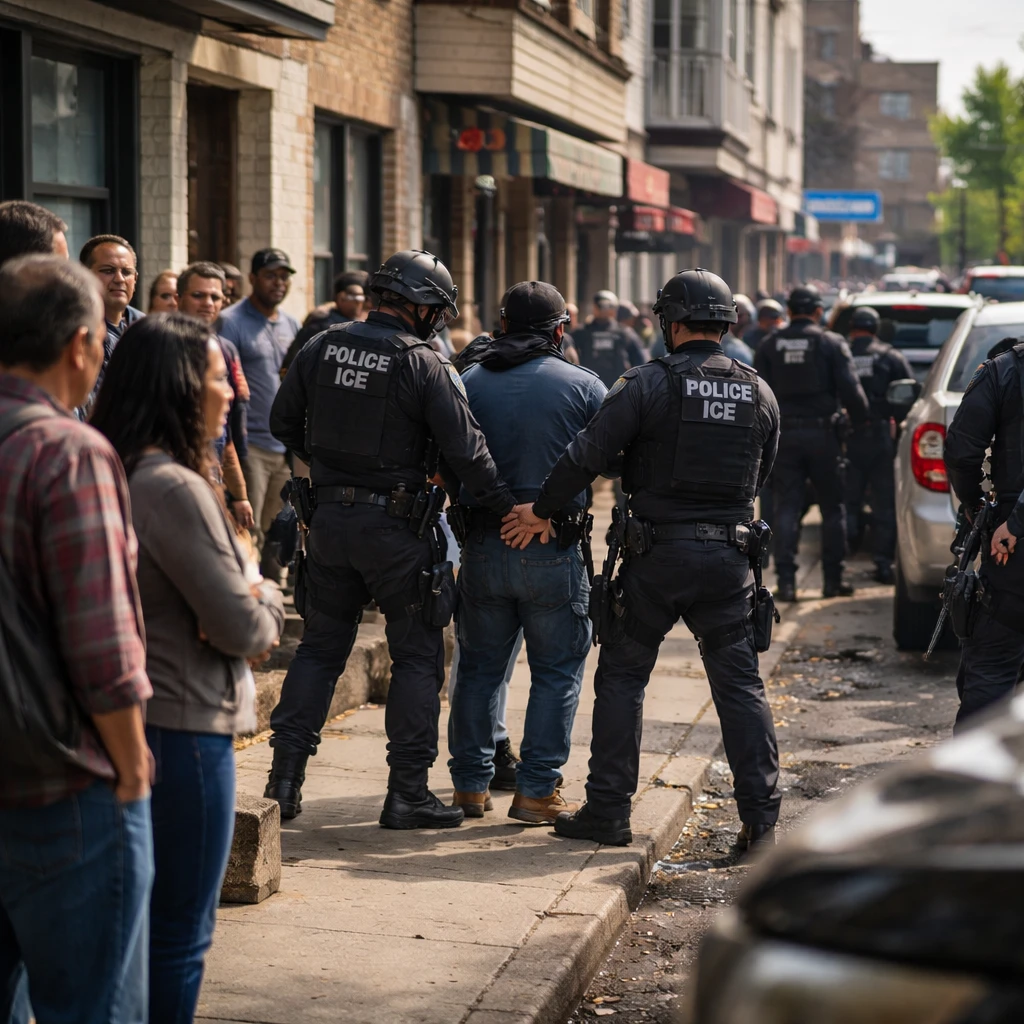
The United Nations High Commissioner for Human Rights, Volker Turk, has publicly urged the United States government to align its immigration enforcement practices with international human rights standards. Highlighting reports of arbitrary detentions and excessive force by federal immigration agents, Turk emphasized the necessity for due process and legal access for detainees. This plea comes amid escalated federal operations in Minneapolis following a fatal shooting and criticism of local responses to immigration policies.
Key Points
- The United Nations High Commissioner for Human Rights highlights concerns regarding arbitrary detentions and alleged excessive force in US immigration enforcement operations, particularly in Minneapolis.
- Due process rights and access to legal counsel for detainees are reportedly not consistently upheld, prompting calls for adherence to international law during immigration enforcement.
- The rise in deaths within US Immigration and Customs Enforcement custody and the social stigmatization of migrants contribute to an environment of increased risk for undocumented individuals and immigrant communities.
- These developments have implications for the legal and social services sectors involved in immigration law, as well as public health and community safety institutions operating in affected areas.
The United Nations High Commissioner for Human Rights, Volker Turk, issued a strong recommendation for the United States government to ensure that its immigration enforcement strategies conform to both individual rights and established international law. Speaking on January 23 in Geneva, Turk voiced alarm over actions taken during the recent immigration crackdown, where individuals suspected of undocumented status have been monitored and apprehended across various public and private settings, including healthcare facilities, places of worship, judicial venues, commercial areas, educational institutions, and even within private homes.
Turk's concerns arise in the context of heightened federal immigration operations in Minneapolis, where approximately 3,000 heavily armed and masked federal officers have been deployed. Their objective has been to detain individuals identified as significant criminal immigration violators; however, these operations have occasionally encompassed individuals not engaged in criminal behavior, including US citizens and lawful residents. The situation remains tense, exacerbated by the January 7 shooting by an immigration official that resulted in the death of Renee Good, a 37-year-old US citizen and mother of three.
Vice President JD Vance has publicly defended the increased immigration enforcement, attributing disorderly conditions in the city to disruptive activists and uncooperative municipal authorities. Nonetheless, Turk criticized enforcement agencies for employing force that appears to be excessive or disproportionate. Such measures, he asserted, should be reserved strictly for instances where individuals pose an immediate threat to life.
Emphasizing adherence to international legal standards, Turk underscored the necessity of upholding due process rights during migration enforcement procedures. He raised particular concerns about the lack of timely legal counsel afforded to some detainees, which compromises fundamental legal protections.
Turk also urged the initiation of an independent inquiry into a troubling increase in deaths within US Immigration and Customs Enforcement custody. For the year 2025, authorities recorded 30 fatalities, alongside six more incidents so far in the current year. This trend signals a critical issue in the treatment and safety of detainees.
Furthermore, Turk condemned the persistent negative portrayals of migrants and refugees in the United States, characterizing such depictions as routine and harmful. Presenting migrants as criminals or societal burdens, he noted, has intensified their vulnerability to xenophobic aggression and mistreatment, exacerbating their marginalization.
Risks
- Potential for continued use of disproportionate force by immigration authorities poses risks to civil liberties and public trust in law enforcement agencies, impacting social cohesion and stability.
- Ongoing legal and procedural deficiencies in immigration detention processes may lead to increased scrutiny and legal challenges, influencing immigration policy and resource allocation in the justice system.
- The social stigmatization and xenophobia faced by migrant populations could exacerbate community tensions and public health disparities, affecting broader societal wellbeing.