
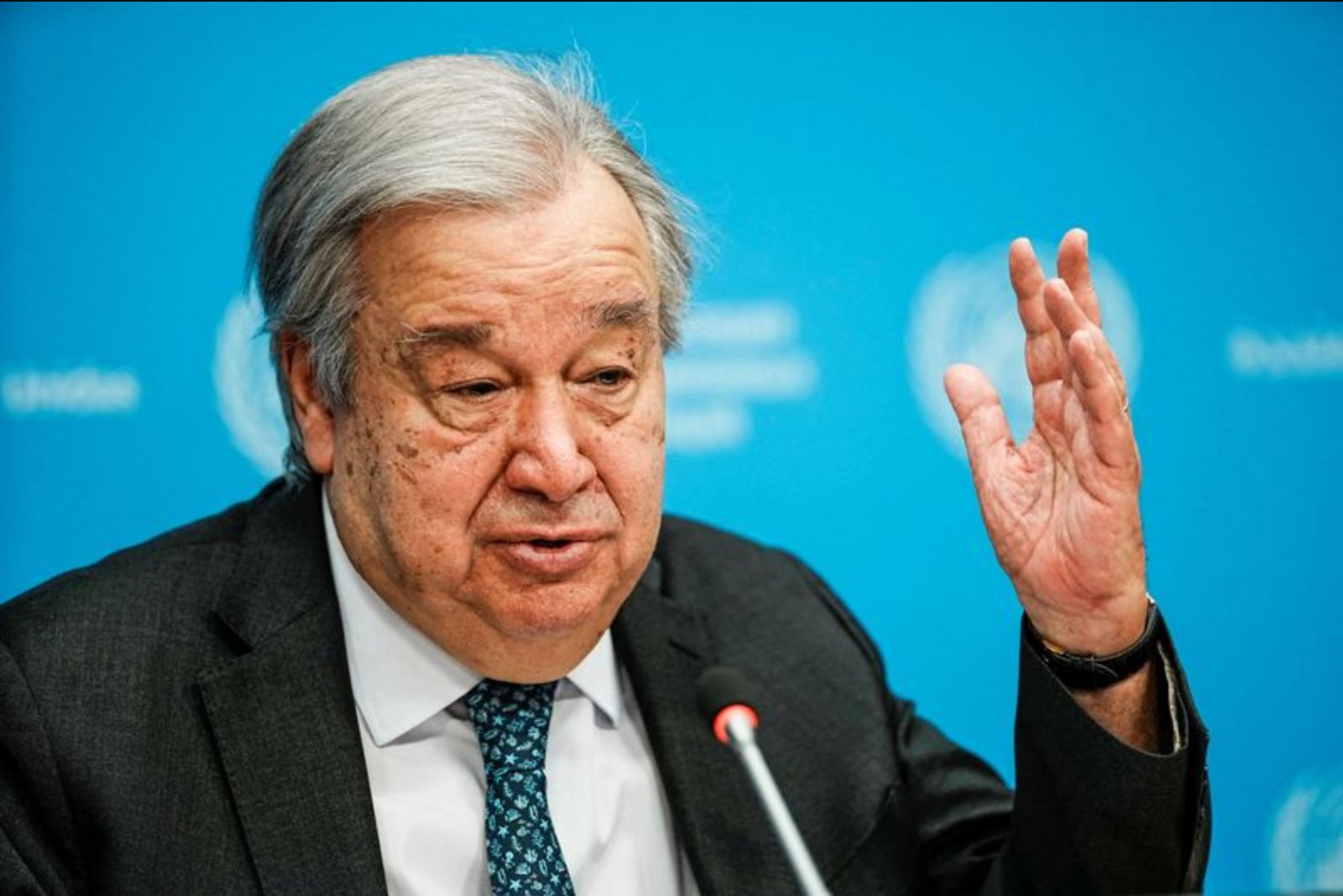
United Nations Secretary-General Antonio Guterres on Wednesday described the expiration of the New START Treaty as a grave turning point for international peace and security and pressed both the Russian Federation and the United States to begin negotiating a new arms control framework immediately.
New START, which expired at midnight on Wednesday, had placed caps on the number of strategic nuclear warheads the United States and Russia were permitted to deploy. The treaty also limited the deployment of land- and submarine-based missiles and bombers used to deliver those warheads.
Guterres emphasized the historical significance of the lapse in binding constraints. "For the first time in more than half a century, we face a world without any binding limits on the strategic nuclear arsenals of the Russian Federation and the United States of America - the two States that possess the overwhelming majority of the global stockpile of nuclear weapons," he said in a statement.
He warned that the unraveling of long-standing arms control arrangements comes at an especially precarious moment. "The dissolution of decades of achievement in arms control could not come at a worse time - the risk of a nuclear weapon being used is the highest in decades," Guterres said, underscoring the heightened peril he believes the world now confronts.
Alongside the warning, the secretary-general pointed to a potential opening to redesign arms control to match current realities. He referred to the possibility "to reset and create an arms control regime fit for a rapidly evolving context," framing the expiration as both a danger and an impetus for renewed diplomacy.
Guterres also noted an encouraging sign: the leaders of both the Russian Federation and the United States have expressed an appreciation of the need to avoid a return to unconstrained nuclear proliferation. Building on that, he called for concrete action. "The world now looks to the Russian Federation and the United States to translate words into action," he said.
He concluded with a direct appeal to both governments to resume talks and to agree on a successor arrangement. "I urge both states to return to the negotiating table without delay and to agree upon a successor framework that restores verifiable limits, reduces risks, and strengthens our common security," Guterres said.
Key points
- New START expired at midnight on Wednesday; it capped strategic nuclear warheads and limited delivery systems for the United States and Russia.
- UN Secretary-General Antonio Guterres called the treaty's expiration a "grave moment" and said it leaves the world without binding limits on the strategic arsenals of the two largest nuclear powers.
- The lapse raises concerns for sectors tied to national defence and international security; government defense planning and related markets may be affected as states reassess strategic postures.
Risks and uncertainties
- The end of binding limits increases the risk of nuclear weapons use, a danger Guterres described as the highest in decades - a direct threat to global security.
- The dissolution of decades of arms control achievements leaves uncertainty over verification mechanisms and confidence-building tools that have governed U.S.-Russia strategic stability.
- Without a successor framework, there is uncertainty about how defense and security sectors will adapt, and whether further steps will be taken to reduce escalation risks between the two states.