
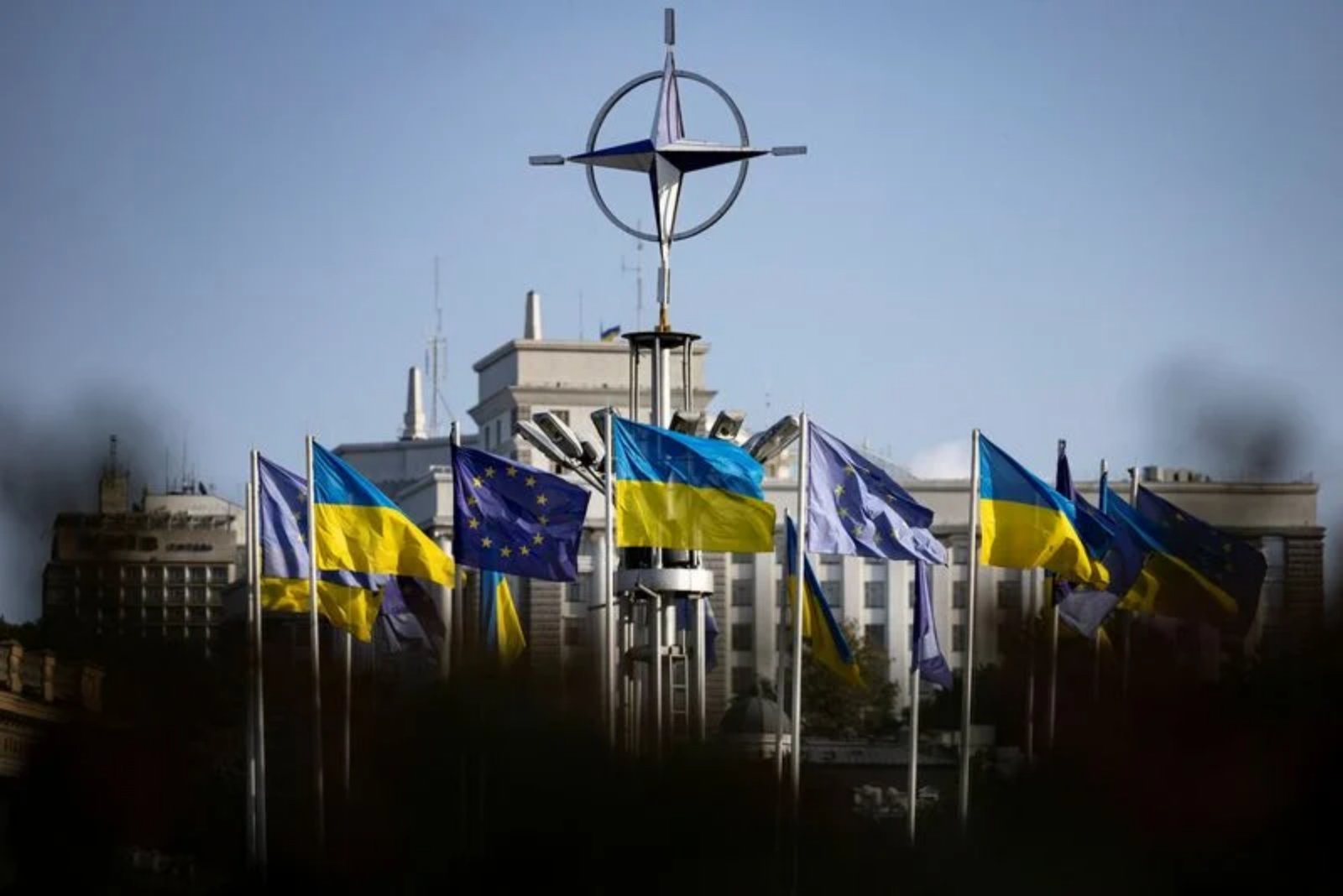
BRUSSELS, June 15 - Ukraine took a formal step toward European Union membership on Monday when negotiators opened the first phase of accession talks in Luxembourg. The negotiations begin with a group of policy issues the EU calls the "fundamentals" cluster, which addresses core democratic and judicial standards that Kyiv must bring into alignment with EU rules.
Ukrainian Deputy Prime Minister Taras Kachka described the opening as a pivotal moment. "For us, this is really a Rubicon, a milestone ... moment," he told reporters after the talks began. He added that Ukrainian society broadly sees EU accession as a collective aspiration: "All Ukrainian society believes that joining the European Union is our dream."
President Volodymyr Zelenskiy has made joining the EU a central foreign policy objective, presenting accession as a means to secure long-term prosperity and stability for Ukraine and to bolster the continent's security in the face of Russian aggression. The formal start of talks requires Kyiv to undertake reforms across multiple policy areas as part of a structured accession process.
The EU accession framework groups negotiations into "chapters" that are organized into six thematic clusters. These clusters include matters such as fundamental rights, the EU internal market, and external relations. The first cluster, opened on Monday under the heading "fundamentals", covers subjects including the judiciary, the functioning of democratic institutions, and public procurement.
EU Enlargement Commissioner Marta Kos underlined the dual nature of Ukraine's progress. "While Ukraine is gaining momentum on the battlefield, it is also building its path towards a prosperous and secure Ukraine inside the European Union," she said, and urged continued reform efforts. "It requires the entire society to come together and seize the momentum that Ukraine is building up," she added.
Although European governments broadly back Ukraine's reform path and its long-term ambition to join the EU, diplomats characterise the accession process as complex and protracted. Candidate countries must negotiate policy chapters and enact legal and institutional changes to conform with EU standards before accession can proceed.
EU leaders had agreed in December 2023 to open accession talks with both Ukraine and Moldova. However, negotiations could not begin immediately because of opposition from the previous Hungarian government to Kyiv's bid. A change in Budapest's government led to an agreement reached this month between Hungary and Ukraine on the rights of Hungary's minority in Ukraine. Following that agreement, EU ambassadors on Friday agreed that Ukraine and Moldova could commence talks on the first cluster of policy areas where legal reforms are required to meet EU norms.
The opening of the "fundamentals" cluster marks the beginning of a procedural process that will require sustained political and legal work within Ukraine. The negotiations are a formalisation of Kyiv's effort to anchor its institutions within EU frameworks while managing the security pressures posed by ongoing conflict.