
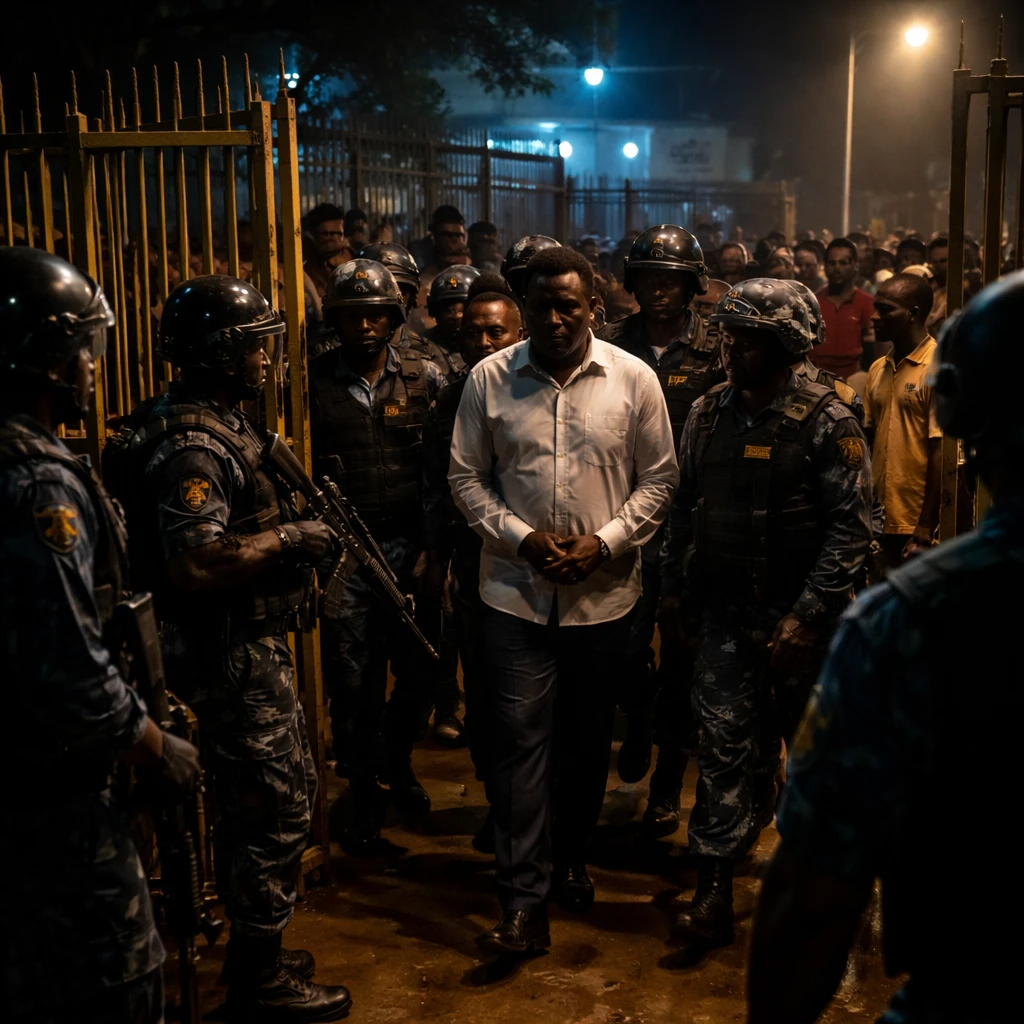
Ugandan law enforcement officials announced on Thursday that they have detained Muwanga Kivumbi, who serves as vice president of the opposition National Unity Platform party, in connection with violence linked to the recent presidential election. The incidents resulted in no fewer than seven fatalities, drawing international attention to the political climate in Uganda.
Kivumbi's party, led by popular musician-turned-politician Bobi Wine—whose legal name is Robert Kyagulanyi—has faced significant challenges since the January 15 elections. Wine himself has been in hiding following a military operation targeting his residence, which occurred just hours before the official announcement of incumbent President Yoweri Museveni's election victory by a substantial margin.
According to the police statement, Kivumbi's arrest is related to "recent incidents of political violence," and he is expected to be brought before a court shortly. The authorities maintain that opposition supporters, described as machete-armed "goons" associated with Kivumbi, attacked a police station and a vote count center, contributing to a series of confrontations after the presidential elections.
Contrasting accounts from Kivumbi himself indicate a different version of events. He has asserted that fatalities occurred within his home, where supporters had gathered awaiting the announcement of parliamentary election results affecting his seat. Kivumbi characterized the violence as a "massacre," alleging that as many as ten individuals lost their lives in that location.
David Rubongoya, the National Unity Platform's Secretary General, indicated he is currently assimilating information about Kivumbi's detention and will provide comments in due course. The party contends that a pattern of repression is underway, citing numerous detentions of NUP supporters and officials both before and following the elections. Reports from the opposition include allegations of torture inflicted upon detainees.
In a prior interview, Bobi Wine described the security environment in Uganda as unsafe for all citizens. While emphasizing the party's commitment to nonviolence, he expressed the belief that moral resistance and exposing abuses of power might stem the violence and political oppression. Wine also appealed to the African Union to address what he described as systemic electoral fraud, including accusations of ballot stuffing and kidnappings of opposition agents and supporters.
President Museveni's victory in the recent election extends his tenure toward a 45-year rule concluding in 2031, marking him as Africa's third longest-serving head of state. There is widespread speculation about his plans to eventually transfer authority to his son, Muhoozi Kainerugaba, who currently commands the military forces.