
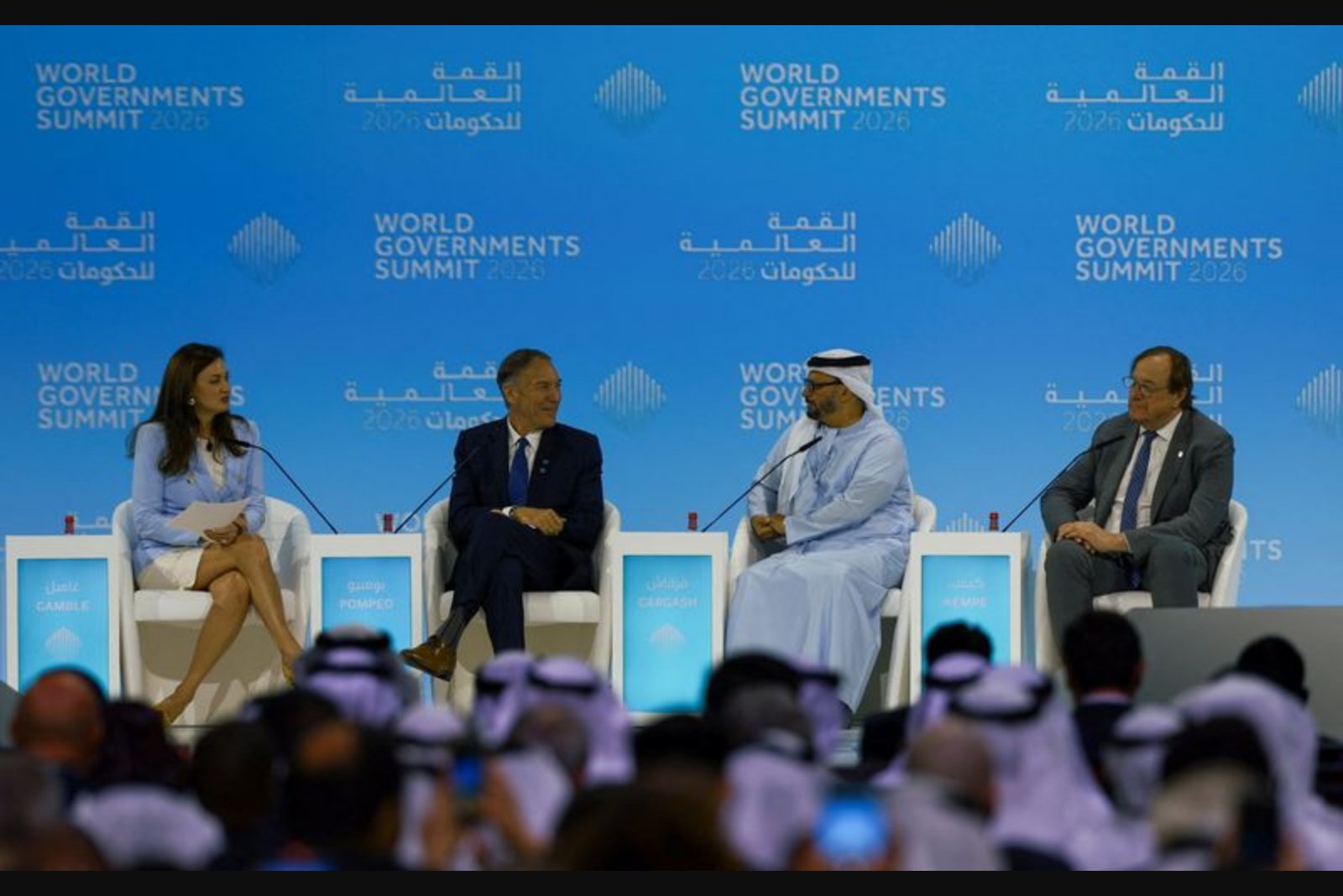
DUBAI - The Middle East does not need another confrontation between the United States and Iran, and Tehran must reach a nuclear accord with Washington, the diplomatic adviser to the United Arab Emirates president said at the World Governments Summit in Dubai.
Iran and the United States will resume nuclear talks on Friday in Turkey, Iranian and U.S. officials told Reuters on Monday. The diplomatic adviser, Anwar Gargash, said he hoped direct Iranian-American negotiations would produce understandings to prevent recurring crises.
"I think that the region has gone through various calamitous confrontations. I don’t think we need another one, but I would like to see direct Iranian-American negotiations leading to understandings so that we don’t have these issues every other day," Gargash said.
U.S. President Donald Trump warned that, with large U.S. warships moving toward Iran, "bad things" would probably happen if a deal could not be reached. Washington has signaled increased naval presence in the Gulf following violent domestic unrest inside Iran last month - unrest described in the article as the deadliest such unrest in Iran since its 1979 revolution.
U.S. Special Envoy Steve Witkoff and Iranian Foreign Minister Abbas Araqchi are due to meet in Istanbul in an attempt to revive diplomacy on the long-running dispute over Iran's nuclear program and to calm fears of a wider regional war. A regional diplomat said delegates from countries such as Saudi Arabia and Egypt would also take part.
The U.S. naval buildup near Iran followed a violent crackdown on anti-government demonstrations last month. President Trump, who stopped short of intervening during that crackdown, has since demanded that Tehran make nuclear concessions and dispatched a flotilla to Iran's coast. Trump said last week that Iran was "seriously talking," while Tehran's top security official Ali Larijani said arrangements for negotiations were under way.
The United Arab Emirates, a regional trade and business hub and an influential Gulf Arab power, said a long-term solution to the dispute was necessary. Gargash insisted the region does not need another U.S.-Iran confrontation and emphasized dialogue between Tehran and Washington as the preferred path forward.
The UAE has been in the spotlight since December, when tensions with Saudi Arabia rose over developments in Yemen. The withdrawal of Emirati forces from Yemen following a Saudi airstrike did not defuse tensions between the two Gulf oil powers, which have long-standing differences.
Since December the UAE has faced intense criticism on social media related to its support for separatists in Yemen and alleged backing for a paramilitary group accused of committing atrocities in the war against Sudan's military. Gargash dismissed that online criticism as noise that should be separated from reality.
"I was reading a message that said we were getting 45,000 hate tweets every day on the Sudan issue and on our position in Sudan. And suddenly Yemen was an issue, and suddenly the Sudan bots were reduced from 45,000 to 3,000 a day, so the whole group moved on to another fight," he said.
Context and near-term developments
The scheduled resumption of nuclear diplomacy in Turkey is framed as an immediate step intended to reduce tensions. U.S. naval movements in the region and the history of recent domestic unrest in Iran form part of the current backdrop that participants in the talks will face.
UAE stance
The UAE is publicly advocating a negotiated, long-term resolution to the nuclear dispute between Tehran and Washington and is urging direct dialogue rather than escalation. At the same time, the country remains sensitive to reputational pressures stemming from regional military and political involvements.