
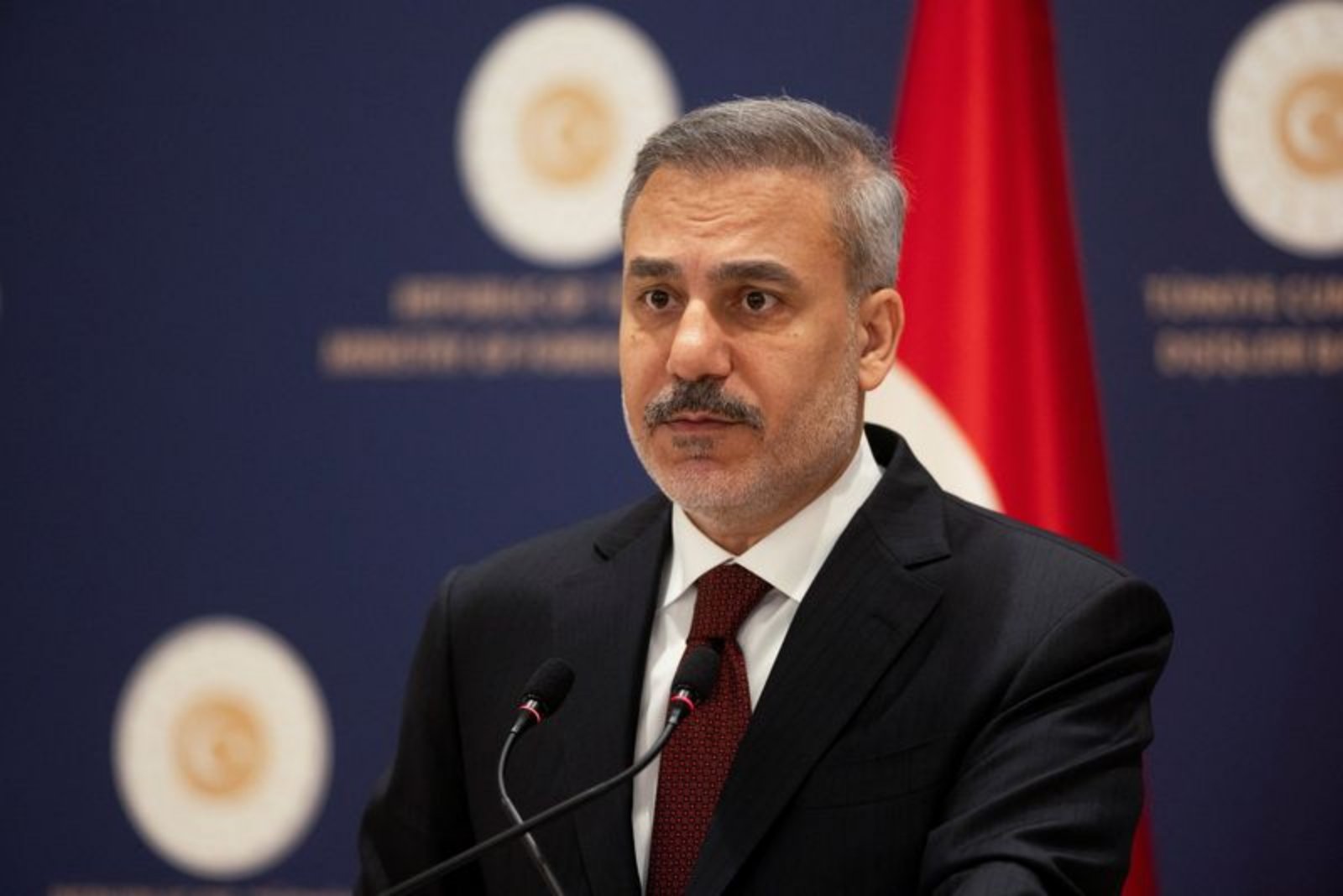
Turkey’s foreign minister on Wednesday called on the United States to resolve its differences with Iran one issue at a time rather than attempt an all-encompassing deal, saying a phased approach would reduce the risk of humiliating Iranian officials and could make negotiations more palatable.
Speaking in an interview with Al Jazeera, Foreign Minister Hakan Fidan reiterated Ankara’s opposition to any foreign military intervention against Iran and framed a step-by-step settlement as the best route forward. "My advice always to the American friends: close the files one by one with Iranians. Start with nuclear, close it, then the other, then the other," Fidan said.
Fidan warned that presenting a broad package of demands at once would be difficult for Iranian leaders to accept. "If you put them as a package all of them, it will be very difficult for our Iranian friends to digest," he said. "It sometimes might seem humiliating for them. It will be very difficult to explain to not only themselves, but also to the leadership."
Turkey also reported that Tehran was ready to hold talks on its nuclear programme. The country has maintained that its nuclear work is for peaceful purposes, but diplomatic efforts have seen little progress. "Talks on Tehran’s nuclear programme - which it says is for peaceful purposes - have made little progress," Fidan noted in the same interview.
The comments come against a backdrop of heightened rhetoric and regional tension. U.S. President Donald Trump said last week that Washington had an "armada" heading toward Iran but hoped he would not have to use it, while renewing warnings to Tehran against killing protesters or restarting its nuclear programme.
Iran recently experienced a severe crackdown on anti-government protests earlier this month, with authorities reporting thousands of deaths and arrests. Iranian officials attributed the unrest to "armed terrorists and rioters" they said were linked to Iran’s adversaries, the United States and Israel. Rights groups have described the demonstrations as the largest since the 1979 revolution.
In another significant development cited by Ankara, the United States struck Iran’s nuclear facilities in June amid intensified regional tensions involving Israel and the war in Gaza. That action and the broader strategic environment have contributed to the sluggish pace of nuclear discussions.
Turkey, a NATO member that borders Iran, has said it has engaged with officials in both Washington and Tehran. Ankara has stressed that Iran should be permitted to manage its domestic issues independently and warned that any further destabilisation in Iran would exceed the region’s capacity to manage at this time. Fidan has also asserted that Israel was still considering strikes against Iran.
Summary: Turkey recommends the U.S. pursue sequential negotiations with Iran to avoid humiliating Tehran, reports that Iran is prepared for nuclear talks, and warns against foreign military intervention as regional tensions remain elevated following protests and previous strikes on nuclear sites.