
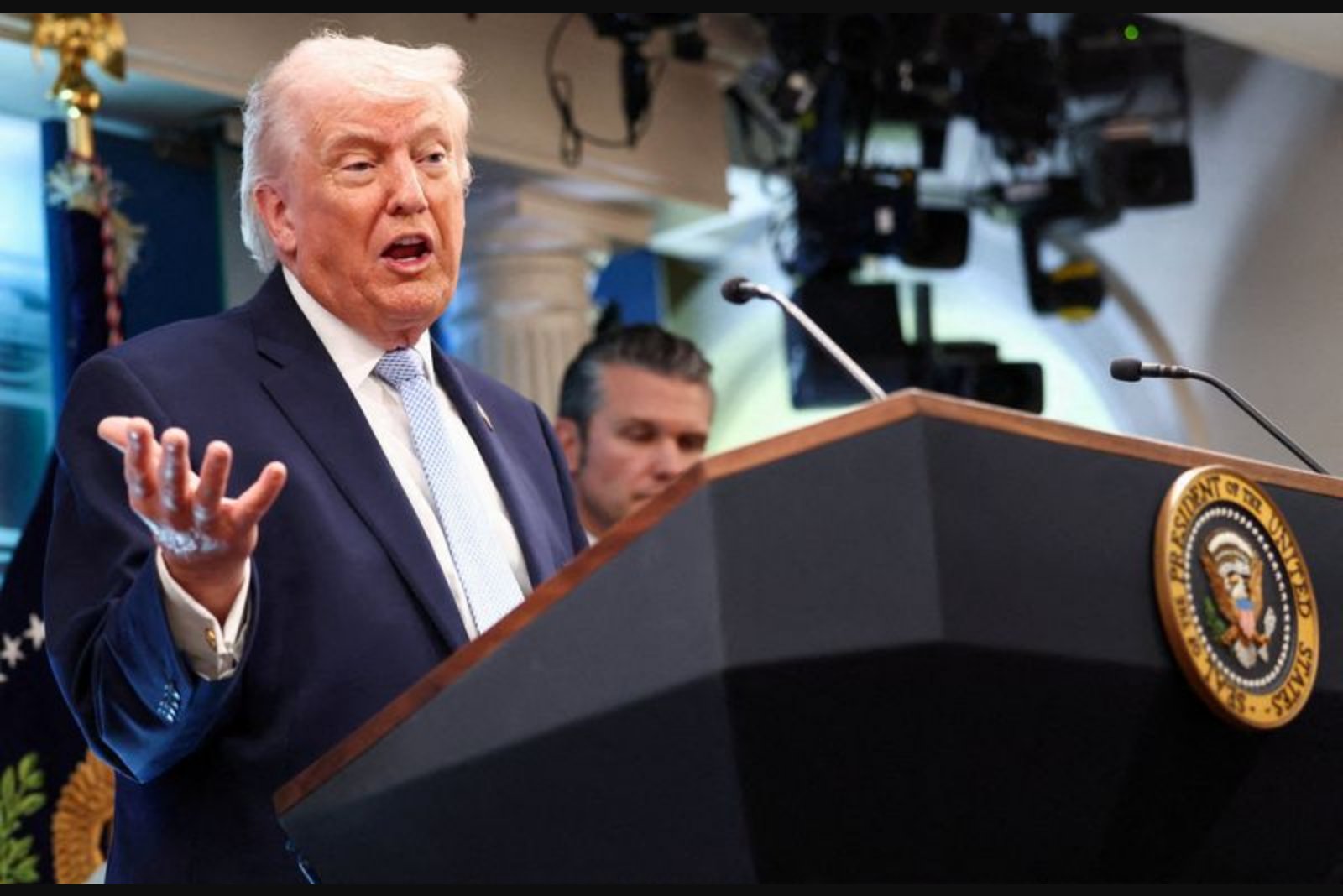
President Donald Trump on Thursday addressed reports that Iran is charging fees to tankers passing through the Strait of Hormuz, urging Tehran to halt any such practice.
Writing on Truth Social, Trump said: "There are reports that Iran is charging fees to tankers going through the Hormuz Strait. They better not be and, if they are, they better stop now." In a separate post, he added without further elaboration, "you'll see Oil start flowing, with or without the help of Iran."
Media accounts have suggested Iran may seek to impose a toll on ships transiting the strait. Western leaders have reportedly opposed the notion of paying such charges.
According to the Financial Times, Iran intends to demand toll payments in cryptocurrency to retain control over the Strait of Hormuz during a two-week ceasefire with the United States. The FT attributed that claim to Hamid Hosseini, a spokesperson for Iran's Oil, Gas and Petrochemical Products Exporters' Union, who was quoted on Wednesday.
The comments and reports come amid a broader conflict that has disrupted regional and global energy flows. The U.S. and Israel attacked Iran on February 28, and Iran responded with strikes on Israel and Gulf states that host U.S. bases. The hostilities have driven up oil prices and unsettled global markets.
U.S.-Israeli strikes on Iran and Israeli attacks on Lebanon have, according to reports, resulted in thousands of deaths and the displacement of millions. In the midst of these developments, Trump announced a ceasefire with Iran on Tuesday after previously threatening to "destroy Iran's entire civilization."
Ship movements through the Strait of Hormuz have been severely reduced. On Thursday, traffic was reported to be well below 10% of normal volumes despite the fragile ceasefire, as Tehran asserted control by warning ships to remain within its territorial waters while transiting the channel.
The Strait of Hormuz serves as a critical chokepoint, handling about 20% of global oil and liquefied natural gas shipments. The near-halt in traffic caused by the conflict represents one of the most significant disruptions to global energy supplies in recent memory.
Context and implications
- The reports of potential tolls, and of demands for cryptocurrency payments, reflect Tehran's asserted control over maritime traffic during the ceasefire period.
- Reduced traffic through the strait has immediate implications for energy markets and shipping operations given the corridor's role in global oil and LNG flows.
- Statements from Western leaders pushing back on paying fees indicate international resistance to normalizing any levy on passage through this strategic waterway.