
At the annual gathering of world leaders and top executives in Davos, Switzerland, President Donald Trump announced on January 21 that the United States will lower the tariff rate imposed on Swiss imports from 39% to 15%. This decision follows lobbying efforts by Swiss companies, including renowned watchmaker Rolex, which faced substantial costs due to the higher tariffs. Despite the reduction, Trump emphasized that this lower tariff level might not be permanent and could increase again in the future.
During his address, Trump defended the broader strategy of imposing elevated tariffs on imports from multiple countries, stating that many countries, Switzerland included, had exploited previously low or zero tariff rates to their advantage. He recalled that his original proposal was to set the Swiss import tariff at 30%; however, he increased it to 39% following a meeting with then-Swiss President Karin Keller-Sutter. According to Trump, Keller-Sutter's approach during their interaction did not sit well with him, stating she "just rubbed me the wrong way."
Trump recounted that Keller-Sutter repeatedly highlighted Switzerland's small size, urging reconsideration of the high tariff level, but he stood firm. Details regarding any potential upward revision of the tariffs in the future were not disclosed during the speech. Keller-Sutter faced criticism at home for her handling of these discussions, and Trump later publicly expressed frustration that she "didn’t want to listen" to his concerns about the U.S. trade deficit.
In November, bilateral discussions led to a preliminary agreement to bring tariffs down to 15%, conditional upon Swiss industry committing to invest $200 billion in the U.S. by the end of 2028. Swiss companies have welcomed the reduction, which aligns their tariff treatment with that of European Union competitors. Negotiators from both countries continue to work toward concluding a final deal, targeting completion by the first quarter of 2026.
This development is significant for sectors involved in trade and manufacturing, especially industries reliant on Swiss imports, such as luxury goods and precision instruments. The tariff changes may influence pricing strategies, supply chain decisions, and investment flows between the two countries.
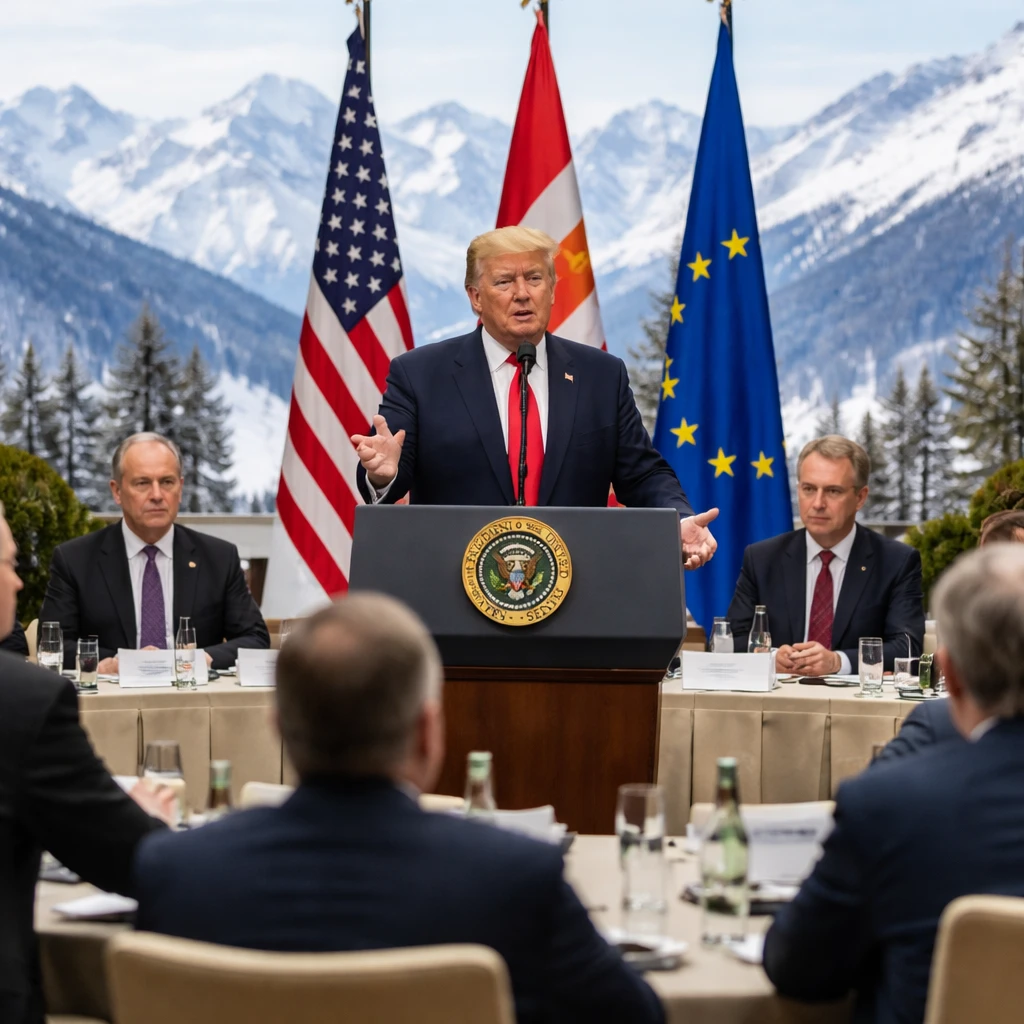
During the World Economic Forum in Davos, President Donald Trump revealed that the United States has agreed to reduce tariffs on imports from Switzerland from 39% to 15% following pressure from Swiss businesses such as Rolex. However, he cautioned that the lower rate is not permanent and could be raised again. This tariff adjustment comes as part of ongoing negotiations that include Swiss commitments to significant investment in the U.S. economy.
Key Points
- The United States agreed to reduce tariffs on Swiss imports from 39% to 15% following pressure primarily from Swiss businesses including Rolex.
- President Trump defended the higher tariff strategy broadly, citing that many countries benefit from low or nonexistent tariffs, with the Swiss tariff initially intended at 30% but raised to 39% after an unsatisfactory meeting with Swiss President Karin Keller-Sutter.
- A preliminary deal includes Swiss industry pledging $200 billion in investments into the U.S. by 2028, with final negotiations ongoing, aiming to conclude by early 2026.
Risks
- Although the tariff rate has been lowered, it could rise again in the future without specific details on the timeline or conditions, creating uncertainty for Swiss exporters and U.S. importers, notably in the luxury goods sector.
- The previous diplomatic tensions between U.S. and Swiss leaders, highlighted by comments on the Swiss President's approach, may complicate negotiations and delay the finalization of agreements impacting trade and investment.
- Swiss companies face an uncertain regulatory and pricing environment until the agreement is finalized, potentially affecting their competitiveness compared to EU counterparts.