
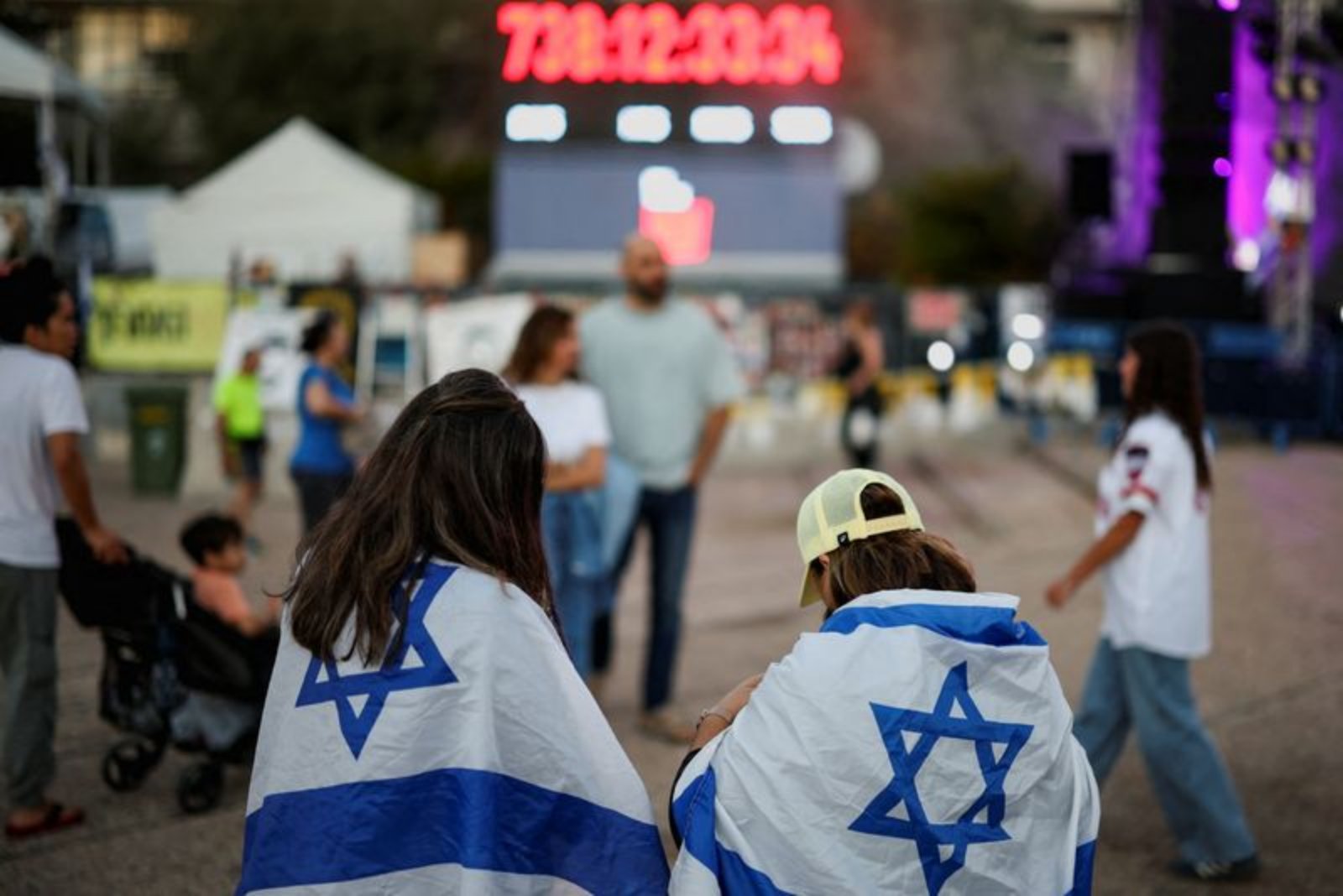
A prominent clock in a central Tel Aviv square that has counted the days since hostages were seized during the October 2023 Hamas attack will be switched off on Tuesday, 844 days after it began tracking their captivity. The decision follows an announcement by the Israeli military on Monday that the body of the last remaining hostage had been located in Gaza.
Israeli officials identified the deceased as 24-year-old Ran Gvili, an off-duty police officer who had been recovering from an injury and was killed while fighting militants who had infiltrated Israel during the 2023 attack. Gvili’s death closes a chapter that had kept thousands of Israelis gathering regularly in the square known to many as Hostages Square, where weekly rallies called for the return of those taken on October 7.
Speaking to reporters after her son’s body was recovered, Gvili’s mother, Talik, thanked those who had supported the family over the 27 months since the attack.
she said late on Monday."We have a closure. Rani returned home an Israeli hero, really, an Israeli hero and we’re the most proud of him in the world,"
The return of the last captive has been framed in Israel as a potential moment of national healing. The Hamas attack, the bloodiest killing of Jews since the Holocaust, was widely seen as the most traumatic event in the country’s history. The recovery of the final hostage also fulfills a central element of the first stage of the U.S.-backed plan to end the war, a plan that Washington says is now moving into a second phase.
The second phase, which U.S. officials said had begun earlier this month, includes provisions such as the reopening of Gaza’s Rafah border crossing with Egypt. For Palestinians in Gaza with medical needs, reopening the border is a practical and urgent matter. Nour Daher, a 31-year-old Palestinian from Gaza waiting for treatment for a heart defect, said he had registered with the World Health Organization and was awaiting placement on a list for evacuation.
he said."I have the medical referral papers. I registered with the WHO (World Health Organization). Now I’m waiting for my name to appear on their lists,"
Daher added, describing near-daily bouts of severe palpitations."I am hopeful my problem will finally end,"
In Tel Aviv, family members and former hostages plan to gather at Hostages Square for a public ceremony as the clock is turned off. Ran Gvili’s sister, Shira, is among those scheduled to participate, according to the Hostages and Families Forum, an organization that mobilized public support for the captives and their relatives following the October 7 abductions.
Israeli officials said Gvili was shot while defending Kibbutz Alumim, a community in Israel’s south near the Gaza border. He was taken into Gaza by militants from Islamic Jihad, a Palestinian group that joined the assault alongside Hamas, Israeli statements said.
Handing over all remaining living and deceased captives was a core pledge of the first phase of the ceasefire and prisoner exchange arrangements, though other commitments from that initial phase have not been completed. The precise implementation of the next stage - which the U.S.-backed plan says should include the reconstruction of Gaza and its demilitarization - remains unclear.
On the ground, the Israeli military continues to hold control over 53% of Gaza, while Hamas retains control over the remainder. Since the ceasefire tied to the U.S. plan took effect in October, four Israeli soldiers and over 480 Palestinians have been killed in Gaza, according to counts cited by officials. Both Israel and Hamas have accused the other of violating the truce repeatedly.
Tensions on Tuesday underscored the fragility of the ceasefire. Al Ahli Hospital in Gaza reported that Israeli forces had killed four Palestinians in the northern Gaza Strip on Tuesday. An Israeli military spokesperson, however, said they were not aware of any incidents in northern Gaza on that day.
As the clock in Tel Aviv is extinguished, families and communities will confront both personal grief and unresolved questions about how the broader political and reconstruction steps ahead will be carried out. The ceremony in Hostages Square will mark an emotional milestone for many, even as the practical and political work of the next phase of the U.S.-backed plan remains unsettled.
Context and next steps
The shutdown of the clock closes a visible symbol of captivity that had become a focal point for public grief and protest. But major elements of the negotiated plan for Gaza - including how reconstruction and demilitarization will be realized and how crossings like Rafah will operate - have yet to be implemented in full. That uncertainty shapes the prospects for humanitarian access, reconstruction contracts and the security environment in the months ahead.