
Taipei – On January 23, Taiwan's Vice President Lai Ching-te extended an invitation to Ukraine for direct talks to address the issue of sanctions circumvention, particularly regarding missile components. This move came shortly after Ukrainian President Volodymyr Zelenskiy publicly implicated Taiwan as one of the sources supplying critical parts for missiles used in the ongoing conflict with Russia. Zelenskiy’s remarks, delivered at a Davos forum and subsequently shared on his official website, specified that Russia's missile production depends heavily on key components procured from several regions including China, Europe, the United States, and Taiwan.
In response, Lai communicated via his English-language post on the social media platform X that Taiwan has been actively collaborating with international partners to provide robust support to Ukraine, highlighted through humanitarian aid efforts and sanctions coordination. He emphasized a willingness to expand these cooperative measures to effectively clamp down on illegal third-party shipments and the concealment of final military uses for exported goods. A photo featuring orchids colored in blue and yellow – representing the Ukrainian flag – accompanied his statement.
Lai also acknowledged the sacrifices made by Taiwanese volunteer fighters who have lost their lives defending Ukraine, reflecting the island’s broader commitment to freedom and opposition to aggression. He reaffirmed Taiwan's firm stance that any support extended to aggressor nations or violations of international embargoes and export control regulations are unacceptable. The Vice President concluded by expressing hope for a swift restoration of peace in Ukraine.
Efforts by Taiwan to prevent technology transfers supporting military conflicts have been ongoing, with the island updating export controls repeatedly since the outbreak of hostilities in 2022. Taiwan’s semiconductor industry, a global leader, has been central to these export regulations aimed at barring military applications. Additionally, Taiwan complies with the Wassenaar Arrangement that seeks to control conventional arms and dual-use goods exports, though Taiwan itself is not a formal signatory to the agreement.
While interaction between Taiwan and Ukraine has hitherto included unofficial talks with Ukrainian municipal leaders and coordination through Taiwanese diplomatic missions in Europe, the two governments lack formal diplomatic representation within each other's territories. Humanitarian aid from Taiwan has mainly been managed via these European diplomatic channels rather than direct bilateral contact.
Attempts to reach the Ukrainian presidential office for comment outside official working hours were unsuccessful. Nevertheless, the ongoing dialogue signals a developing willingness from Taiwan to deepen cooperation with Ukraine concerning sanctions enforcement and export controls in the context of the complex geopolitical situation caused by the Russia-Ukraine conflict.
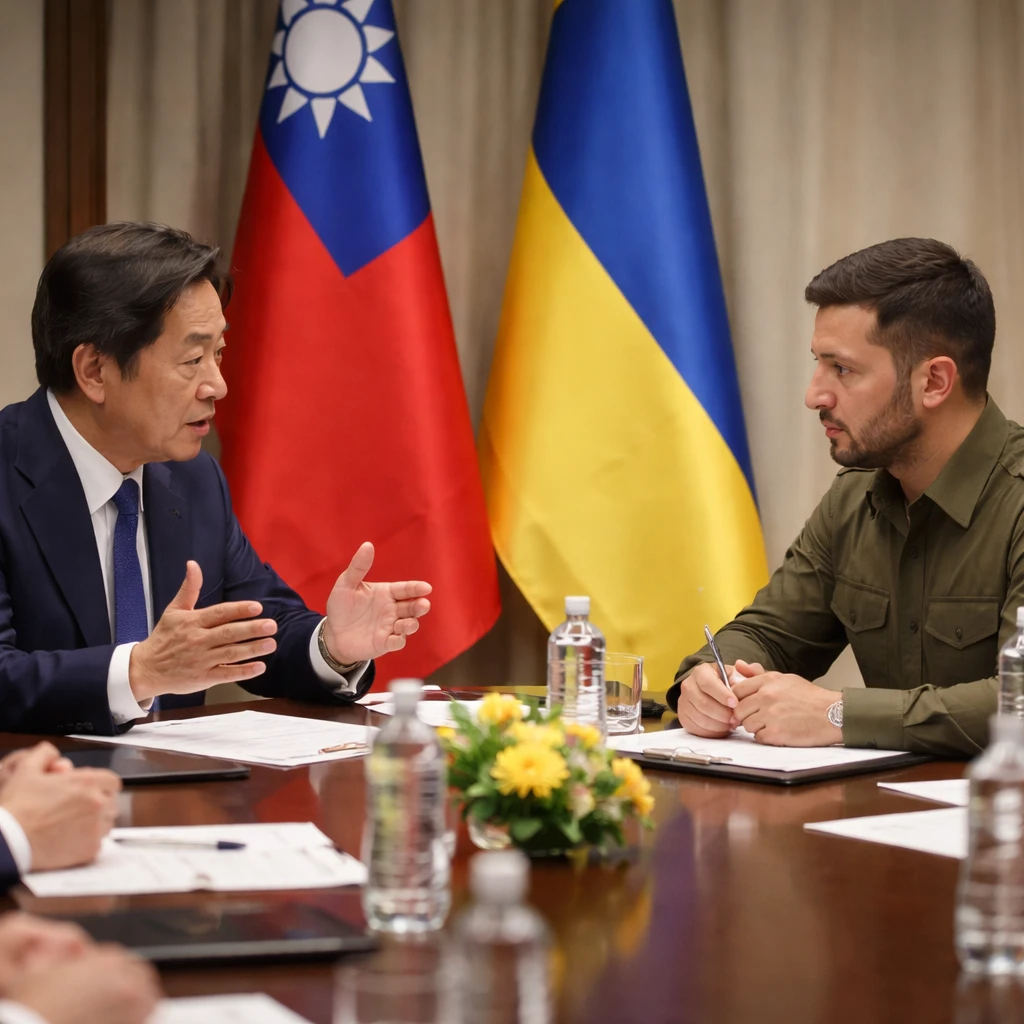
Taiwan’s Vice President Lai Ching-te has offered to engage in discussions with Ukraine aimed at enhancing efforts to prevent sanctions evasion, following Ukrainian President Volodymyr Zelenskiy’s public reference to Taiwan as a source of prohibited missile parts. Since the start of Russia’s invasion of Ukraine, Taiwan has progressively tightened its export restrictions on advanced technologies used for military applications and has aligned with Western-led sanctions against Russia. The call for cooperation underscores Taiwan’s commitment to supporting Ukraine through humanitarian aid and coordinated sanction enforcement.
Key Points
- Taiwan’s Vice President offered direct talks with Ukraine aimed at halting illegal transshipment and sanctions evasion related to missile components.
- Taiwan has progressively tightened export controls on advanced technologies with potential military uses since Russia’s invasion of Ukraine in 2022.
- Despite no formal diplomatic ties, Taiwan supports Ukraine through humanitarian aid coordinated by its diplomatic offices in Europe and emphasizes international cooperation against violations of embargoes.
Risks
- The possibility of continued illicit transfers of sensitive technology to conflict zones poses risks to global security and challenges export control enforcement, impacting the semiconductor and technology sectors.
- Taiwan’s lack of formal diplomatic relations with Ukraine could limit the effectiveness and timeliness of cooperation on sanctions enforcement, affecting diplomatic and defense sectors.
- Ongoing geopolitical tensions surrounding the Russia-Ukraine conflict could lead to complications in international trade regulations and sanctions compliance, influencing global supply chains and defense industries.