
Overview
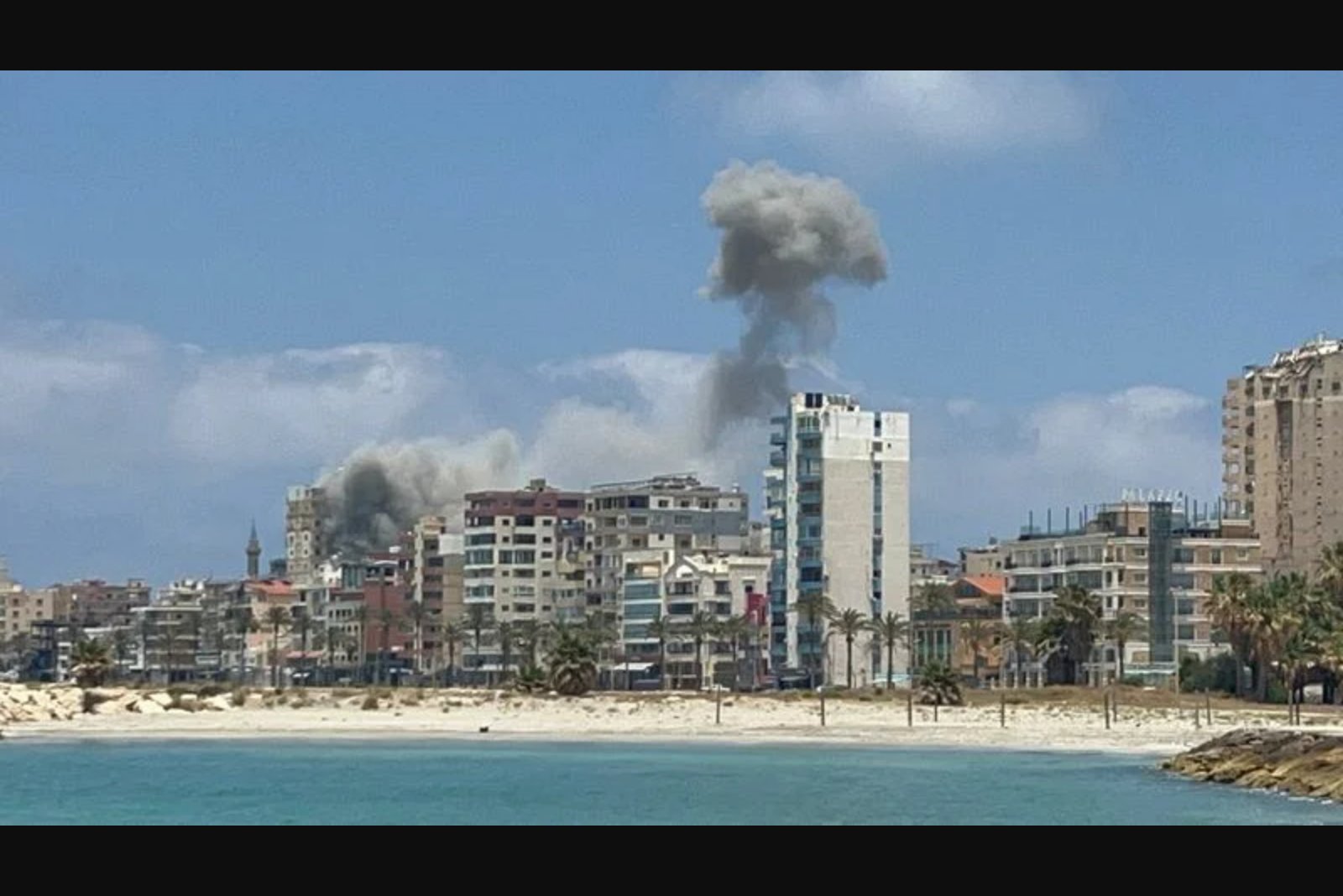
Israeli strikes on the historic southern Lebanese port city of Tyre on Tuesday resulted in the deaths of at least eight people, the Lebanese health ministry reported. The raids came after Israeli authorities issued an evacuation order for the entire city. Footage circulated online showing heavy damage along a road on Tyre's eastern edge, and state media in Lebanon reported that rescue teams were continuing to search for survivors in the aftermath.
Context of the Lebanon campaign
The operations in Tyre are the deadliest to hit the city since fighting broke out in Lebanon on March 2. The wider campaign between Israel and the Hezbollah militia has persisted through a series of exchanges that began when Hezbollah launched rockets at Israel in apparent support of its sponsor. That escalation followed strikes by Israel and the United States against Iran two days earlier.
Israeli authorities have said they are pursuing Hezbollah fighters, and last week the Israeli military reported that Hezbollah elements were operating in and around Tyre. Lebanese state media described residents leaving the city after an online evacuation order was issued on Tuesday morning. Civil defence teams, the reports said, were moving elderly inhabitants into temporary shelters.
Evacuation orders issued by Israel across southern Lebanon - much of which its forces occupy - have contributed to the displacement of large numbers of people. Those orders have effectively emptied about a fifth of the country, reaching communities well beyond the immediate front lines.
Diplomatic and military pause
On Monday, Israel and Iran paused direct attacks on each other after an appeal by the U.S. president for both sides to stop. Tehran has warned that it would resume hostilities if Israel continues to target Hezbollah in Lebanon. Iran has also said that any broader settlement with the United States would depend in part on an end to the fighting in Lebanon.
Israeli leaders have argued that their campaign in Lebanon should be treated separately from a U.S.-Iran ceasefire and have so far continued operations. Hezbollah likewise has maintained attacks during the same period. The fighting in Lebanon, the statements and the continued activity on both sides have complicated diplomatic efforts to translate a narrow truce in the Gulf into a more durable arrangement across the wider conflict.
U.S. helicopter crew recovered from Strait of Hormuz
Separately, in the Strait of Hormuz - under Iranian control - a U.S. military operation recovered two crew members from an Apache helicopter that went down. U.S. Central Command said a U.S. Navy surface drone located and recovered the two pilots from the waters of the strait within roughly two hours of the incident. Centcom described the pair as in stable condition.
The U.S. president said the two crew members were "fine" and that there were no injuries, speaking on the runway at New York's John F. Kennedy International Airport before returning to Washington, D.C. It remains unclear whether the Apache was brought down by Iranian fire, suffered a mechanical malfunction, or experienced some other problem. The president said a report on the cause would be issued later.
Casualties and responses in Iran and Israel
In Tehran, Iran's military announced that two air defence personnel killed in Israeli strikes the day before were due to be buried on Tuesday afternoon. Iranian authorities attributed those deaths to Israeli action. Iranian strikes did not, according to the reporting, produce any fatalities inside Israel.
Market and logistical effects
The exchange of fire between Israel and Iran had earlier pushed oil prices higher, but most of those gains were relinquished on Tuesday after attacks were paused. Iran continues to block most shipping through the Strait of Hormuz, a route that before the war carried about a fifth of the world's crude oil and liquefied natural gas. The United States has imposed its own blockade on Iranian ports in response.
Diplomacy and demands
The U.S. president said he might have "an idea" for a deal with Iran within a few days, without elaborating. He has frequently suggested that a deal could be imminent, but none has materialized to date. U.S. and Israeli officials said the president and the Israeli prime minister spoke on Monday. In a separate interview, the president said he had warned the Israeli leader that he should be cautious about returning to war with Iran, quoting himself as telling the Israeli leader, "I said, 'Bibi, you better be careful, or you will be on your own very soon.'"
Iran's stated demands for any deal include lifting international sanctions, releasing billions of dollars in frozen assets, and recognition of Iranian control of the strait. The U.S. has insisted that any arrangement must prevent Iran from developing a nuclear weapon.
Persistent uncertainties
Multiple elements of the situation remain unresolved. Israel has maintained an ongoing campaign in Lebanon, which, according to the reporting, has resulted in thousands of deaths since it began in March. Hezbollah has continued to mount attacks as well. Meanwhile, Iran's measures affecting shipping and the U.S. blockade of Iranian ports have sustained pressures on maritime trade routes that were previously responsible for a substantial share of global oil and LNG movements.
The combination of military operations, evacuation orders and continued interdiction of shipping underscores the fragile and volatile nature of the regional security environment. Rescue operations, battlefield reports and diplomatic statements are still unfolding, and officials have signalled that further developments could follow.
Key facts at a glance
- At least eight people killed in strikes on Tyre, southern Lebanon, after a full-city evacuation order.
- Two U.S. Apache crew recovered by a U.S. Navy surface drone in the Strait of Hormuz; the cause of the helicopter's loss is undetermined.
- Iran and Israel paused direct strikes after a U.S. appeal, but Tehran warned it could resume if Israel continued to target Hezbollah.