
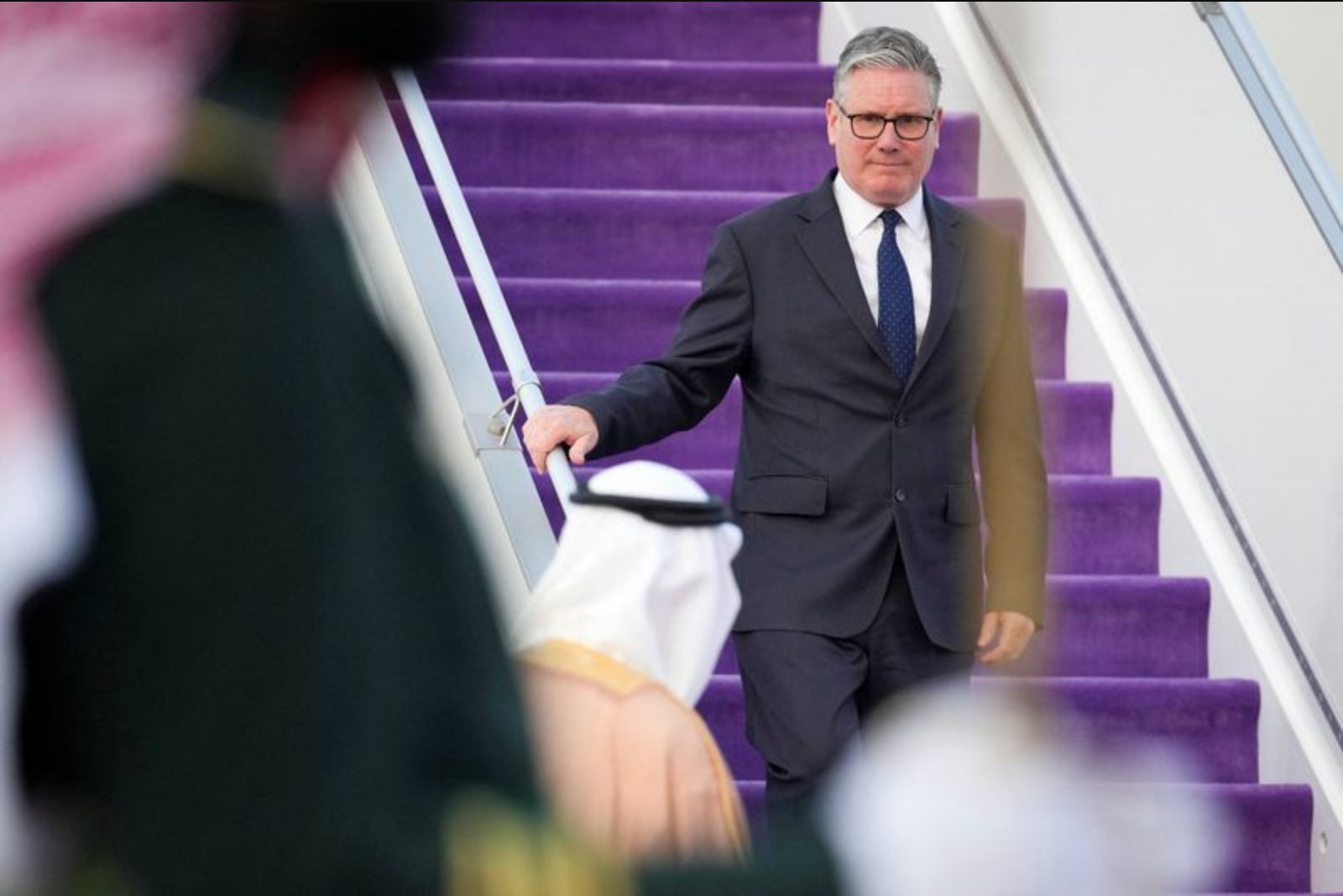
Prime Minister Keir Starmer said on Thursday that the conflict in Iran should serve as a decisive moment for the United Kingdom, concluding nearly two decades of repeated shocks and setbacks. He committed to strengthening Britain's economic and defence posture so the country can withstand what he described as a more volatile and dangerous international environment.
On Tuesday, U.S. President Donald Trump announced a ceasefire in the six-week-old Iran conflict. Despite that announcement, there is no indication that Tehran has lifted its near-total blockade of the Strait of Hormuz. The blockade has produced severe interruptions to global energy flows, which the article describes as the worst disruption to energy supplies in history.
Starmer argued the crisis must become "a line in the sand" for Britain. He noted that the conflict has already pushed up fuel prices in the UK and is expected to feed through to higher inflation and broader economic disruption. Writing in the Guardian, he framed the present moment as one that requires a new approach rather than a return to pre-2008 conditions.
"Britain has been buffeted by crises for nearly two decades now," he wrote, citing a sequence of events that he said have tested the country - the 2008 global financial crash and its ensuing austerity, Brexit, the COVID pandemic and Russia's invasion of Ukraine. "The war in Iran must now become a line in the sand, because how we emerge from this crisis will define all of us for a generation. And instead of hoping to return to the world of 2008, we will forge a new path for Britain - one that strengthens our energy, our defence and our economic security in a new age."
Starmer, who entered Downing Street in 2024 after a landslide victory for his Labour Party, has found it difficult to follow through on his election pledges. Tight public finances, disputes within his party and global instability have all been cited as obstacles to implementing the changes he promised voters.
Opinion polling ahead of the next general election, due by 2029, shows his party trailing the right-wing populist Reform UK, led by Nigel Farage. At the same time, the British public has broadly backed Starmer's choice not to participate in President Trump's offensive action against Iran - a stance that the article notes caused annoyance to Trump. Starmer seeks to convert that public support into momentum by emphasising a strategy focused on national resilience.
He outlined his political rationale in direct terms: "We will not look backwards. We will not aim to recreate the conditions of a world that has now passed us by, and we will build a Britain that is stronger, more secure and more resilient," he said. "That is what this moment demands: and Britain will not be blown off course."
The prime minister's statement links the immediate economic effects of the Iran crisis - notably higher fuel costs and upward pressure on inflation - with longer-term priorities of energy security and defence spending. He positioned his government's approach as both a response to the present disruption and a blueprint for future resilience.
At the same time, Starmer's ability to enact the changes he proposes remains subject to the constraints noted in his own assessment: tight public finances, internal party disagreements and ongoing global instability. How those factors influence the pace and scope of any policy shift will be central to whether the crisis truly becomes the "line in the sand" he envisions.