
Spain faces heightened turmoil in its railway sector as the country's most prominent train drivers' union has called for a nationwide strike lasting three days, from February 9 to February 11. This industrial action follows a heartbreaking series of accidents within a short span, resulting in numerous fatalities and injuries, with growing demands for comprehensive safety improvements on the nation's railways.
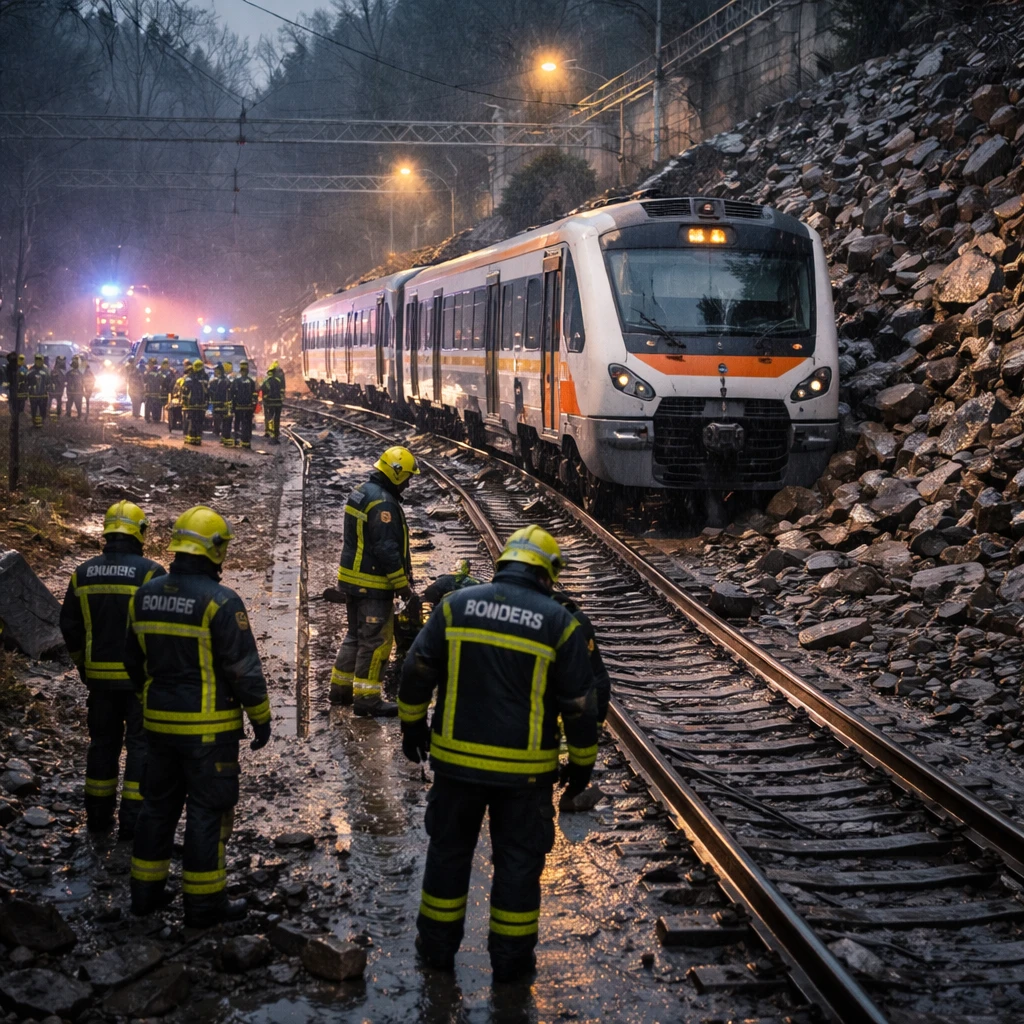
The immediate catalyst for the strike is a succession of catastrophic derailments and collisions. On Tuesday, a commuter train in Gelida, located near Barcelona, derailed after a retaining wall collapsed onto the tracks during intense rainfall. This incident tragically resulted in the death of the driver and critically injured four passengers.
This mishap followed a catastrophic collision on Sunday near Adamuz, in the southern province of Cordoba, which ranks among Europe's most devastating rail accidents. The crash resulted in 43 fatalities, including a train driver, profoundly impacting the transport community and passengers alike.
Investigators recently discovered a significant piece of machinery near the Adamuz crash location, believed to be a missing segment of undercarriage. This item may be vital in clarifying the circumstances leading to the collision, according to sources and experts. Transport Minister Oscar Puente acknowledged that officials have photographed and examined this component, surmising it likely dislodged into a nearby stream as a result of the collision.
Minister Puente also indicated efforts are underway to restore the Madrid-Andalucia railway route, which has been suspended since the deadly Adamuz accident. The restoration target date is set for February 2.
Meanwhile, another derailment occurred on Tuesday within Barcelona's regional rail network, which fortunately did not cause injuries. According to rail network operator Adif, this was due to a rockfall triggered by the same storm affecting the region.
The train operators' union SEMAF issued a statement underscoring the gravity of these events, describing the Adamuz and Gelida accidents, both with fatalities, as pivotal moments prompting demands for immediate and thorough safety reforms across Spain's railway system. The union also announced plans to pursue criminal accountability for parties responsible for maintaining the safety of railway infrastructure.
SEMAF had previously warned Adif in August about significant degradation along the railway track sections where the crashes occurred. Documented issues included potholes, surface unevenness, and imbalanced overhead power lines—factors attributed to frequent mechanical breakdowns and damage to trains on key high-speed routes.
Despite these concerns, Transport Minister Puente expressed reservations regarding the strike as a solution, preferring dialogue with union representatives. He firmly excluded human error as a cause for the Adamuz crash but acknowledged that determining the technical cause remains a complex challenge. Notably, minor marks were found on front bogies of the derailed train and preceding trains; however, linking them definitively to infrastructure defects is premature without further investigation.
Rescue operations at the Adamuz site have made somber progress, uncovering an additional victim in the train's second carriage, which housed the cafeteria. The Andalusian regional government confirmed the death toll now stands at 43.
Efforts to clear the scene included the overnight removal of one of the rear carriages of the derailed train operated by the private consortium Iryo, facilitated by cranes. Minister Puente noted the trains had only a nine-second window between derailment and collision, rendering braking impossible. This refines earlier estimates which suggested a 20-second interval.
Recordings of communications between the Iryo train's driver and the Madrid control centre revealed initial unawareness of the collision by both the driver and passengers in the front five carriages. It was only after a physical inspection of the rear carriages that emergency services were requested.
In response to track condition concerns raised by a driver, Adif imposed additional speed restrictions on the Madrid-Barcelona route, especially over a 78-kilometre segment. These precautions followed initial temporary speed limits applied the previous day. Overnight inspections by maintenance teams identified four critical repair points along this stretch.
Moreover, speed caps are now enforced on a 1.8-kilometre segment of the Madrid-Valencia line, reflecting ongoing caution around railway conditions.
Storm-related disruptions prompted a suspension of regional train services across Catalonia to permit thorough track inspections. Illustrating the disruption's extent, Renfe's President Álvaro Fernández Heredia was pictured utilizing replacement bus transport following travel from Adamuz to Madrid.