
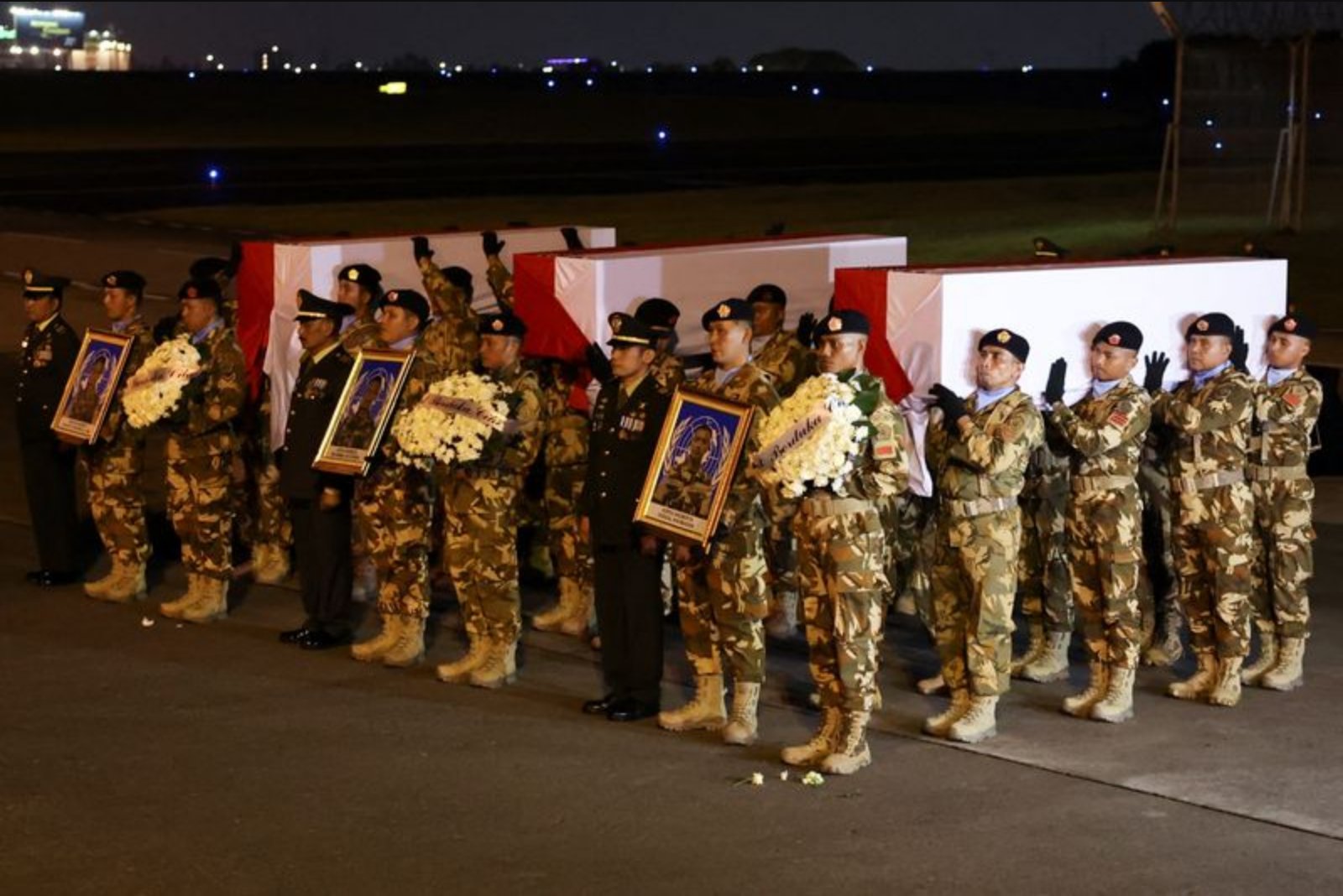
Dozens of countries gathered at the United Nations on Thursday to deliver a joint condemnation of violence directed at U.N. peacekeepers operating in Lebanon, following the deaths of three Indonesian soldiers on separate incidents at the end of March. The joint text, endorsed by 63 countries and the European Union, described the conduct toward peacekeepers as "unacceptable aggressive behavior" and urged enhanced safeguards for personnel.
The statement, read aloud by Indonesia’s U.N. ambassador Umar Hadi and backed by dozens of envoys standing with him, also flagged broader humanitarian concerns. It said signatories were "deeply concerned over the humanitarian situation in Lebanon, especially the significant civilian casualties, the extensive destruction of civilian infrastructure and the mass displacement of more than one million people."
Signatories warned that assaults on United Nations personnel could amount to war crimes under international law and stressed that those responsible must be held to account. The countries reaffirmed their full support for the United Nations Interim Force in Lebanon (UNIFIL) and pressed both the U.N. Secretariat and the Security Council "to strengthen the protection of U.N. peacekeepers in an increasingly dangerous environment."
In addition to calling on all parties to resume negotiations, the statement reaffirmed a "strong commitment to the sovereignty, independence, territorial integrity and unity of Lebanon." Ambassador Hadi said there were indications that additional countries might add their signatures to the joint text. Notably, the list he read did not include Israel, Lebanon or the United States.
Separately, U.N. Secretary-General Antonio Guterres condemned what he described on Wednesday as massive strikes carried out by Israel across Lebanon that day, strikes the U.N. said had led to hundreds of civilians being killed and injured. The U.N. also released preliminary findings on Tuesday from its investigation into the deaths of the three Indonesian peacekeepers, who were killed in separate incidents on March 29 and 30. According to that inquiry, one of the peacekeepers was killed by an Israeli tank projectile and two were killed by an improvised explosive device most likely placed by Hezbollah.
Summary
A joint statement by 63 countries and the European Union at the U.N. condemned attacks on peacekeepers in Lebanon, highlighted a severe humanitarian toll including over one million displaced people, and called for stronger protection for U.N. personnel while urging a return to negotiations.
Key points
- Sixty-three countries and the European Union backed a joint U.N. statement condemning "unacceptable aggressive behavior" toward U.N. peacekeepers in Lebanon and demanding better protection.
- The statement expressed "deep concern" about civilian deaths, extensive infrastructure damage and the displacement of more than one million people, and urged a renewed push for negotiations.
- Preliminary U.N. findings attribute the March 29-30 deaths of three Indonesian peacekeepers to an Israeli tank projectile (one) and an improvised explosive device most likely placed by Hezbollah (two), underscoring the growing risks to peacekeepers and civilians alike.
Risks and uncertainties
- Escalating attacks on U.N. personnel could constitute war crimes under international law, raising legal and diplomatic accountability issues - impacting international governance and defense engagement.
- The reported large-scale civilian casualties and displacement create an acute humanitarian crisis, increasing demand on aid organizations and related logistic and financing channels.
- Political divisions among key states, illustrated by the absence of Israel, Lebanon and the United States from the announced list of endorsers, add uncertainty to unified international responses and the scope of any coordinated protection measures.