
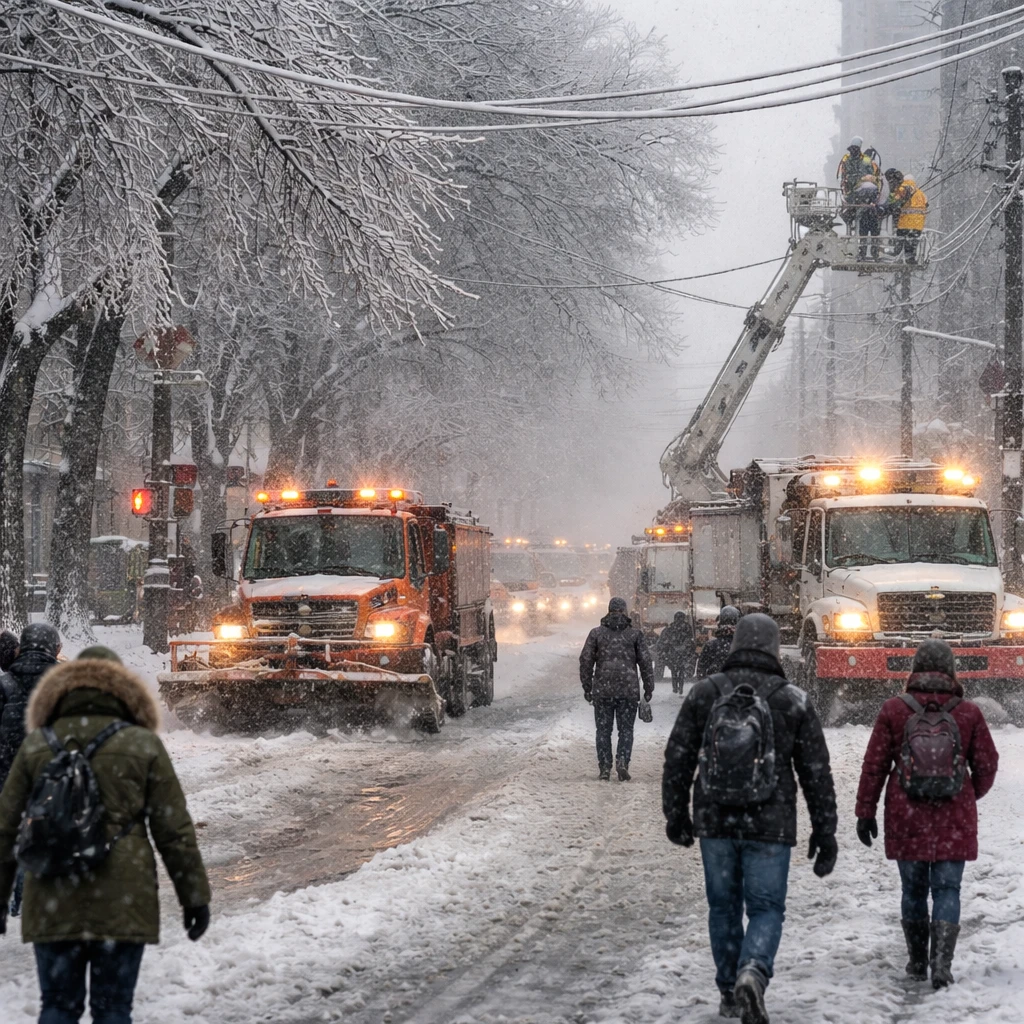
A large-scale winter storm is expected to significantly impact approximately 150 million Americans, spanning from the Central Plains to the eastern seaboard, according to the National Weather Service (NWS). Beginning Friday and continuing through the weekend, this event will bring a combination of heavy snow, freezing rain, and dangerously cold temperatures that could disrupt travel, utilities, and daily life for nearly half of the nation’s population.
The storm is anticipated to deposit up to 20 inches (50.8 cm) of snow in mountainous regions of the Appalachians and West Virginia. Elsewhere in the eastern United States, widespread icy and slick roadways are a concern along with a heightened risk of power outages due to ice accumulation on trees and power lines, causing branches to break and infrastructure to fail.
Brian Hurley, meteorologist at the NWS Weather Prediction Center in College Park, Maryland, noted that "with the extreme cold in the North and the storm, half of all Americans are under some form of weather advisories." Major metropolitan areas such as New York City, Boston, Baltimore, and Washington, D.C. are forecast to receive between 4 and 10 inches of heavy, wet snow starting Saturday. Temperature lows are expected to hover in the low 20s Fahrenheit in Washington, D.C., with Boston experiencing temperatures as low as 7 degrees Fahrenheit (-14 degrees Celsius).
Due to the critical conditions anticipated, New York State will be under a "Code Blue" designation throughout the duration of the storm. This directive mandates social service organizations to extend shelter hours and ensure that individuals experiencing homelessness have access to safe refuge.
In Chicago, residents are preparing for an intense cold snap described as a "deep freeze," with forecast lows reaching 2 degrees below zero on both Friday and Saturday, alongside wind chills plunging as low as 30 degrees below zero. Demand for space heaters has surged, with local hardware stores reporting rapid sales. James Martin, manager at J.C. Licht Ace Hardware River North in Chicago, emphasized that locals are accustomed to harsh winters, though they comically question their continued residence despite the extreme cold.
Further south, Texas Governor Greg Abbott has declared a state of emergency in preparation for the storm. The state has activated additional personnel and resources to manage increased traffic risks, monitor power outages, respond to emergencies, and conduct rescues for those trapped by ice or snow. Governor Abbott urged citizens to stay informed through official channels like DriveTexas.org and to comply with guidance issued by authorities.
The storm system is projected to dissipate by late Sunday or early Monday in most affected areas. Meanwhile, an Arctic cold front advancing from Canada will cause frigid temperatures in northern locations such as Fargo, North Dakota, where highs are expected to remain at approximately 5 degrees below zero on Saturday.
In regions farther south, particularly from Central Virginia to northern Texas and into southeastern states, the principal threat is ice accumulation rather than heavy snow. Forecasters warn that up to a half inch of ice could accumulate in these areas, contributing to hazardous travel conditions and power infrastructure vulnerabilities.