
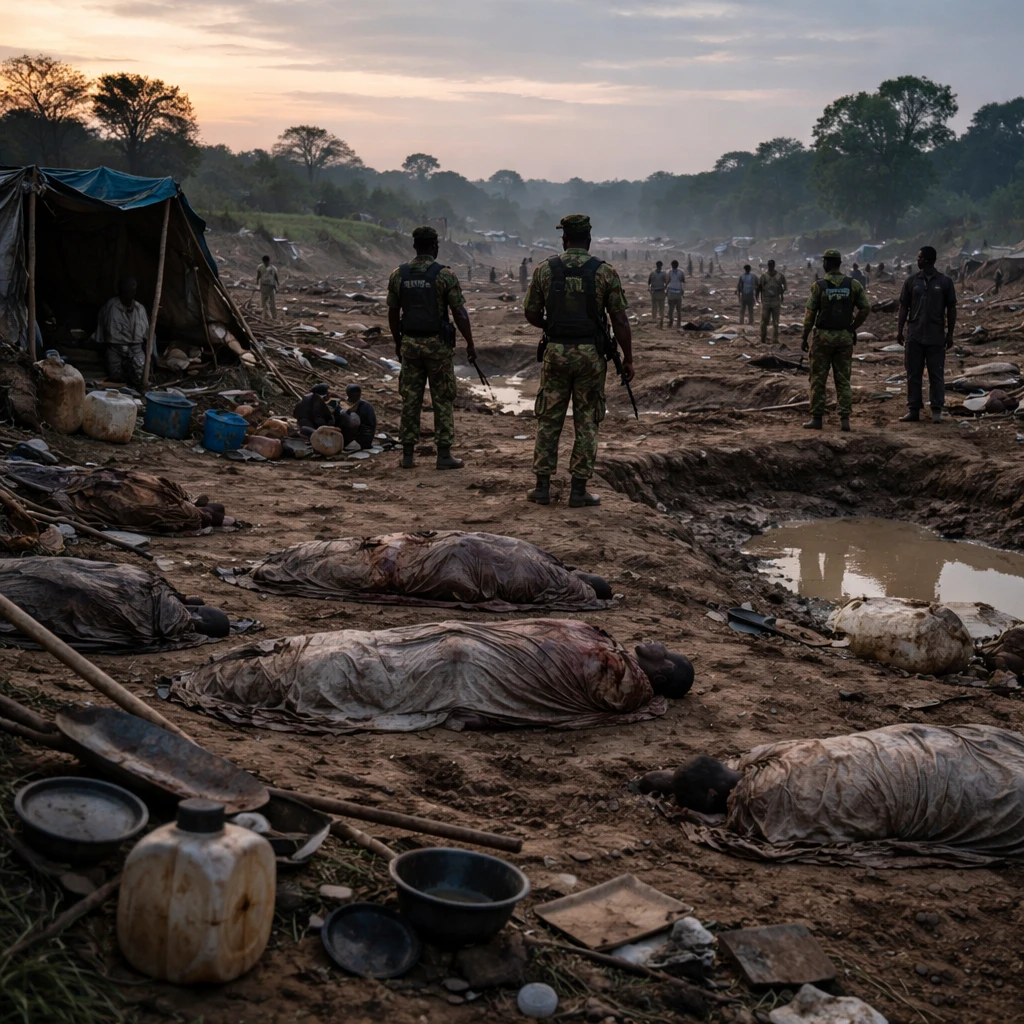
An overnight assault in Nigeria's Plateau state resulted in the deaths of seven miners, ages ranging from 15 to 28, amid a backdrop of longstanding communal conflicts involving ethnic and religious groups. Authorities and local organizations have reported the incident, which involved miners working at a site despite a ban on night mining. The attack reflects ongoing violence in the region, where tensions between nomadic Muslim herders and largely Christian farming communities persist.
Key Points
- Seven miners aged 15 to 28 were killed in an overnight attack at a mining site in Plateau state, Nigeria.
- The violence is part of ongoing ethno-religious conflicts in the Middle Belt region, mainly involving Muslim herders and Christian farming communities.
- Authorities emphasize efforts against violent groups threatening all civilians, while local groups highlight targeted attacks on Berom communities.
In the early hours of Wednesday night, a deadly incident unfolded at a mining location in Nigeria's Plateau state, central to the country's Middle Belt region, where diverse ethnic and religious populations coexist amid frequent clashes. Local youth organization, Berom Youth Moulders-Association (BYM), reported that seven individuals between the ages of 15 and 28 were fatally shot during the attack. The BYM suggested that the assault was part of a series of targeted violent acts against the Berom community, a key ethnic group in the area.
A senior adviser to the Plateau governor, Emmanuel Solomon, confirmed the tragic loss of life in the event. While the Plateau police had not immediately made an official statement, a representative from Operation Safe Haven, the military task force operating in the state, detailed that troops discovered seven bodies and spent cartridges at the scene. The victims were identified as miners who had remained at the site overnight, contravening a local prohibition on nighttime mining activities.
Plateau state is notable for its volatile security environment, characterized by ethnic and religious conflicts primarily between nomadic Muslim herders and predominantly Christian agriculturalists. These disputes have historically resulted in hundreds of casualties over recent years. The recurring violence is often framed as an ethno-religious conflict, though it encompasses complex local dynamics.
On the international stage, tensions concerning the treatment of Christians in Nigeria have drawn attention, with U.S. President Donald Trump explicitly stating that Nigerian Christians face persecution and elevated fatality rates. In connection with these concerns, an airstrike was executed a month ago targeting those accused of perpetrating violence. However, the Nigerian government refutes claims of systemic Christian persecution, emphasizing their actions focus on combating Islamist groups and other violent actors responsible for attacks affecting both Muslim and Christian populations, frequently motivated by ransom demands.
The recent deaths at the mining site underscore persistent instability in Plateau state’s rural regions and highlight challenges to local economic activities, such as mining, that face regulatory restrictions amid security concerns. This pattern reinforces the broader context of conflict that impacts the livelihoods and safety of communities in Nigeria's Middle Belt.
Risks
- Continued ethno-religious violence poses safety risks for mining and agricultural sectors in Plateau state, disrupting local economies.
- Nighttime mining bans may be difficult to enforce amid security challenges, potentially increasing vulnerability for miners.
- Escalating communal tensions may affect regional stability, impacting investor confidence and economic development efforts.