
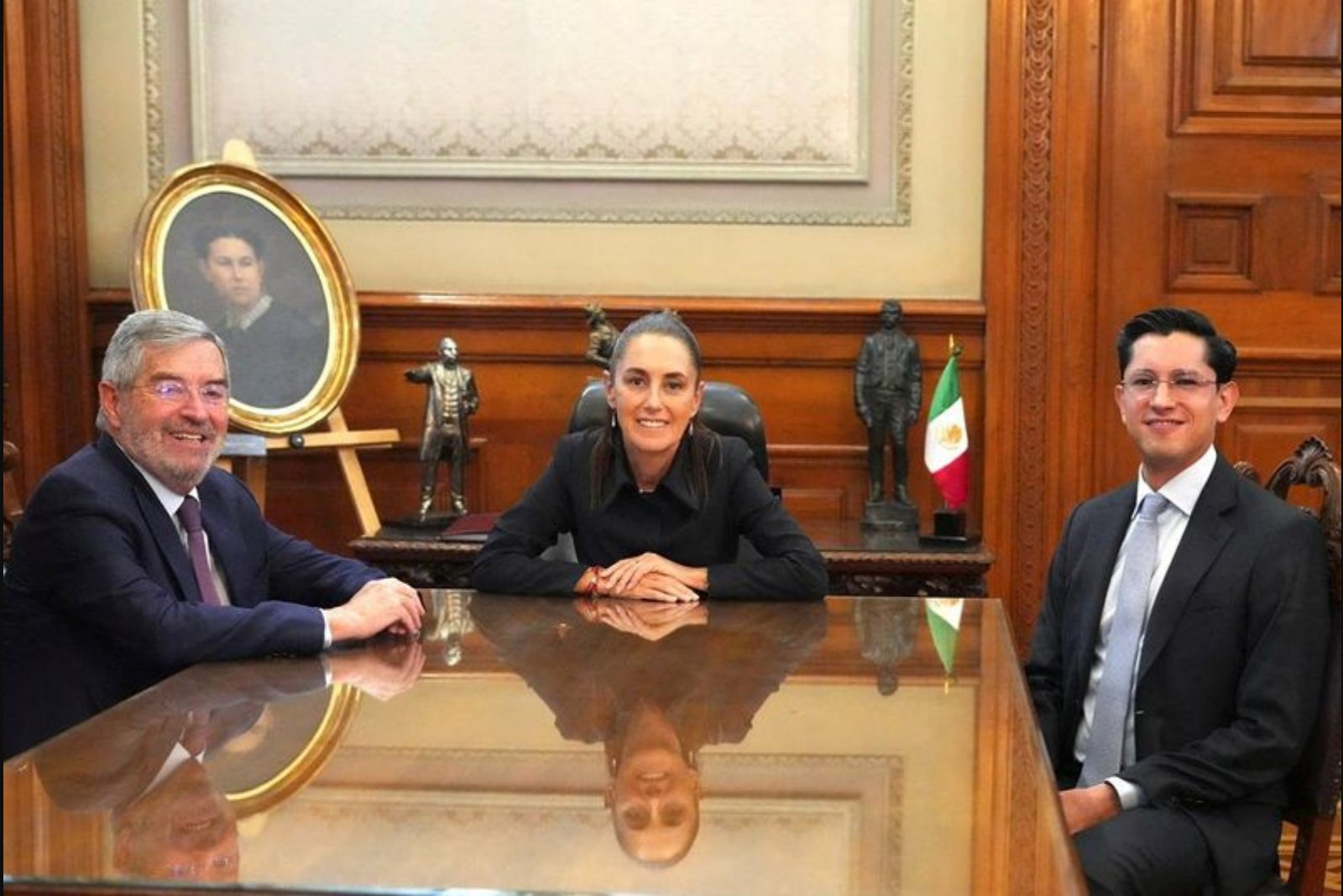
Mexico's Senate has formally approved Roberto Velasco to lead the foreign ministry, granting him the post with 81 votes in favor, 30 against and zero abstentions. The confirmation follows President Claudia Sheinbaum's recent selection of Velasco after the previous foreign minister, Juan Ramon de la Fuente, announced his departure citing health concerns.
Velasco steps into the role at a moment the government described as pivotal for regional trade. He has been directly responsible for managing Mexico's diplomatic relations with its North American partners since June 2020. His tenure in that portfolio began as head of the North America unit and later advanced to the position of undersecretary for North America.
The timing of the leadership change coincides with a scheduled, joint review of the trade pact among Mexico, the United States and Canada this year. That review involves the three member nations of the United States-Mexico-Canada Agreement (USMCA) and is occurring while Velasco assumes leadership of the foreign ministry.
This confirmation formalizes a transition in Mexico's top diplomatic post after a health-related resignation by the outgoing minister. The vote tally in the Senate - 81 supporting, 30 opposing and no abstentions - finalized Velasco's appointment to the foreign ministry.
Context and role
Since June 2020, Velasco has overseen the bilateral and trilateral diplomatic engagement with the United States and Canada through roles that placed him at the center of North American relations. His promotion to foreign minister occurs as the USMCA member states carry out their joint review process this year.
What changed
- Former Foreign Minister Juan Ramon de la Fuente announced he would leave the post for health reasons.
- President Claudia Sheinbaum named Roberto Velasco as the successor last week.
- The Senate confirmed Velasco with 81 votes in favor, 30 against and zero abstentions.
Immediate framing
The appointment formalizes leadership in Mexico's foreign ministry at a point when the country's relations with its North American partners and the status of the USMCA review are concurrent priorities.