
World January 25, 2026

Renewed Violence in Gaza Kills Civilians as U.S. Pushes Forward on Phase Two Plan

Local authorities report fatalities from Israeli strikes and continued unrest despite a ceasefire framework brokered with U.S. involvement

By Ajmal Hussain
Renewed Violence in Gaza Kills Civilians as U.S. Pushes Forward on Phase Two Plan

Israeli strikes in northern Gaza and Gaza City wounded and killed civilians on Sunday, local health officials said, while U.S. envoys continued diplomatic engagement aimed at advancing a phased Gaza arrangement. The incidents underscore persistent insecurity following the October 7, 2023 attack that triggered the war and a ceasefire framework whose implementation parties dispute.

Key Points

  • Israeli strikes killed two people in the Tuffah neighbourhood and an Israeli drone explosion in Gaza City wounded four civilians, according to local health authorities. Impacted sectors: humanitarian response and local civilian infrastructure.
  • Gaza’s health ministry reports over 71,000 fatalities, mostly civilians, from Israeli fire since the start of the conflict, and at least 480 people killed since the ceasefire took effect last October; Israel reports four soldiers killed by militants since the ceasefire began. Impacted sectors: humanitarian aid and regional security.
  • U.S. envoys Steve Witkoff and Jared Kushner met with Prime Minister Benjamin Netanyahu as the plan entered a second phase that envisions further Israeli troop withdrawals and Hamas handing over administrative control of Gaza, even as violence continues. Impacted sectors: diplomacy and political risk.

Israeli fire killed two Palestinians in the Tuffah neighbourhood in the northern Gaza Strip on Sunday, local health authorities reported, and a separate incident in Gaza City involving an Israeli drone wounded four additional civilians.

Medical personnel described the Gaza City episode as an explosion on the rooftop of a multi-floor building that injured four people in the street nearby. The Israeli military did not provide a comment on either of the incidents.

The enclave has been heavily damaged in the conflict that began after a militant assault on southern Israel on October 7, 2023, which Israeli tallies say resulted in 1,200 deaths. Gaza’s health ministry reports that more than 71,000 people, predominantly civilians, have died from Israeli fire since that outbreak of hostilities.

The health ministry also states that at least 480 people were killed by Israeli fire since the ceasefire agreement came into effect last October. Conversely, Israeli authorities say four of their soldiers have been killed by militants in Gaza since the ceasefire began. Representatives on both sides have exchanged accusations over breaches of the truce.

Diplomatic efforts are ongoing. Washington announced earlier this month that the plan had entered a second phase, under which Israel is expected to pull troops back further inside Gaza and Hamas would relinquish control over the territory’s administration. In support of that process, U.S. envoys Steve Witkoff and Jared Kushner met in Israel on Saturday with Prime Minister Benjamin Netanyahu, primarily to discuss Gaza, according to two people briefed on the matter. The meeting occurred as local authorities continued to report further violence in the enclave.

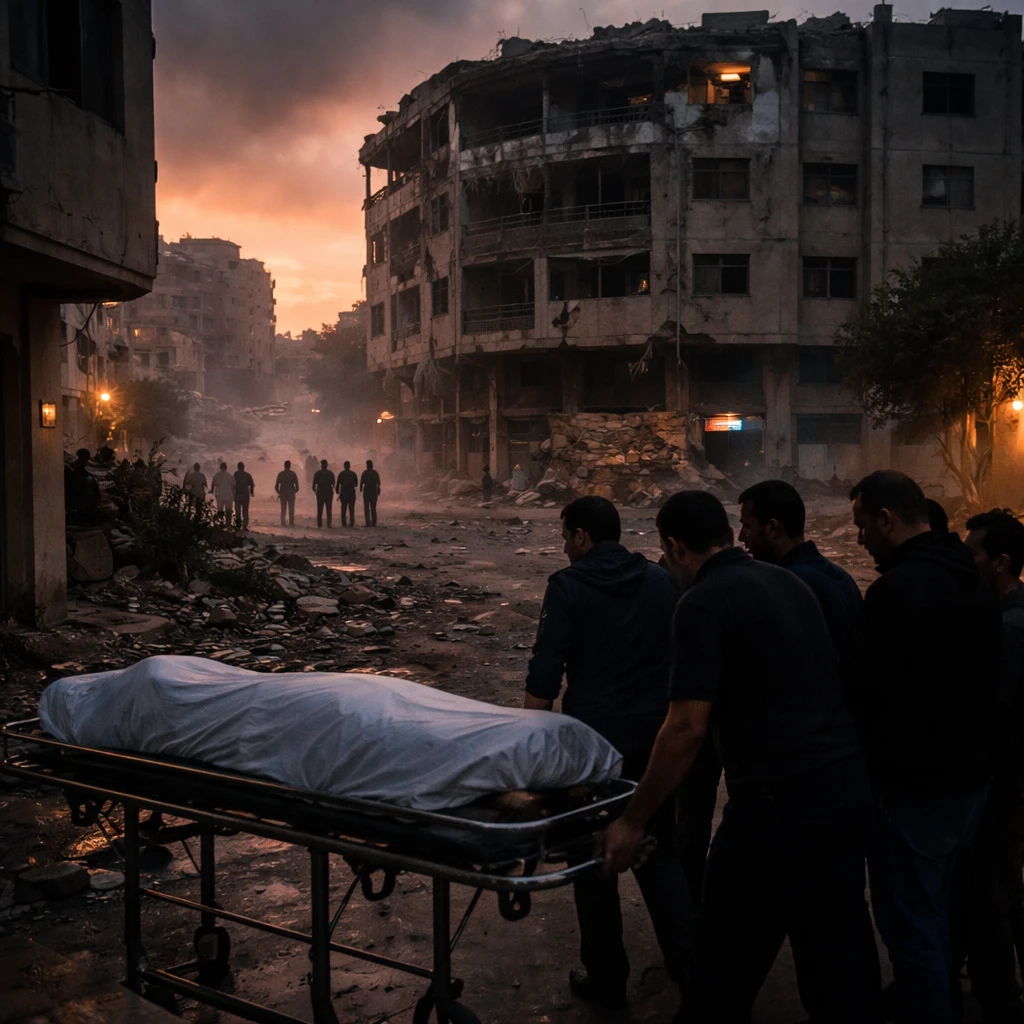
In the southern Gaza city of Khan Younis, a funeral drew more than a hundred mourners for a man killed by Israeli drone fire on Saturday. Attendees performed special prayers before his white-shrouded body at the morgue in Nasser Hospital. At the burial, a relative, Fares Erheimat, expressed distrust in the ceasefire, saying, "They are liars, there is no ceasefire."

The recent incidents and official tallies from both sides reflect the fragile security environment even as a diplomatic framework advances to a new phase. Local health authority figures, military casualty reports, and the U.S.-facilitated timetable for administrative changes in Gaza are playing out concurrently, with ongoing accusations about truce violations and continuing civilian harm.

Risks

  • Ceasefire fragility - Both sides have traded blame for violations and recent incidents show the truce remains unstable, posing continued risks to civilians and aid operations. Affected sectors: humanitarian assistance and local commerce.
  • Implementation uncertainty - The U.S.-brokered plan moving into a second phase faces practical challenges as violence persists, which could delay or complicate the planned troop withdrawals and administrative changes. Affected sectors: governance and reconstruction efforts.
  • Escalation potential - Ongoing strikes and the reported deaths of soldiers and civilians increase the chance of further hostilities and undermine confidence in the ceasefire framework, with consequences for security and regional investment sentiment. Affected sectors: regional security and investor risk assessment.

More from World

U.S. Olympic hospitality site renamed 'Winter House' after protests over ICE shootings Feb 2, 2026 Greenland’s premier says U.S. still aims for control despite ruling out military action Feb 2, 2026 Kremlin says Russia has long offered to process or store Iran’s enriched uranium Feb 2, 2026 Long-Awaited Rafah Reopening Prompts Hope and Anxiety Among Palestinians Stranded Across Border Feb 2, 2026 Rafah Reopens but Core Questions Persist Over Implementation of Trump’s Gaza Blueprint Feb 2, 2026