
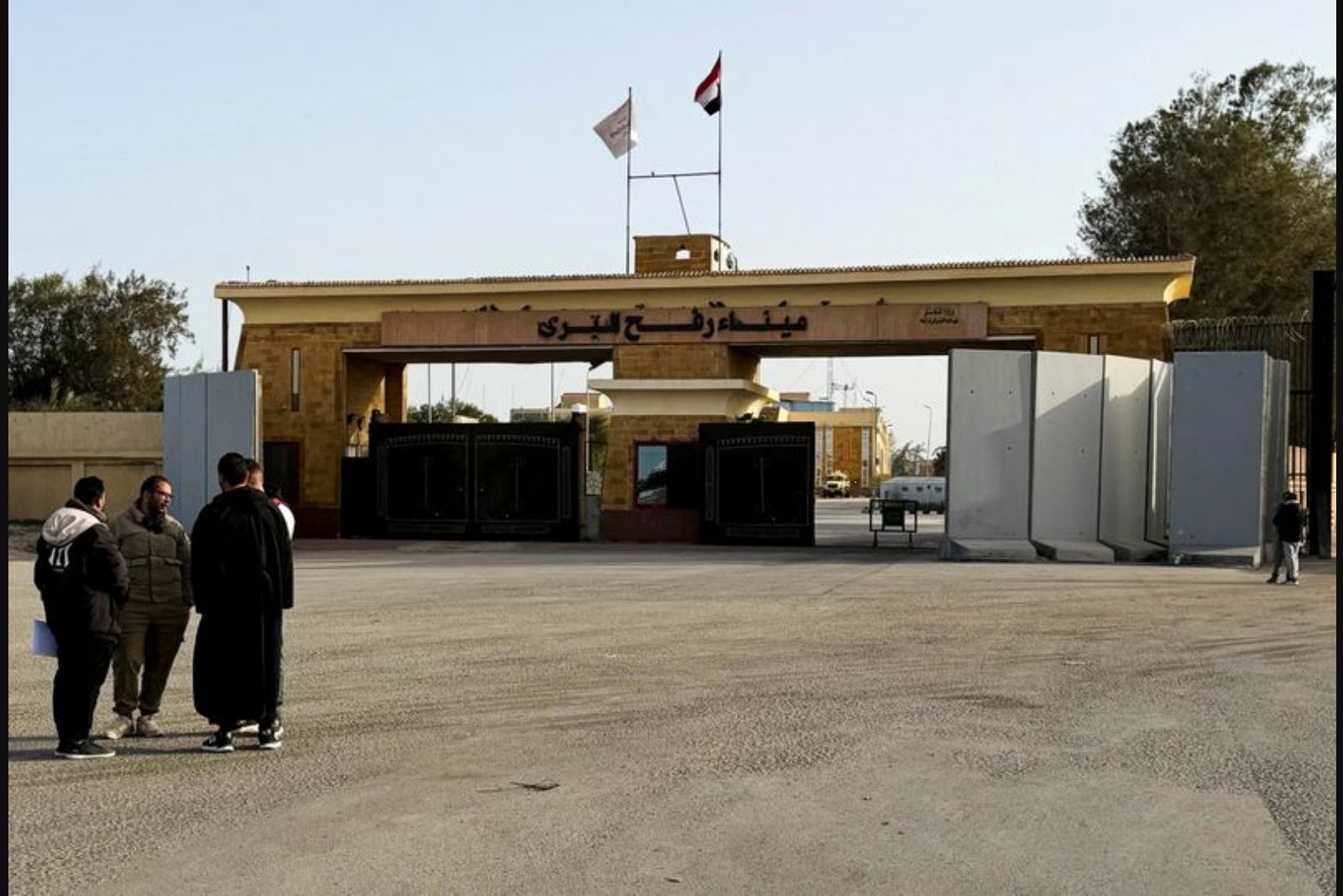
GAZA - Israel reopened the Rafah border crossing with Egypt on Monday to people traveling on foot, a limited resumption of civilian movement that will allow some Palestinians to leave the Gaza Strip and enable those who fled the enclave to come back. The return to operations is subject to security screening by Israeli authorities and is expected to include numerical limits imposed jointly by Israel and Egypt on the number of travellers.
The Rafah crossing had been seized by Israeli forces in May 2024, roughly nine months into the Gaza war that was partially paused by an October ceasefire negotiated under a plan led by U.S. President Donald Trump. The reopening of Rafah was identified as a key element of the first phase of that plan to halt hostilities between Israel and Hamas.
An Israeli security official said that European monitoring teams had arrived at the crossing, which "has now opened to the movement of residents, for both entry and exit." The official's comment indicated that pedestrian crossings would resume under monitored conditions, rather than a full restoration of pre-war transit flows.
Movement, medical access and displaced populations
During the first nine months of Israel's military offensive that began after the October 7, 2023 Hamas attack on southern Israel, Palestinians were generally able to cross into Egypt via Rafah. Palestinian authorities estimate that about 100,000 people have left Gaza since the war began, most of them in that initial nine-month period. Some departures were facilitated by aid organisations, while other departures involved payments to intermediaries in Egypt to obtain permission to cross.
Following Israeli operations that swept into the Rafah area, the crossing was closed and the Philadelphi corridor - the route that runs along Gaza's border with Egypt - was also shut. Those closures removed an important avenue for the evacuation of the wounded and sick seeking medical treatment outside Gaza. Over the past year, a few thousand people have been allowed to travel to third countries for medical care via Israel, although United Nations assessments indicate thousands more remain in need of treatment abroad.
Press access and humanitarian visibility
Despite the reopening of Rafah to pedestrian traffic, Israel continues to bar entry to Gaza for foreign journalists. The ban has been in place since the start of combat operations and has restricted international media reporting from inside the territory, which has experienced extensive destruction.
Gaza's population of approximately 2 million people is largely displaced within the enclave, living in makeshift tents and damaged dwellings amid extensive ruin. The Foreign Press Association has petitioned Israel's Supreme Court to compel authorities to allow foreign journalists into Gaza from Israel. Government lawyers have argued that admitting reporters could present dangers to Israeli soldiers and to the journalists themselves. The association disputes that position, saying the public is being denied an essential source of independent information and noting that many aid workers and United Nations personnel have been permitted to enter the enclave since the onset of the war.
Political framework and ongoing tensions
The broader political architecture underpinning the ceasefire includes a multistage plan now in its second phase. That framework envisions governance being transferred to Palestinian technocrats, Hamas relinquishing its weapons, and Israeli forces withdrawing as reconstruction takes place. Israel has questioned Hamas's willingness to disarm, and some Israeli officials have said the military is preparing for the possibility of renewed conflict.
Since the October arrangement, health authorities in Gaza report that more than 500 Palestinians have been killed in Israeli strikes, while militants have been blamed for the deaths of four Israeli soldiers. Over the weekend, Israeli forces conducted some of the most intense airstrikes recorded since the truce, actions that officials described as a response to an alleged Hamas violation of the ceasefire on the preceding Friday; those strikes were reported to have killed at least 30 people.
The limited reopening of Rafah provides a measure of mobility for civilians who have faced months of displacement and constrained access to external medical care, but it does not remove the broader restrictions and protections that remain in place. Movement will proceed under security protocols and monitored conditions, and other significant limitations - including the press ban and the closure of key border routes - continue to shape life in the territory.