
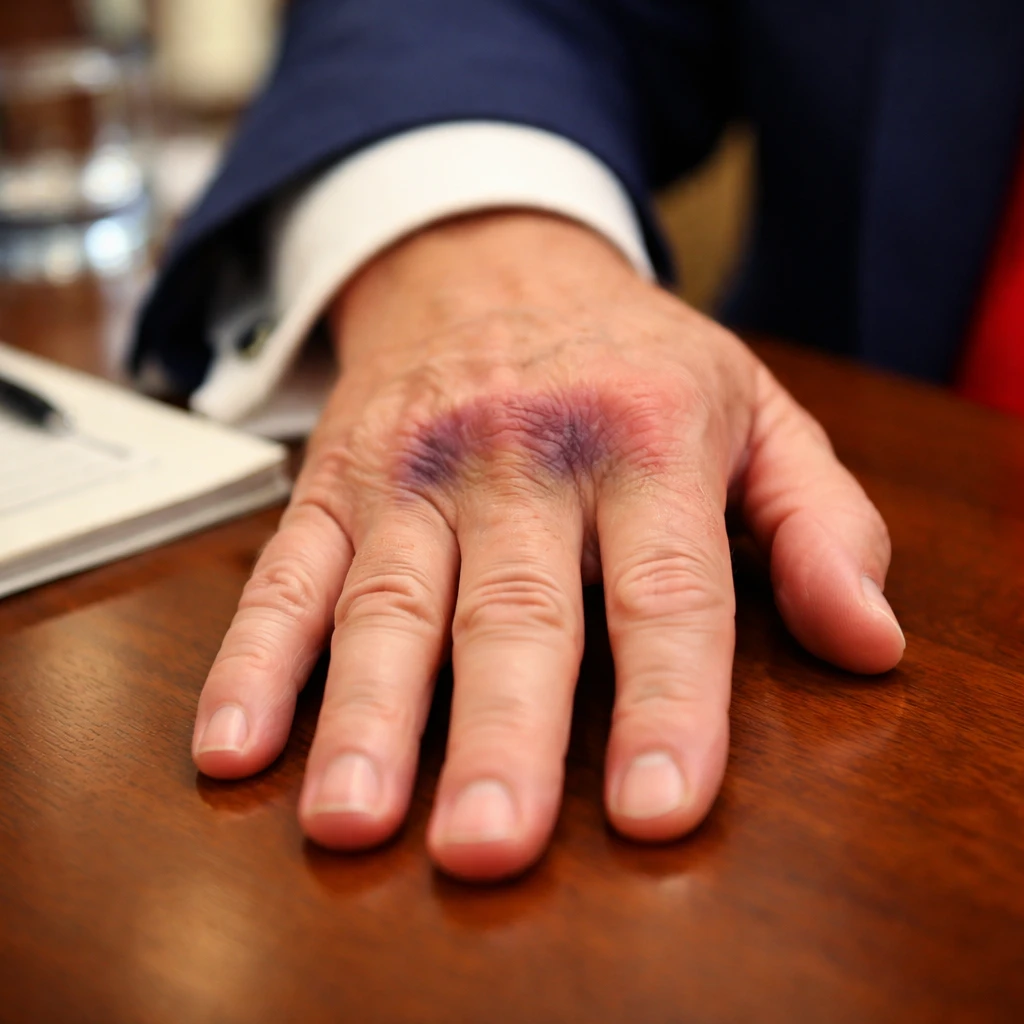
President Donald Trump attributed a visible bruise on his left hand to his regular consumption of high-dose aspirin. Speaking to reporters aboard Air Force One following his trip to Davos, he explained the bruising resulted from bumping a table at the World Economic Forum and his aspirin regimen, which he believes helps maintain his heart health. Medical professionals agreed aspirin could be a contributing factor to the bruising. The White House clarified the injury occurred during a formal announcement. Trump has expressed a preference for a larger aspirin dosage than prescribed to ensure thin blood flow to his heart.
Key Points
- President Trump attributes the visible bruise on his left hand to frequent aspirin use combined with an accidental bump against a table at the World Economic Forum.
- Medical professionals consulted agree that aspirin's blood-thinning effects could lead to easier bruising, validating the President’s explanation.
- The White House clarified the bruise occurred during an official event related to the Board of Peace announcement.
During his return flight to the United States aboard Air Force One, President Donald Trump addressed a visible bruise on his left hand, attributing it to his habitual consumption of aspirin in doses higher than medically advised. The President recounted that the bruise appeared after he accidentally bumped the corner of a table while participating in the World Economic Forum in Davos, Switzerland. He explained to reporters that his aspirin intake causes him to bruise with greater ease.
“They say take aspirin if you like your heart, but don’t take aspirin if you don’t want a little bruising. I take the big aspirin,” Trump stated, highlighting his choice of dosage despite medical advice.
He further elaborated on his health perspective, noting, “The doctor said, 'You don’t have to take that, sir. You’re very healthy.' I said, 'I’m not taking any chances.'” This comment underscores his cautious approach toward maintaining cardiovascular health.
White House Press Secretary Karoline Leavitt issued a statement clarifying the cause of the injury, noting that Trump struck his hand on the edge of a signing table during the announcement of his Board of Peace initiative.
Medical insights were provided by four physicians—a pair of surgeons and two internists—who confirmed to Reuters that aspirin could plausibly contribute to the formation of such bruising due to its blood-thinning properties.
In a previous discussion with the Wall Street Journal earlier in January, Trump acknowledged taking a daily aspirin dose higher than what his doctors recommend, emphasizing his intention for “nice, thin blood pouring through my heart.”
Last summer, the White House had attributed similar bruising to the physical toll of extensive handshaking engagements. At 79 years old, Trump is the second oldest individual to serve as U.S. president, following Joe Biden, who concluded his presidency at age 82 last year after withdrawing from the 2024 reelection race amid questions regarding his capacity to serve.
Trump's aspirin usage and resulting bruising reflect the broader conversation about cardiovascular health management in elderly populations, especially among high-profile political figures who face intense public scrutiny around their fitness. The disclosure and medical commentary offer insight into the personal health decisions that can influence public perception and political image.
While the information provided primarily concerns the President’s health regimen and minor injury, the implications underscore the intersection between personal medical choices and public communication from government officials.
Risks
- Continued use of high-dose aspirin may increase risk of bruising or bleeding complications which could impact the individual's health status.
- Public attention to the President's health at an advanced age might influence perceptions of his fitness to serve, affecting political stability and public confidence.
- Discrepancies between medical advice and patient's choices highlight potential challenges in health management that could lead to unforeseen medical events.