
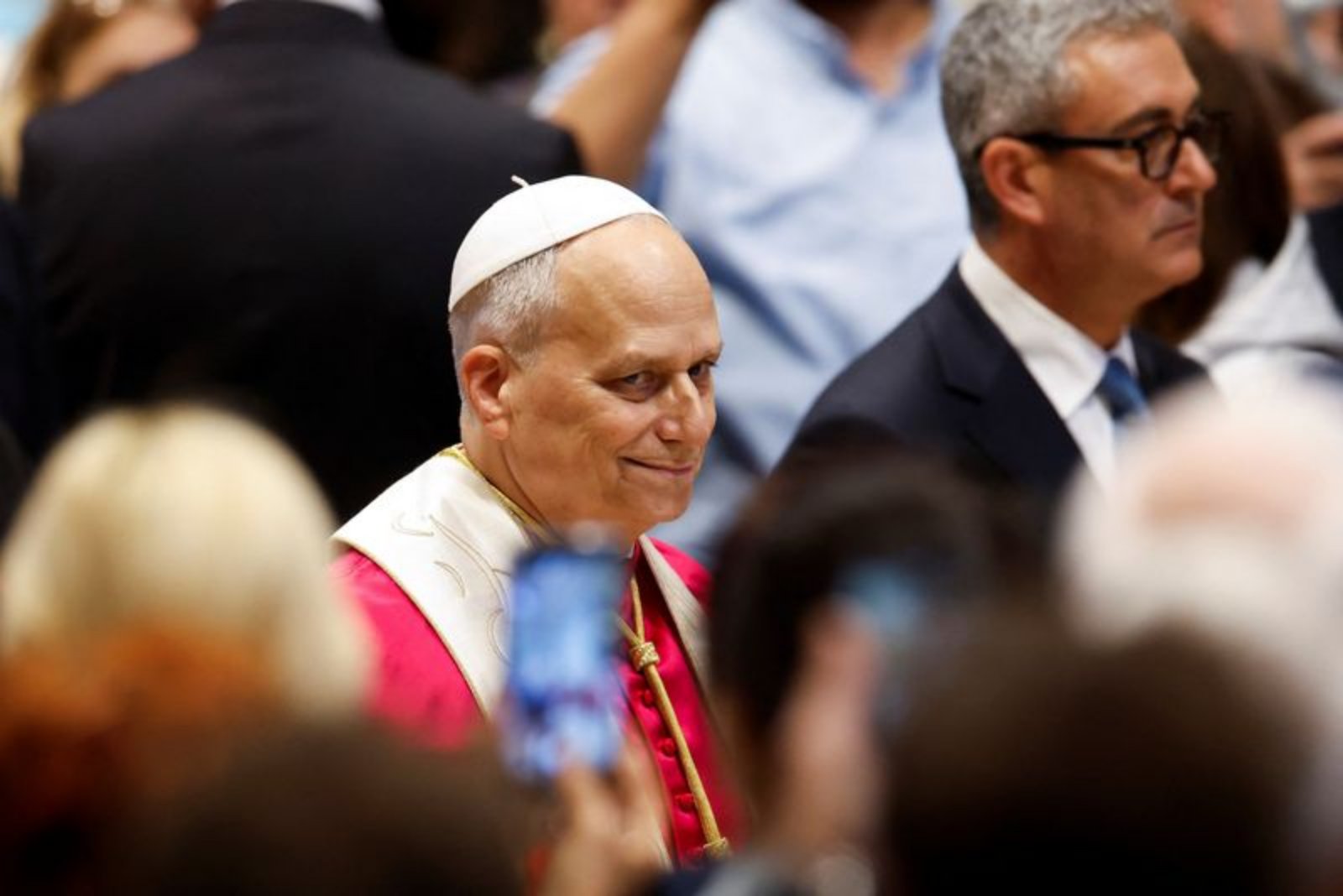
Pope Leo on Saturday publicly urged world leaders to halt what he described as the "madness of war," delivering a stark appeal for peace at a special prayer vigil held inside St. Peter's Basilica. The address came as senior U.S. and Iranian officials met in Pakistan to discuss steps toward ending the six-week conflict.
Speaking at the vigil, the first U.S. pope criticized efforts to employ religious language as a rationale for armed conflict, and warned against what he called a growing "delusion of omnipotence that surrounds us ... is becoming increasingly unpredictable." He made an explicit appeal to those in positions of authority: "Stop! It is time for peace! Sit at the table of dialogue and mediation, not at the table where rearmament is planned."
The pope, who has in recent weeks emerged as an outspoken critic of the Iran war, used unusually strong language at the service, citing correspondence he said had come from children living in war zones and describing "horror and inhumanity." He also invoked the Church's opposition to the 2003 U.S.-led invasion of Iraq, referencing an appeal by the late Pope John Paul II issued four days before that conflict began.
At the vigil he reiterated a series of condemnations: "Enough of the idolatry of self and money! Enough of the display of power! Enough of war!" The remarks echoed another comment he made on March 30, when he said God rejects the prayers of leaders who start wars and have "hands full of blood."
In his broader warning, the pope said that the internal balance of the human family had been "severely destabilized" and lamented that "Even the holy Name of God, the God of life, is being dragged into discourses of death."
Some conservative Catholic commentators have interpreted the pope's earlier remarks as aimed at U.S. Defense Secretary Pete Hegseth, who has used explicitly Christian language to justify the joint U.S.-Israeli strikes on Iran that marked the start of the conflict. The special prayer service on Saturday had been announced by the pope in his Easter message the previous Sunday.
The pope's appeal came against the backdrop of diplomatic efforts in Pakistan, where senior U.S. and Iranian officials began talks intended to explore ways to end the six-week-long hostilities. The vigil and the diplomatic engagement occurred simultaneously, underscoring the convergence of moral and political pressures surrounding the conflict.
Context and implications
While the pope framed his remarks in moral and theological terms, his call for dialogue and mediation highlighted the urgent need for political solutions as negotiations take place abroad. He targeted both the rhetoric used to justify war and the material priorities that sustain it, urging a move away from rearmament toward mediation.