
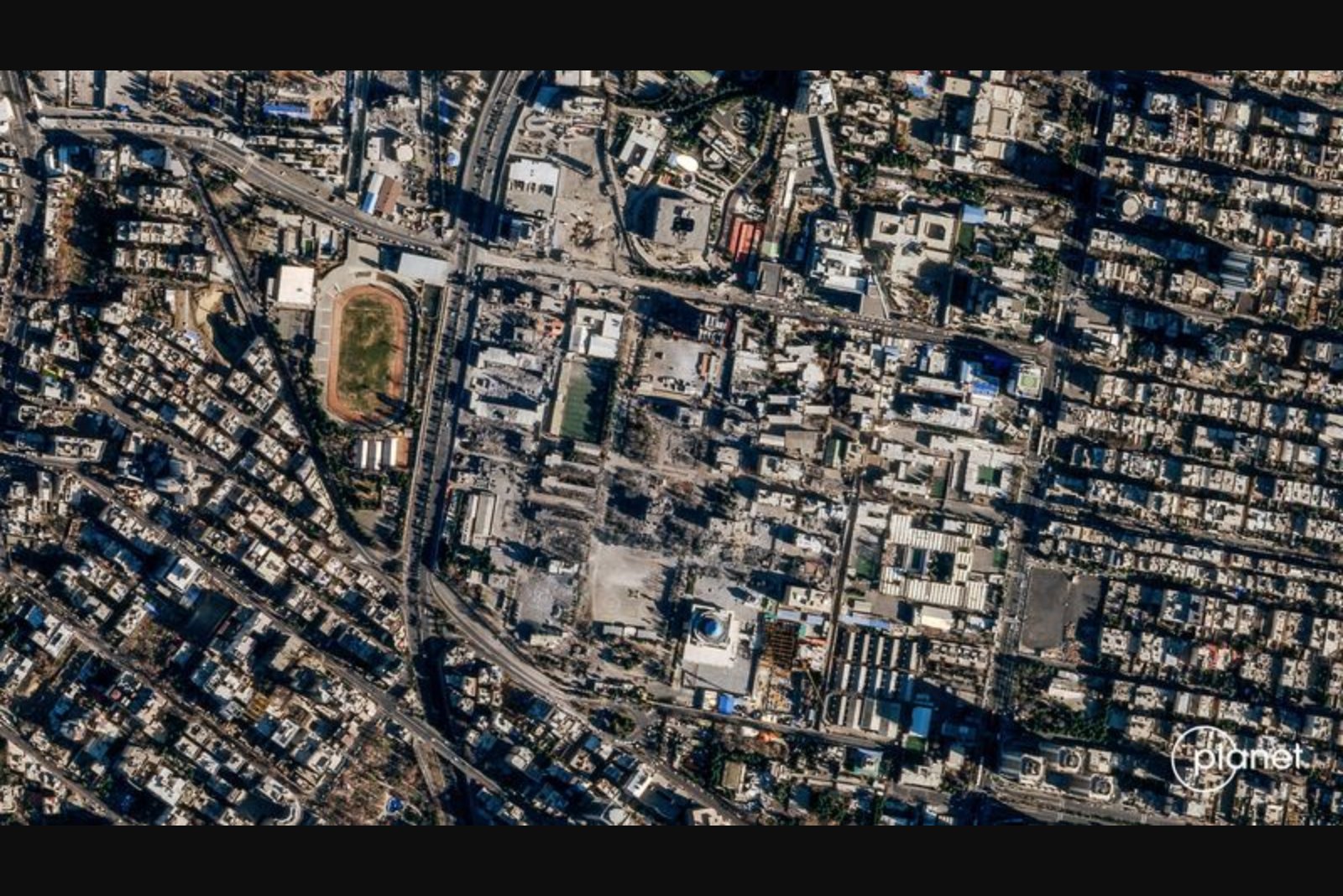
Planet Labs, the California-based operator of a large fleet of Earth-imaging satellites, informed its customers on Saturday that it will indefinitely withhold satellite imagery covering Iran and the broader region affected by the recent conflict in the Middle East. The company said the change follows a request from the U.S. government for imagery providers to cease releasing visuals of the conflict area.
The company stated in an email to customers that imagery dating back to March 9 will be pulled from distribution and that the policy is expected to remain in effect until the conflict concludes. The step expands on a 14-day delay Planet Labs imposed last month on Middle East imagery, a temporary restriction the firm earlier described as intended to prevent adversaries from using commercial imagery to plan attacks against the United States and its allies.
Planet Labs said it would replace its standard public distribution with what it termed a "managed distribution of images" that would prioritize safety. Under the new approach, releases of imagery from the affected region will be made on a case-by-case basis, limited to requests that meet urgent, mission-critical needs or those deemed to be in the public interest.
The company described the current situation as an extraordinary circumstance and said it was attempting to balance the varied needs of stakeholders, including government, commercial and public-interest users. Planet Labs did not respond to a request for additional comment beyond the customer email.
The Pentagon said it does not comment on intelligence-related matters. Military uses of satellite technology, the company and other observers note, include target identification, weapons guidance, missile tracking and communications. The firm and some analysts have expressed concern that commercial imagery can be accessed by state actors and could potentially be used in ways that threaten U.S. and allied forces.
Some specialists have suggested that Iran may be obtaining commercial imagery indirectly, including pictures that could be supplied via U.S. adversaries, though Planet Labs did not provide specific evidence in its customer notice.
Commercial satellite imagery is also widely used by journalists and academic researchers to study areas that are difficult to reach on the ground. The new distribution policy will likely limit such access while it remains in place, with releases possible only in narrowly defined circumstances.
Other commercial providers have handled the issue differently. Vantor, the company formerly known as Maxar Technologies, told Reuters it had not been contacted by the U.S. government but that it has for years reserved the right to implement enhanced access controls during times of geopolitical conflict. Vantor said it currently applies such controls to parts of the Middle East. The company described these measures as including restrictions on who can request new imagery or purchase existing pictures of regions where U.S. forces and allied militaries are actively operating or where adversaries are actively targeting assets.
BlackSky Technology, another commercial provider contacted, did not immediately respond to a request for comment.
Context of the conflict
Planet Labs referenced the broader conflict that has intensified in the region. According to the company notice, the war began when the U.S. and Israel attacked Iran on February 28. The situation expanded after Tehran responded with attacks on Israel and on U.S. military bases located in Gulf states, including Saudi Arabia, Kuwait and Bahrain.
Operational implications
By instituting an indefinite hold and moving to controlled, case-by-case distribution, Planet Labs is prioritizing operational security and safety considerations over the routine, frequent public dissemination of high-resolution, near real-time imagery that governments, businesses and media outlets typically rely on. The company framed the move as a response to extraordinary circumstances and as an effort to balance competing stakeholder needs while the conflict continues.