
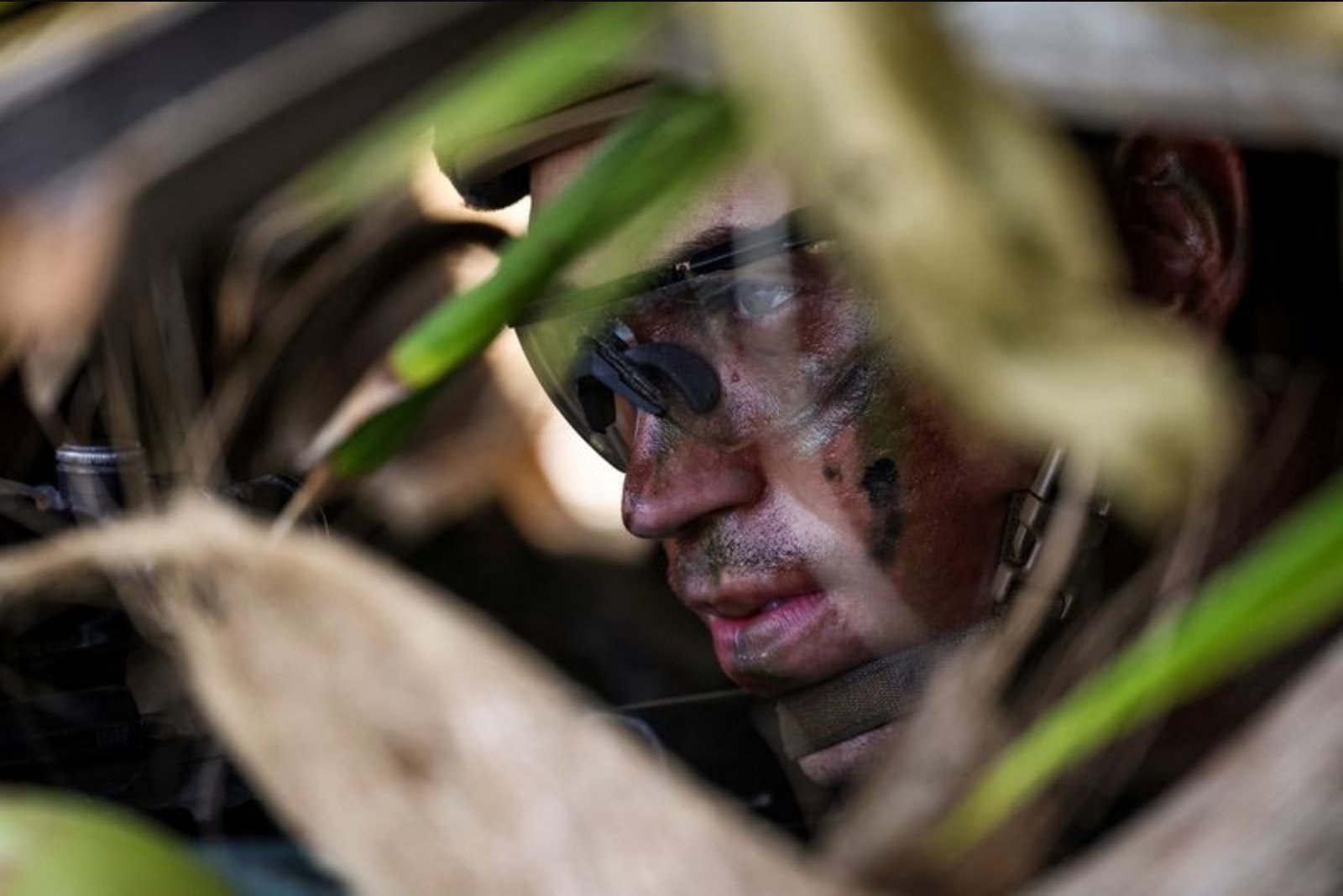
PALAWAN, Philippines - Philippine and U.S. military personnel, along with contingents from Australia and New Zealand, staged coordinated counter-landing exercises on Monday off the coast of Palawan island facing the South China Sea. The drills simulated enemy boats and unmanned craft approaching the shoreline, with participating forces employing live fire against designated targets and intercepting approaching threats.
The activities were conducted as part of the annual Balikatan - which translates to "shoulder to shoulder" - exercises designed to rehearse coastal defence manoeuvres and evaluate allied capacity to secure territorial waters. The displays included what military officials described as advanced weapons capabilities and demonstrated operational readiness among participating forces.
Philippine military chief Romeo Brawner emphasized the strategic significance of the exercise location, noting Palawan's position opposite the Kalayaan Island Group in the Spratly Islands, which the Philippines considers within its exclusive economic zone. "We are defending our exclusive economic zone, where we get our resources, food, and energy. So it’s really very important that we defend this territory of the Philippines," Brawner told reporters.
Officials said this year’s counter-landing component differed from previous iterations through its extensive use of unmanned systems. The exercise incorporated unmanned aerial vehicles and other robotic platforms in addition to traditional systems such as HIMARS. The inclusion of these unmanned systems was highlighted as a notable feature of the drills.
Scope and allied participation
Philippine and U.S. military officials have described this iteration of Balikatan as the largest to date in terms of participating countries. The exercises run from April 20 to May 8 and include multiple phases. Another phase scheduled in northern Luzon - the Philippines’ largest island and closest to Taiwan - will involve combat troops from Japan participating for the first time, with plans for Japanese forces to fire Type 88 missiles during a maritime strike exercise.
The expanding scope of allied participation follows a series of bilateral and multilateral defence arrangements. Tokyo and Manila signed a reciprocal access agreement in 2024 that allows each to deploy forces on the other’s territory. The Philippines also noted Japan’s decision to remove restrictions on overseas arms sales, enabling exports of warships, missiles, and other weapons.
Numbers and wider context
More than 17,000 troops are taking part in this year’s exercises, including about 10,000 personnel from the United States. Washington has said the scale of the drills underlines U.S. defence commitments to the region even as American forces remain engaged in the Middle East.
The joint drills have been criticised by China in the past, with Beijing saying exercises of this kind raise regional tensions. Manila and Beijing have experienced a series of maritime confrontations in the South China Sea in recent years. China claims almost the entire South China Sea, a position that was challenged by an arbitral ruling in 2016 that found those expansive maritime claims invalid.
Assessment
Monday’s counter-landing rehearsal on Palawan reinforced the focus on coastal defence and allied interoperability, with an emphasis on integrating unmanned systems alongside conventional firepower. As further phases of Balikatan proceed, including the northern Luzon exercises involving Japanese forces and Type 88 missile firings, the drills will continue to test logistics, command and control, and the operational integration of participating militaries.