
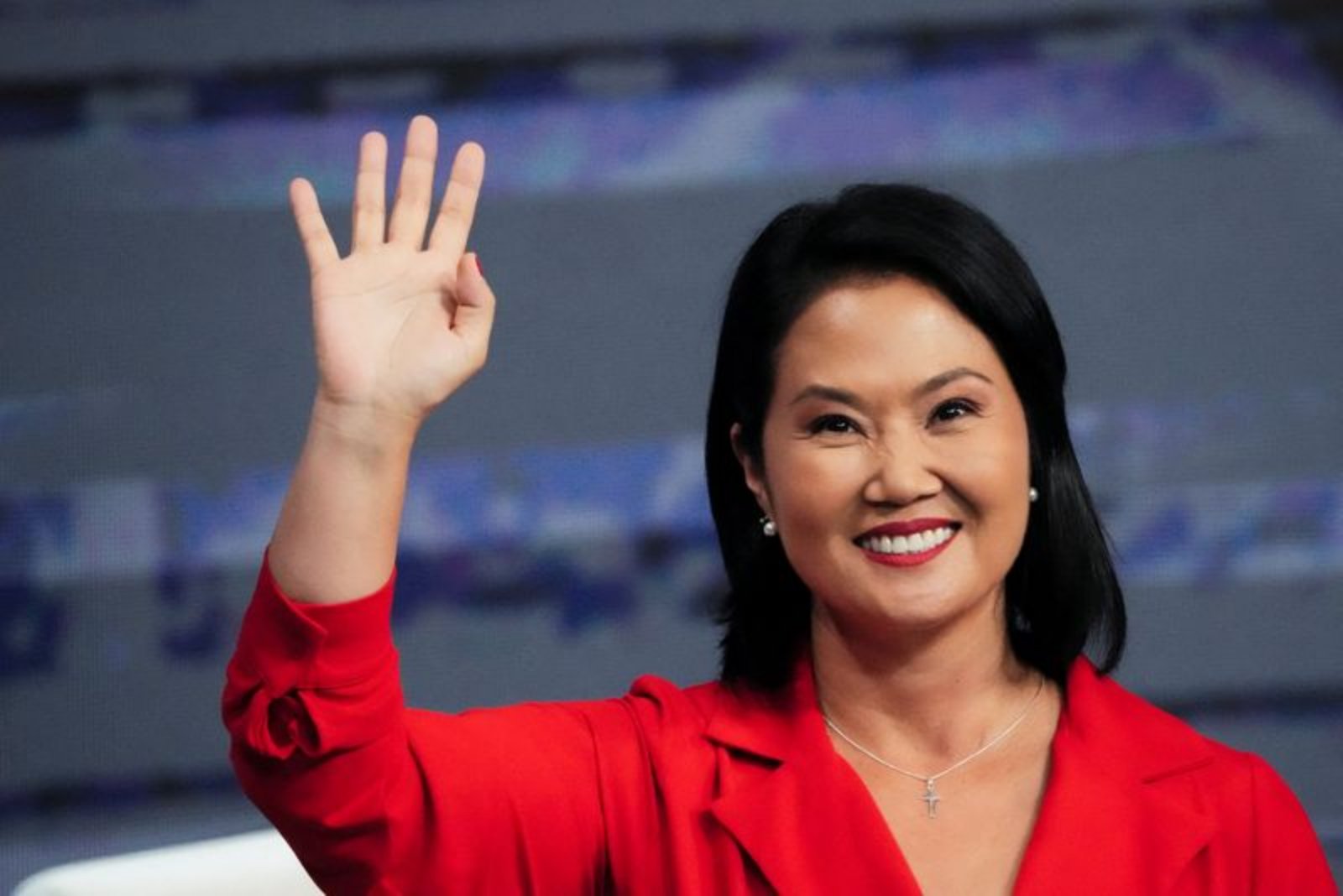
LIMA, April 8 - Peruvians will vote on April 12 to choose a new president and members of Congress after years marked by political turmoil, impeachments and corruption scandals that have produced eight presidents since 2018. A record number of presidential hopefuls are contesting the first round. If no candidate receives more than 50% of the vote, the two top vote-getters will progress to a second round scheduled for June 7. Polling data suggest a runoff is likely, and at least five of the 35 candidates are viewed as having a realistic chance to capture one of the two front-runner positions.
Election context
The crowded field and the fragmentation it creates are central to campaign strategies. Several candidates seek to consolidate blocs of voters around themes such as security, institutional stability, economic management and constitutional change. Many of the contenders carry baggage from prior controversies or ties to established political actors, while others are positioning themselves as outsiders capable of channeling public frustration toward change.
Leading contenders
-
Keiko Fujimori - Conservative
Keiko Fujimori, 50, is mounting her fourth presidential campaign and has advanced to the runoff in each of her three prior attempts, a streak that highlights both her persistence and the polarizing effect she exerts on Peru's electorate. She is a former legislator and heads the right-leaning People’s Force party, which serves as a central anchor for a conservative bloc in Congress. That role in the legislature gives her structural leverage in a politically fragmented environment.
Fujimori is the eldest daughter of the late Alberto Fujimori, who served as president from 1990 to 2000 and was subsequently jailed for human rights abuses. Her campaign emphasizes a law-and-order agenda reminiscent of the security-focused policies associated with her father’s administration in the 1990s. She frames herself as pro-U.S., advocating for foreign investment within clearer institutional rules and contrasting herself with rivals she portrays as closer to Beijing.
She has faced accusations of illicit campaign financing in the past; however, Peru’s constitutional court dismissed that case last year on procedural grounds. Educated in the United States, she continues to be placed among the leading contenders in opinion surveys.
-
Rafael Lopez Aliaga - 'Porky'
Rafael Lopez Aliaga, 65, an ultraconservative businessman and former mayor of Lima from the Popular Renewal party, remains a recognisable figure despite polling that indicates some erosion in his support. He worked earlier in corporate banking and built business interests in hotels and railways. Lopez Aliaga has cultivated a staunchly conservative public profile, expressed through vocal opposition to abortion, same-sex marriage and what he terms 'gender ideology.'
Nicknamed 'Porky' after the cartoon character, he is a former member of the Catholic group Opus Dei, is unmarried, and has publicly stated he has practiced celibacy since age 19. His commercial ties to the mining sector are notable: his railway investments have benefitted from the transportation of minerals such as copper from the Las Bambas mine, which is operated by a Chinese firm.
-
Carlos Alvarez
Carlos Alvarez, 62, is a well-known comedian who has translated popular recognition into a political candidacy with the center-right Country for All party. Running on a populist, anti-crime platform, Alvarez seeks to tap into widespread dissatisfaction with the political elite. He has compared his path from entertainment to politics to that of Ukrainian President Volodymyr Zelenskiy, drawing a parallel between public notoriety and perceived democratic legitimacy.
Alvarez’s proposals include support for capital punishment for certain crimes and expanded use of the armed forces to address mounting insecurity. Polling shows a recent rise in his support, although critics have questioned the depth of his policy proposals and the strength of his technical team if he were to enter government. On foreign policy he has expressed openness to U.S. engagement while acknowledging the economic importance of Chinese investment.
-
Alfonso Lopez Chau
Alfonso Lopez Chau, 75, is an economist and academic running with the left-of-center Now Nation party. A former member of the central bank's board, Lopez Chau has allied with a running mate who identifies as Marxist and has called for changes to Peru’s market-oriented economic structure. He has proposed the creation of a sovereign wealth fund intended to finance infrastructure projects, though detailed plans have not been provided publicly.
Lopez Chau has also supported calls for a new constitution. He is under investigation by Peru’s prosecutor’s office over alleged embezzlement during his tenure as president of the National University of Engineering for the period 2021 to 2025; he denies the allegations.
-
Jorge Nieto
Jorge Nieto, 74, a former defense and culture minister in the administration of ex-president Pedro Pablo Kuczynski, is a lower-polling centrist presenting himself as an institutionalist with government experience. He resigned his post in protest after Kuczynski pardoned Alberto Fujimori. Nieto founded the centrist Party of Good Government and has advanced proposals related to civil rights, including support for same-sex marriage and loosening strict rules on abortion access. He has offered relatively little commentary on foreign policy during the campaign.
-
Cesar Acuna
Cesar Acuna, 71, leads the right-wing Alliance for Progress party and built his career in the education sector, developing university campuses. He is a two-time presidential candidate and has held positions as a congressman, governor of the gold-mining region of La Libertad, and mayor of its capital, Trujillo. Throughout his political career he has faced multiple allegations of corruption, which he denies, and he has not been convicted of a crime.
Acuna’s campaign emphasizes education reform and fiscal consolidation, proposing a reduction in the number of government ministries from 18 to 10.
-
Roberto Sanchez
Roberto Sanchez is a congressman running for the left-leaning Together for Peru party and is considered a potential wildcard in an otherwise fragmented race. He advocates for a new constitution aimed at creating a 'plurinational' state to increase the political voice of Indigenous communities and regions that feel excluded from national decision-making. Sanchez served as a minister under former leftist president Pedro Castillo. Castillo, who is jailed on charges of rebellion and conspiracy following an attempt to dissolve Congress in December 2022, has publicly endorsed Sanchez from prison as his preferred successor.
Implications for policy and markets
The slate of contenders highlights competing priorities that could influence Peru’s policy direction depending on electoral outcomes. Security and public order feature prominently in the platforms of several leading candidates, potentially affecting public-sector budgets and the deployment of security forces. Proposals touching on foreign investment and relations with major partners are also present across multiple campaigns, with candidates variously courting ties to the United States or acknowledging the importance of Chinese investment. Economic proposals range from administrative downsizing and education-focused spending to calls for a sovereign wealth fund to finance infrastructure, each of which carries different fiscal and market implications.
What to watch in the coming weeks
With the first round imminent and a likely runoff on the calendar, attention will focus on whether any single candidate can consolidate enough support to avoid a second round, and on which two contenders might capture the plurality of votes necessary to advance. Political investigations, endorsements, and shifts in voter sentiment could all alter the trajectory of the race in short order.