
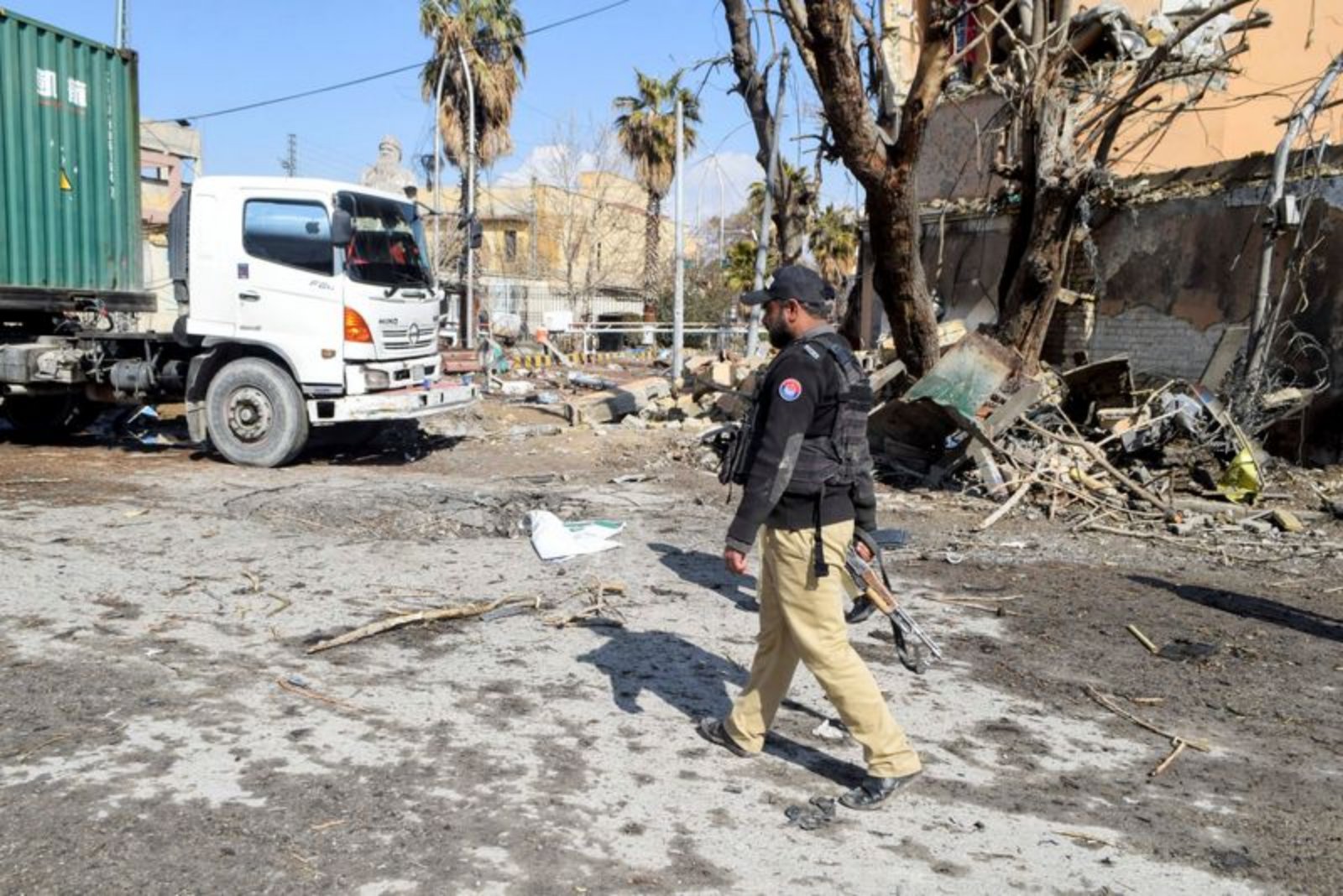
Provincial officials in Pakistan on Sunday said security forces had killed 145 militants over about 40 hours after a series of coordinated attacks across the southwest province of Balochistan, marking one of the most intense recent escalations of violence in the region.
Sarfaraz Bugti, the chief minister of Balochistan, told a press conference in Quetta that the tally of 145 included militants killed in raids conducted on Friday and Saturday as well as additional militants who were killed during ongoing clearance operations. The military had earlier reported 92 militants killed on Saturday.
Bugti said the figure was the highest number of militants eliminated in such a short period since the insurgency intensified, but he did not provide comparative statistics to quantify that claim. He also confirmed that 17 law enforcement personnel and 31 civilians lost their lives in the attacks.
Balochistan - Pakistan’s largest and poorest province - has long been the site of a decades-old insurgency led by ethnic Baloch separatist groups that press for greater autonomy and a larger share of the province’s natural resources. Local authorities said the violence this week underscored the continued presence and operational capability of insurgent networks in the region.
The banned Baloch Liberation Army publicly claimed responsibility for the multi-pronged operation, saying it had launched a coordinated campaign it called Herof, or "black storm," aimed at security forces across the province.
The federal military characterized the attackers on Saturday as "Indian-sponsored militants." India rejected that charge the following day. Randhir Jaiswal, a spokesperson for the Indian Foreign Ministry, was quoted as saying:
"We categorically reject the baseless allegations made by Pakistan,"
and adding that Islamabad should instead address "long-standing demands of its people in the region."
Attacks occurred simultaneously in multiple districts, including Quetta, Gwadar, Mastung and Noshki, according to provincial officials. The assaults prompted large-scale responses involving the army, police and counterterrorism units. In some areas, hospitals were put on an emergency footing to deal with casualties.
Military statements said security forces successfully repelled militant attempts to seize control of any city or strategic installation. Clearance operations continued as authorities moved to secure affected locations and pursue remaining militant elements.
Officials also noted that Pakistan has faced intermittent attacks by Islamist militants elsewhere in the country, including factions linked to the Pakistani Taliban, though the recent operations in Balochistan were tied to separatist activity in that province.
Context and next steps
Provincial leaders and security forces said operations were ongoing at the time of the briefing. Officials did not disclose detailed comparative casualty figures for past operations, nor did they outline a specific timeline for concluding the clearance activities.