
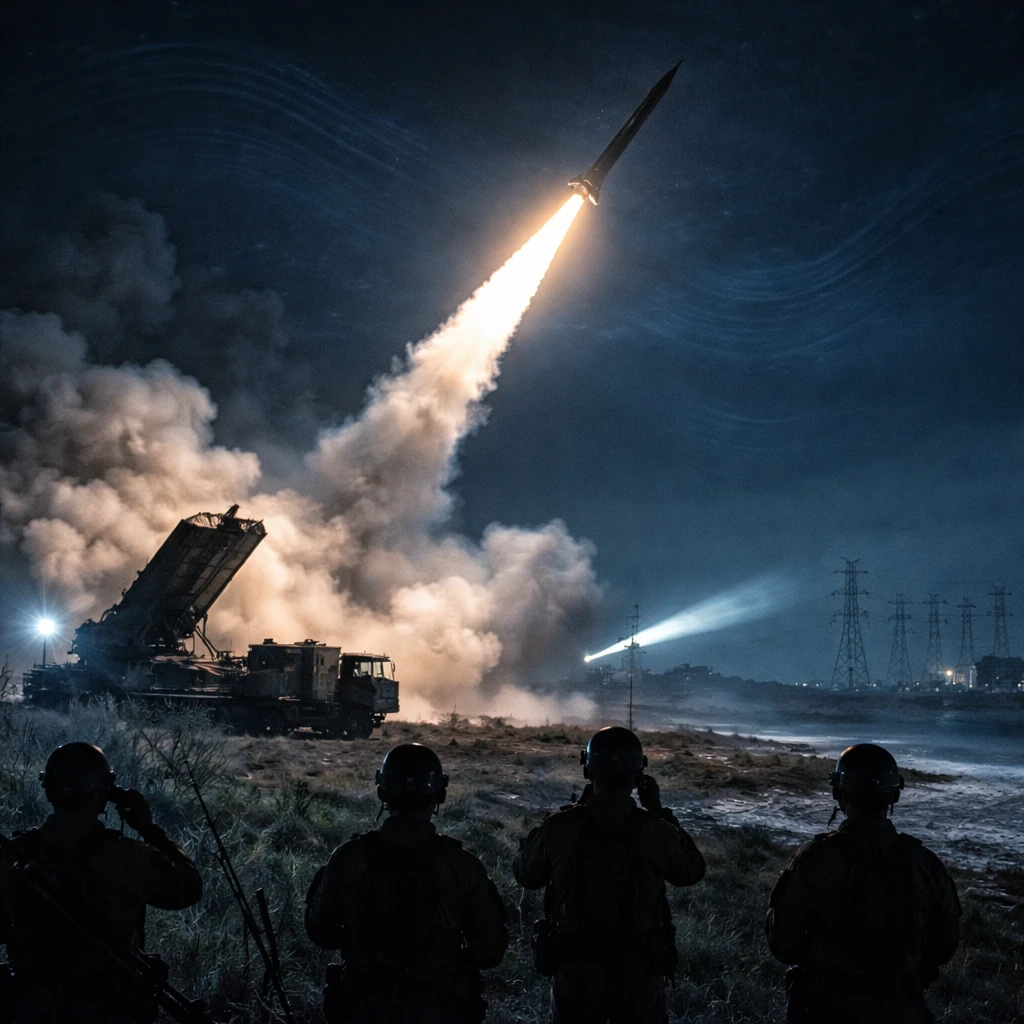
North Korea said on April 9 that it had carried out tests of several new conventional weapons, including a tactical ballistic missile fitted with a cluster-bomb warhead and an electromagnetic weapon, according to state media. The Academy of Defence Science and the Missile Administration also conducted trials of carbon-fibre bombs and a mobile short-range anti-aircraft missile system, the state outlet reported.
A general in charge of the exercises, Kim Jong Sik, told state media the electromagnetic weapon system and the carbon-fibre bombs were "special assets" for the country's armed forces. Seoul's Joint Chiefs of Staff separately said on Wednesday that Pyongyang had test-fired multiple missiles over several days.
North Korea did not specify how many ballistic missiles it launched in the recent activity - an omission that the state media noted in the description of tests - and international rules prohibit such launches under United Nations sanctions. State reporting said the exercises included a firing drill using "low-cost raw materials," language that Pyongyang has used to indicate a focus on weapons mass production.
One of the tests highlighted by state media involved a surface-to-surface tactical ballistic missile called the Hwasongpho-11 Ka, which North Korea said was tipped with a cluster-bomb warhead. KCNA reported that this system could "reduce to ashes any target" covering an area of up to 7 hectares (17 acres).
Analysts and academics quoted in coverage of the tests framed them as a demonstration of advanced conventional capabilities by a nuclear-armed state for the information of both adversaries and allies. The timing of the tests coincides with diplomatic movements in the region: Chinese Foreign Minister Wang Yi was scheduled to begin a two-day visit to North Korea on Thursday, and there has been speculation that a U.S.-North Korea summit could be sought by U.S. officials on the sidelines of an upcoming visit to China in mid-May.
Expert commentary cited in reporting drew attention to the operational effects these systems might have in a conflict. Lim Eul-chul, a professor at Kyungnam University, described the electromagnetic weapon system as having the potential to disable electronic circuits in enemy assets, and he suggested it could conceivably be used to target systems such as South Korea's F-35A stealth fighters or Aegis-equipped destroyers.
Carbon-fibre bombs, another item tested according to the state account, were described by Lim as a weapon capable of damaging industrial infrastructure. In his explanation, carbon-fibre munitions deploy conductive strands over a target that can cause failures at facilities such as power plants.
Yang Moo-jin, a professor at the University of North Korean Studies, pointed to North Korea's reference to drills using "low-cost raw materials" as an indication that the country is aiming for mass-producible weapon systems. Song Seong-jong, a professor at Daejeon University and a former official at Seoul's Defence Ministry, said the appearance of such weapons would complicate South Korea's defensive posture against North Korean threats.
Shin Jong-woo, secretary general at the Korea Defense and Security Forum, noted that Pyongyang appears to be drawing lessons from recent conflicts abroad, mentioning Ukraine and the Middle East as relevant examples. He said the tests reflected North Korea's stated objective of developing weapons aimed at industrial infrastructure on the peninsula, characterising the approach as an "asymmetric warfare model" that prioritises mass production and the use of electronic warfare to disrupt power grids and industrial systems.
The tests, as described by North Korean state media and reflected in commentary from South Korean officials and academic experts, underscore a focus on conventional capabilities intended to have operational impact on critical infrastructure and military systems. Observers and analysts framed the demonstrations as a public display of these emerging capabilities rather than a detailed technical disclosure, with the state emphasising both the weapons themselves and the potential for large-scale production.
Contextual note: The information in this report is drawn from state media accounts and statements by South Korean military and academic sources as presented in coverage of the announced tests. Specific technical details beyond those cited by the reporting agencies were not provided.