
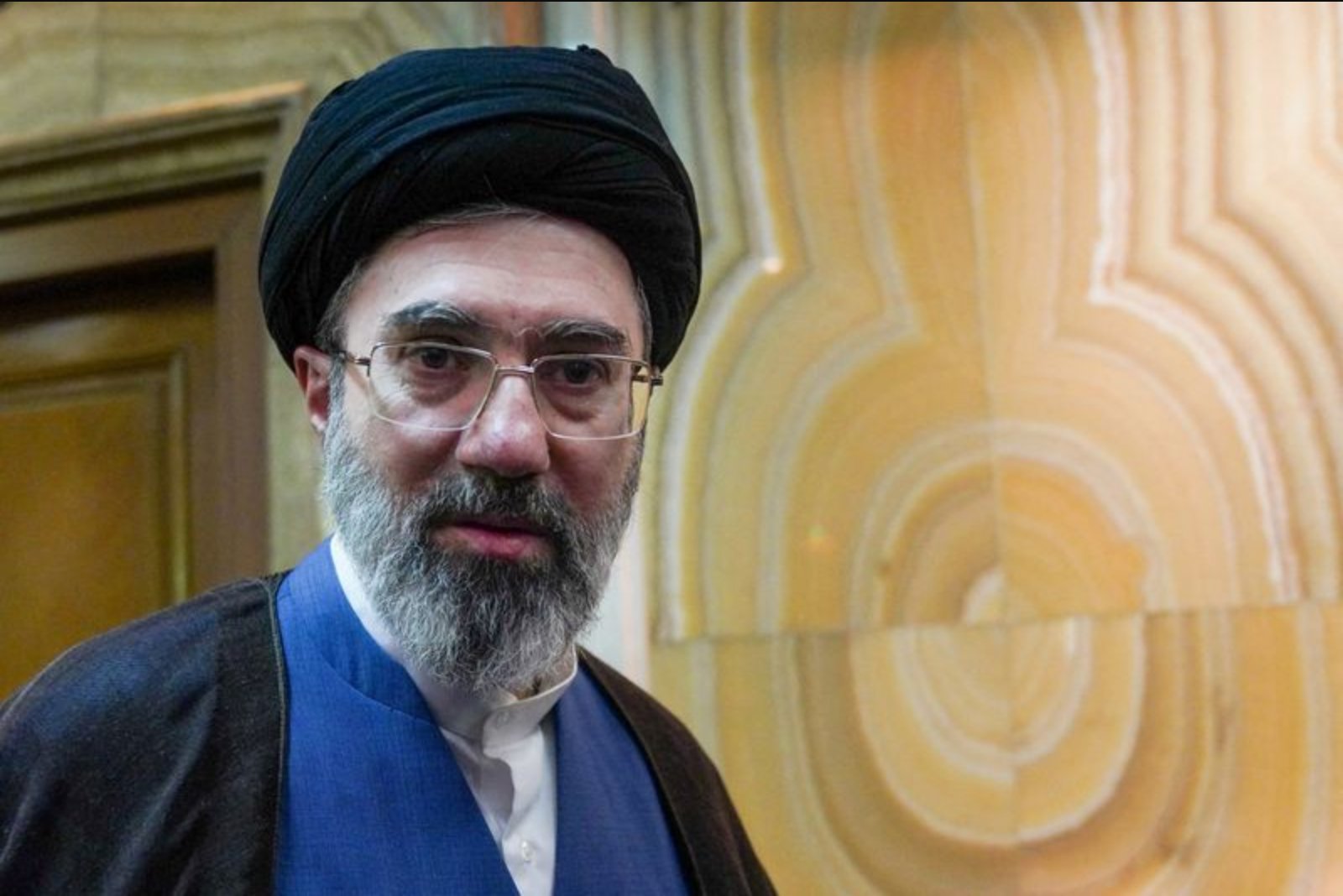
Three people with direct ties to the new supreme leader's inner circle say Mojtaba Khamenei is convalescing from grave wounds to his face and at least one leg, injuries they say were inflicted during the airstrike that killed his father at the outset of the conflict. The sources, who requested anonymity because they were discussing sensitive matters, described facial disfigurement and a major leg injury sustained in the attack on the supreme leader's compound in central Tehran.
They added that the 56-year-old leader is recovering from his wounds and remains mentally lucid. According to two of those close to him, he is participating in meetings with senior officials through audio links and is taking part in decisions on major matters, including the ongoing war and negotiations with Washington conducted in Islamabad.
The leaders' condition and whereabouts remain largely opaque to the public. There has been no photographic, audio or video material of the new supreme leader released since the attack and his subsequent appointment on March 8. Officials at Iran's mission to the United Nations did not reply to questions about the extent of his injuries or the absence of publicly available images or recordings.
Those close to the leader said he was wounded on February 28, the first day of the war, in the attack that killed his father and predecessor, Ayatollah Ali Khamenei, who had led since 1989. The same strike also killed several members of his immediate family, including his wife, brother-in-law and sister-in-law, the sources said. The leadership has made no official, detailed public statement about the full extent of the injuries.
State television did, however, use a term generally reserved for those seriously injured in combat when a newsreader described the new leader as a "janbaz" after his appointment - a designation suggesting he had been badly wounded. The accounts provided by the three people close to the leader are consistent with earlier public remarks from some international officials, including a U.S. defense official who said in mid-March that the leader had been "wounded and likely disfigured."
One individual familiar with U.S. intelligence assessments told reporters that the leader was believed to have lost a leg. The Central Intelligence Agency declined to comment on the leader's condition when approached for a response. The Israeli prime minister's office also did not reply to questions about the reports.
Authority and the question of command
The issue of whether the leader's health allows him to preside fully over state affairs arrives as Iran confronts what sources called its gravest peril in decades. High-stakes peace talks with the United States are scheduled to open in Islamabad, raising immediate questions about who is exercising decisive authority in Tehran while the supreme leader's public presence is so limited.
In Iran's theocratic system, ultimate authority is vested in the supreme leader, a senior Shi'ite cleric selected by an assembly of 88 ayatollahs. The holder of that office nominally oversees the elected president and directly commands parallel institutions, including the Revolutionary Guards, a powerful politico-military organization that has taken a prominent role in directing strategic wartime decisions.
Observers and senior Iranian sources have previously told analysts that Mojtaba Khamenei does not yet wield the same automatic, unquestioned authority as his father had accumulated over decades. While he has been an influential figure within his father's office and has cultivated links with senior Guards figures, the leadership transition and the circumstances of his accession mean his personal authority may not be comparable to the long-established power of the previous supreme leader.
One senior fellow who studies the region said that, regardless of the physical impact of the injuries, it is unlikely an inexperienced successor will instantly command the same overriding influence. The successor, the expert suggested, would likely be one significant voice among others rather than an unchallenged, decisive figure, and the regime as a whole will have to determine its direction amid wartime pressures.
Public silence, limited communications and possible timeline for appearances
There has been scant direct communication from the supreme leader since his elevation. His first public message to the nation as supreme leader was delivered in writing and read by a television presenter on March 12, when he called for the Strait of Hormuz to remain closed and urged regional states to shut U.S. bases, according to the written statement issued by his office. A few other brief written statements have followed, including a message on March 20 marking the Persian new year that he termed the "year of resistance."
Other senior officials have issued public policy statements on the country's wartime posture, diplomatic approach, negotiations, and domestic issues, leaving observers to interpret those pronouncements in the absence of extensive direct commentary from the supreme leader himself. One of the people close to his circle said images might be released within one or two months and that he might make a limited public appearance when his health and the security situation permit. All three stressed, however, that any public emergence would depend on both medical and security considerations.
Domestic reaction and online speculation
The lack of visible presence by the new leader has generated intense discussion across social media and messaging platforms in Iran, where intermittent internet access allows periodic bursts of public debate. Conspiracy theories have circulated widely, and one widely shared visual riff on the situation depicts an empty chair under a spotlight with the question "Where is Mojtaba?" appearing in online exchanges.
Amid these public doubts, some government-aligned voices have argued that the leader should remain out of public view given the threats posed by repeated U.S. and Israeli airstrikes that have, according to sources, already removed a number of the country's senior figures. A senior member of the Basij militia, a volunteer paramilitary force run by the Revolutionary Guards, told interlocutors that a low profile was a rational precaution. A lower-ranking Basij member echoed that stance, asking rhetorically why the leader should expose himself publicly only to risk becoming a target.
Implications for institutional power
The Revolutionary Guards played a central role in elevating the new supreme leader to his post following the assassination of his father, and they have assumed a dominant voice on strategic choices during the war. Officials at Iran's mission to the United Nations did not respond to inquiries about the balance of power between the Guards and the new supreme leader. Previous accounts from senior Iranian sources indicate that while the leader is seen as a continuity figure, he may not command absolute power in the same fashion as his predecessor.
Those close to the leader say he had long been involved in top-level decision-making and had developed links with senior Guards figures. While that background suggests continuity of approach on key policy issues, insiders and external analysts alike note that the leader's personal worldview remains poorly understood in broader public terms.
What remains uncertain
- The full scope of the leader's physical injuries has not been officially disclosed.
- There has been no public audio, video or photographic confirmatory material released since his appointment.
- How the distribution of decision-making authority will evolve between the supreme leader, the Revolutionary Guards and other senior officials during the war and in diplomatic negotiations has not been resolved publicly.
Officials and insiders have emphasized that the new leader will present himself publicly only when medical and security conditions allow, and that more imagery or appearances could follow in the weeks ahead if circumstances permit.