
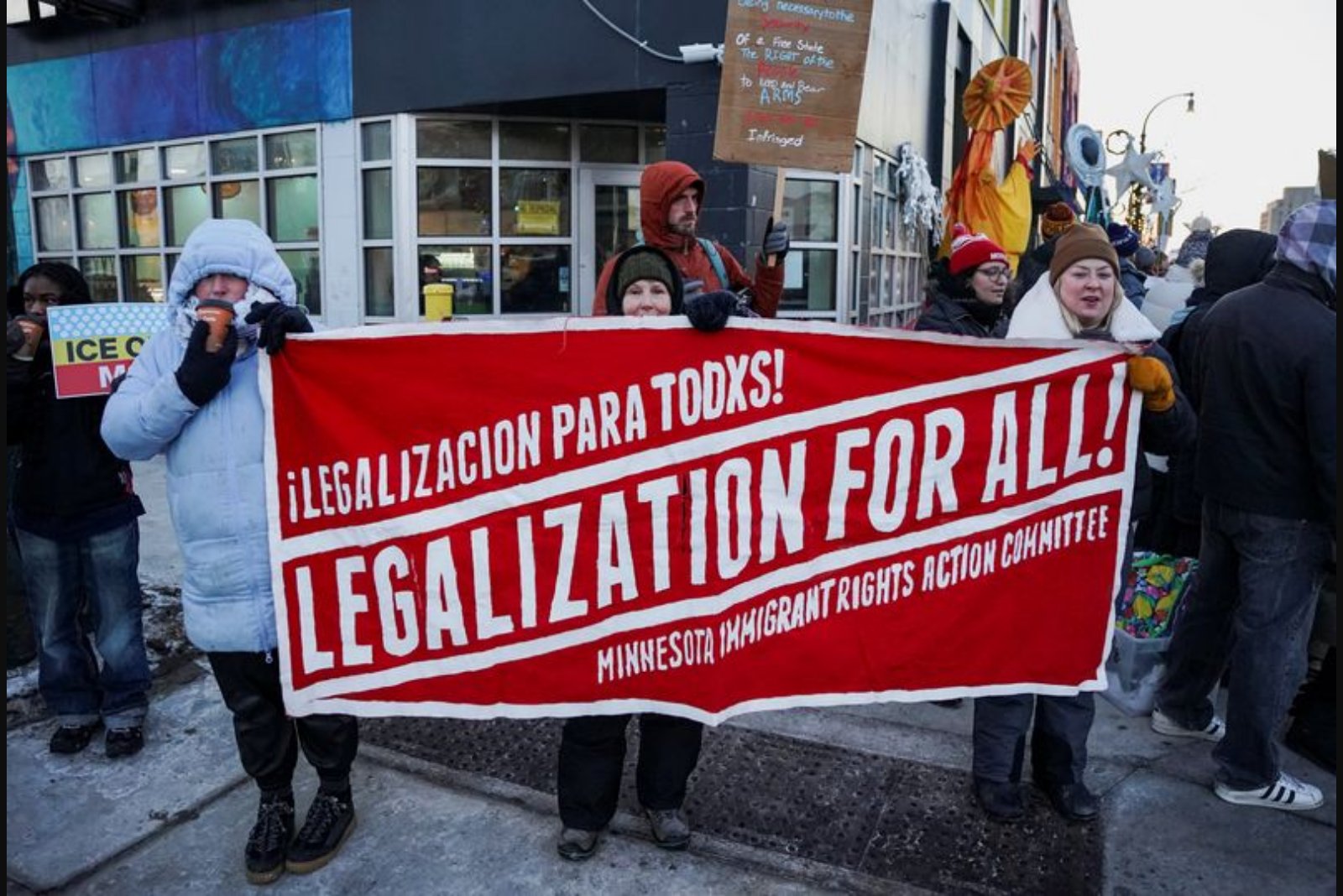
MINNEAPOLIS, Jan 30 - Student activists and allied groups have mobilized a nationwide call for walkouts and protests on Friday to press for the removal of federal immigration agents from Minnesota, following two recent fatal shootings that have provoked widespread public indignation.
Organizers are urging a general strike after last Friday’s large demonstration in Minneapolis, when thousands marched in freezing temperatures to demand an end to President Donald Trump’s intensified immigration enforcement in the city. Protest leaders said they sought to build momentum and make the demonstrations sustained rather than episodic.
"We want this to be more of a sustained movement, so going forward: more striking, more protesting," said Brianna Jackson, who is part of the Black Student Union at the University of Minnesota, in a video promoting the strike.
On Thursday, Tom Homan, newly appointed to lead the federal immigration enforcement surge in Minneapolis, indicated that federal officers will pivot toward targeted operations and away from broad street sweeps. In related internal guidance, a senior official at U.S. Immigration and Customs Enforcement instructed federal officers to avoid unnecessary communication and engagement with what the guidance described as "agitators," to prevent "inflaming the situation."
A national organizing website used the slogan "No work. No school. No shopping. Stop funding ICE" and listed roughly 250 protest sites across 46 states, including major cities such as New York, Los Angeles, Chicago and Washington, D.C. The site called for a coordinated day of demonstrations intended to pressure federal policymakers and draw attention to the two shootings.
The protests come amid a political backdrop in which voters returned Trump to the presidency in 2024 in part because of frustration over a surge in illegal immigration. Yet, according to a recent Reuters/Ipsos poll, public approval of the president’s immigration approach in his second term has declined to its lowest level, after a series of videos circulated showing heavily armed, masked officers using aggressive tactics in Minneapolis. The poll found that a majority of respondents believed the crackdown had gone too far.
Public anger increased after two fatal encounters involving immigration officers. The day after last Friday’s demonstrations, immigration officers shot and killed Alex Pretti, 37, an intensive care nurse who worked at a hospital for military veterans. The community had already been grieving the January 7 shooting death of Renee Good, 37, a mother of three, who was killed while in her car. Both Good and Pretti were among those who had been observing immigration officers as part of a community monitoring effort; cellphone videos recorded by witnesses captured both shootings.
At a memorial near the location where Pretti was killed, a mourner placed a bouquet of flowers and wept quietly on Thursday, saying the death compelled her to join protests in his memory. "I’m absolutely not spending any money tomorrow," said Stacy, who asked that her last name not be used. "It’s my little way of being a voice for those who don’t have them, like Alex."
Demonstrations are not limited to Minnesota. In Georgia, students at about 90 high schools from Atlanta to Savannah planned walkouts on Friday. "We are saying no business as usual while ICE is allowed to terrorize our communities," said Claudia Andrade, an immigrant rights organizer with Atlanta’s Party for Socialism and Liberation.
On the eve of the nationwide actions, authorities in Washington, D.C., detained 54 protesters representing multiple faiths who staged a sit-in at the Hart Senate Office Building. Sitting on the floor and holding banners that read "Do Justice, Love kindness, Abolish ICE," the demonstrators demanded that the U.S. Senate withhold funding from the Department of Homeland Security, the cabinet department that oversees ICE.
The coordinated calls for shutdowns and strikes signal a broad grassroots reaction to the two deaths and to the tactics used by federal immigration officers. Organizers are framing Friday’s events as an escalation in pressure on both federal enforcement practices on the ground and federal budgetary support for the agencies involved.
Federal officials have moved to refine their operational approach in Minneapolis and to reduce public interactions that could escalate tensions. Whether those shifts will alter the trajectory of protests or public sentiment remains uncertain as communities respond to the deaths and continue to organize.