
World January 22, 2026

Merz Urges Caution Amid Evolving US-Greenland Diplomacy, Calls to Preserve Transatlantic Bonds

Amid shifting US stances on Greenland, German Chancellor stresses the importance of trust in NATO and transatlantic relations

By Caleb Monroe
Merz Urges Caution Amid Evolving US-Greenland Diplomacy, Calls to Preserve Transatlantic Bonds

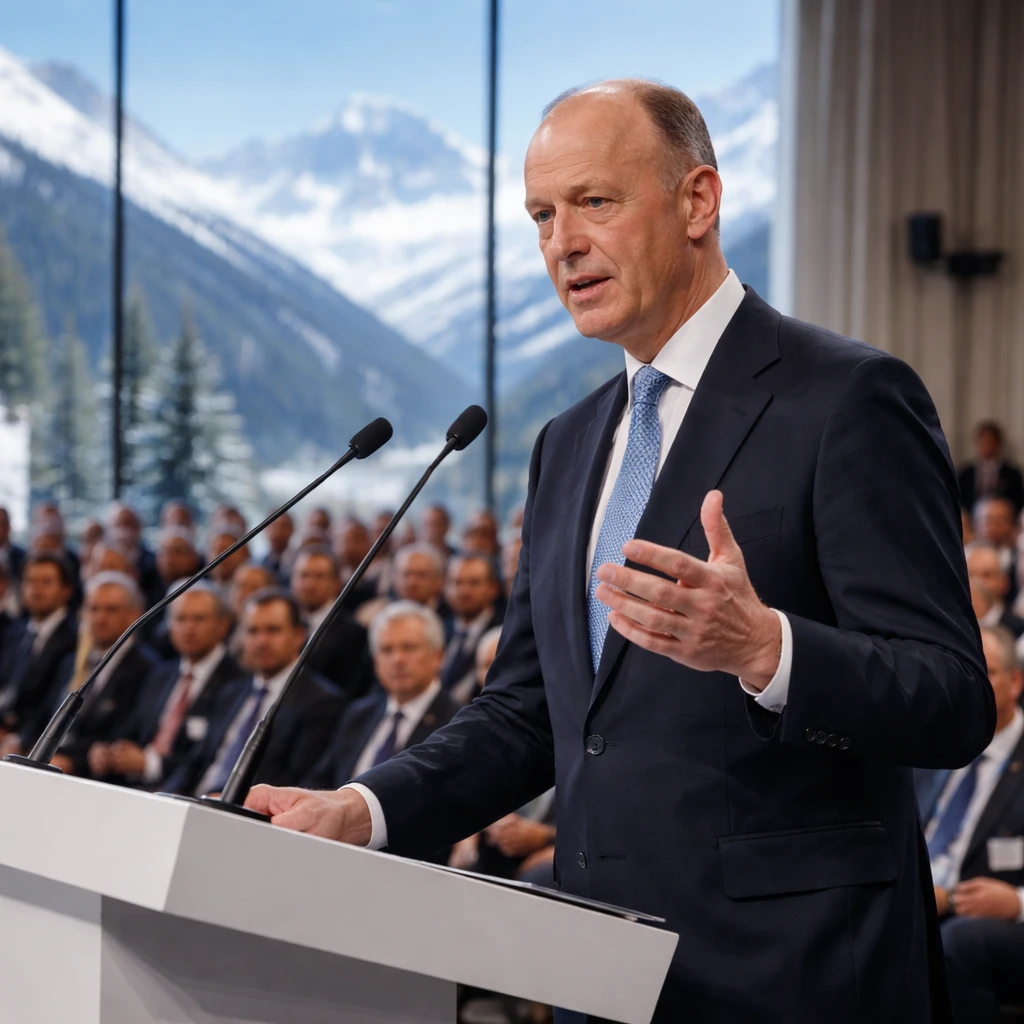
German Chancellor Friedrich Merz emphasized the value of maintaining strong transatlantic ties following the United States' recent rhetorical retreat on Greenland. Speaking at the World Economic Forum in Davos, Merz highlighted the critical trust underpinning NATO and warned against quickly discarding cooperation between Europe and the US despite recent tensions.

Key Points

  • German Chancellor Friedrich Merz welcomed the recent de-escalation in U.S. rhetoric regarding Greenland, emphasizing the value of transatlantic relations.
  • Merz highlighted the essential role of trust underpinning NATO as a crucial competitive advantage for both Europe and the US in an environment of global power rivalries.
  • Germany, along with six other European countries, has contributed small military deployments to Greenland in support of Denmark's plans for an expanded NATO presence there.

In a notable address delivered at the World Economic Forum in Davos, Switzerland, German Chancellor Friedrich Merz conveyed a message of cautious optimism regarding the relationship between Europe and the United States, particularly in light of recent developments surrounding Greenland. This commentary came a day after U.S. President Donald Trump publicly reversed his earlier threats to seize Greenland by means of tariffs or military force, signaling a softening in his administration’s approach.

Merz reflected on the preceding months characterized by tension and mistrust, cautioning against a hasty dismissal of the historically significant transatlantic partnership. He observed that both Germany and Europe comprehend the vital nature of the trust that forms the foundation of NATO's strength. In a strategic environment dominated by competing global powers, the United States likewise depends on this trust, which Merz identified as a key competitive advantage that benefits all member nations.

Addressing a broader spectrum of issues including global security and European competitiveness, the Chancellor underscored the necessity for Europe and the United States to actively work toward mending the confidence that has historically sustained their alliance. In a related development, Germany participated alongside six other European countries by deploying modest military contingents to Greenland, as Denmark advances its agenda to establish a more substantial and enduring NATO presence on the island.

This military cooperation indicates ongoing strategic efforts by European nations to reinforce security arrangements in the Arctic region, reflecting the geopolitical importance ascribed to Greenland. These dynamics highlight the complex interplay between diplomatic relations and defense planning within the transatlantic context.

Risks

  • Previous U.S. threats to impose tariffs or seize Greenland raised the possibility of a severe rupture in transatlantic relations, posing risks to global trade stability.
  • The fragile trust underpinning NATO could deteriorate if similar diplomatic tensions reoccur, potentially impacting collective security arrangements.
  • Ongoing geopolitical competition in the Arctic region, including military deployments, may increase tensions among global powers, affecting broader security and economic sectors.

More from World

Kremlin says Russia has long offered to process or store Iran’s enriched uranium Feb 2, 2026 Long-Awaited Rafah Reopening Prompts Hope and Anxiety Among Palestinians Stranded Across Border Feb 2, 2026 Rafah Reopens but Core Questions Persist Over Implementation of Trump’s Gaza Blueprint Feb 2, 2026 Rafah Crossing Reopens on Foot with Strict Limits as Gaza Remains Under Strain Feb 2, 2026 Medvedev Warns World Is Growing More Dangerous but Says Russia Does Not Seek Global War Feb 2, 2026