
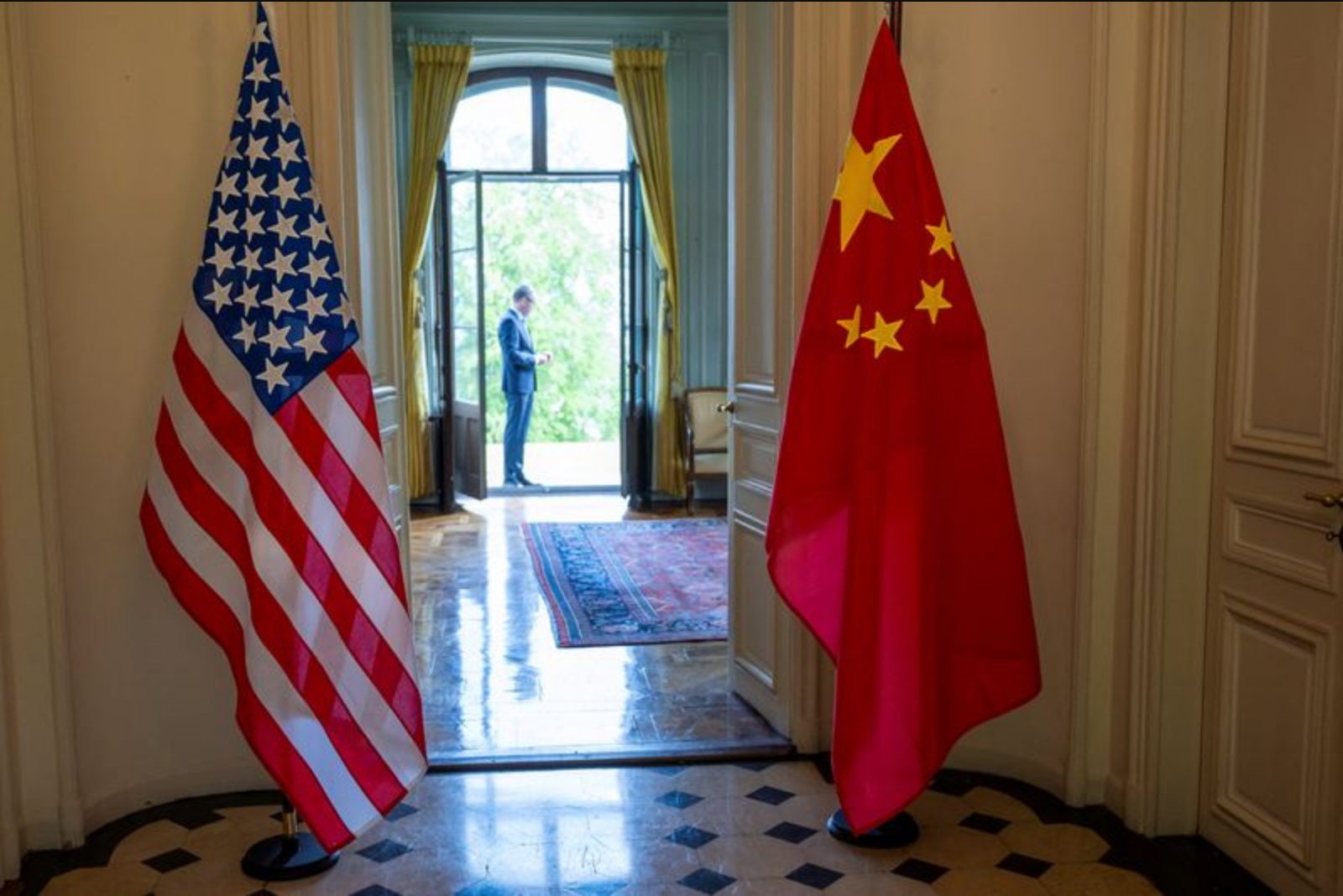
U.S. President Donald Trump is expected to meet Chinese President Xi Jinping in May during what will be his first visit to China in eight years. The visit arrives amid a prolonged and evolving dispute between the two largest economies, one that began with sweeping and at times erratic global tariffs and has since progressed into a layered confrontation involving investigations, export controls and multiple negotiating rounds.
What began as reciprocal tariff hikes has over the past year broadened into a series of bilateral and multilateral responses - including new probes, export licensing decisions and targeted curbs - even as officials from both capitals maintain channels of diplomacy through talks, phone calls and intermittent meetings at the presidential level.
Developments this year
- March - Washington launched fresh Section 301 unfair-trade investigations into a variety of Chinese industries. Beijing answered with reciprocal probes. During this month, preparations for a summit between Presidents Trump and Xi were in progress, although Trump pushed back his planned visit to Beijing until mid-May as the Iran war continued. Also in March, U.S. Treasury Secretary Scott Bessent and Trade Representative Jamieson Greer met Chinese Vice Premier He Lifeng and top trade negotiator Li Chenggang in Paris for a sixth round of talks that both sides described as "constructive."
- February - The U.S. Supreme Court rejected the legal basis for Trump’s global tariff regime. Despite the ruling, Trump signaled he would continue to rely on tariffs as a policy tool.
- January - China closed 2025 with a record trade surplus. Officials and observers noted that the country likely benefited from redirecting trade toward Southeast Asia, Africa and Latin America as exports to the U.S. declined at an accelerated pace.
Key developments in 2025
- October - China tightened controls over critical minerals by expanding export restrictions to cover a broader range of rare earth elements and increasing scrutiny of semiconductor users. In response, the U.S. imposed an additional 100% duty on certain Chinese imports and rolled out export controls on critical software. Both countries also targeted elements of each other’s shipping industries. That same month, Presidents Trump and Xi met in Busan, South Korea, and announced a new trade truce: Washington would scale back some tariffs while Beijing agreed to steps that included targeting the illicit fentanyl trade, resuming purchases of U.S. soybeans and pausing rare earth export curbs.
- September - Talks between the two capitals included discussions over the potential divestiture of TikTok. The U.S. also pushed to address trade in chemicals, aircraft engines and parts.
- June-August - The trade truce appeared to regain momentum after some Chinese producers of rare earth magnets began receiving export licences. The U.S. granted licences to Nvidia to export advanced chips to China, and President Trump publicly urged China to increase its purchases of U.S. soybeans by a factor of four. The tariff truce was extended by another 90 days.
- May - At the initial round of talks held in Geneva, both sides agreed to a 90-day truce that permitted reductions in the highest tariff levels. Three weeks after that agreement, President Trump said China had breached a pledge to mutually roll back tariffs and to ease curbs on critical minerals exports. China countered that the United States had introduced multiple "discriminatory restrictive" measures against Chinese interests.
- April - Upon returning to office with a 10% punitive tariff on Chinese goods in place, President Trump announced sweeping "Liberation Day" tariffs on all imports at the start of April, a move that markedly worsened bilateral relations. China retaliated, and the two sides subsequently engaged in multiple rounds of escalating levies that pushed some effective rates above 100%. Beijing also initiated restrictions on some rare earth exports.
The upcoming meeting in May follows a year in which official engagement - from ministerial-level negotiations to presidential contact - alternated with rounds of escalation. While pockets of agreement have periodically produced limited rollback of measures, both capitals have continued to employ a mix of tariffs, probes and export controls as levers of economic statecraft.
Implications for markets and sectors
The sequence of tariffs, export curbs and reciprocal investigations has intersected with multiple parts of the global economy. Critical minerals and rare earths have become central to trade tensions, while semiconductors, shipping, agriculture and select manufacturing supply chains have also been directly affected by policy shifts and licensing decisions. Negotiation outcomes and the durability of any summit truce will be closely watched by firms and investors exposed to those sectors.