
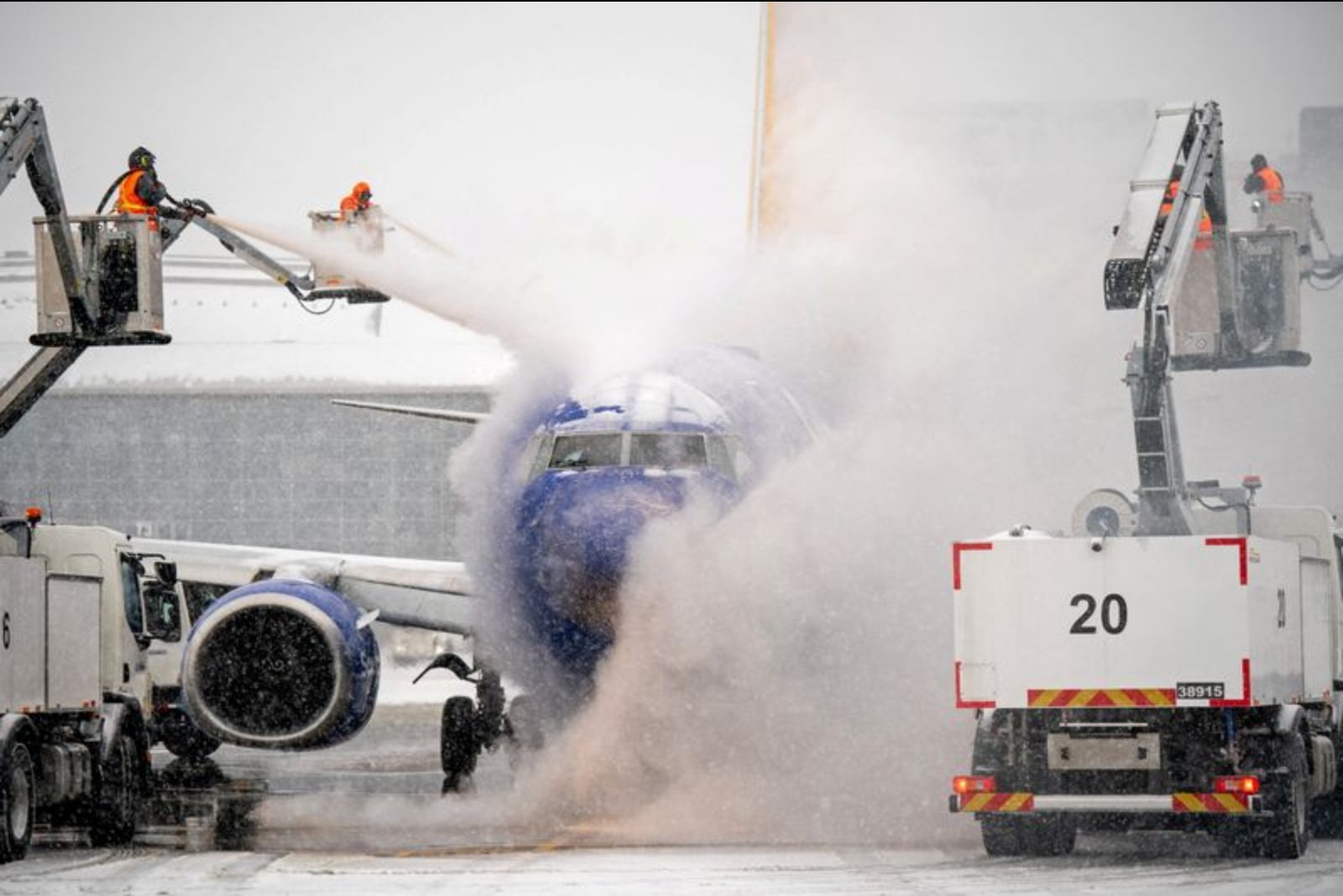
On Jan 24, a sweeping winter storm prompted widespread travel disruption and utility concerns across much of the United States, with weather forecasters warning of heavy snow, sleet, freezing rain and dangerously low temperatures moving through the eastern two-thirds of the country.
As of 5 p.m. EST on Saturday, flight tracking data showed more than 3,900 U.S. flights scheduled for the day had been canceled. The same source reported that in excess of 8,800 flights planned for Sunday were also canceled, reflecting airlines' anticipatory changes in schedules ahead of the storm.
Federal emergency disaster declarations were approved on Saturday for South Carolina, Virginia, Tennessee, Georgia, North Carolina, Maryland, Arkansas, Kentucky, Louisiana, Mississippi, Indiana, and West Virginia. The president wrote on his social media platform: "We will continue to monitor, and stay in touch with all States in the path of this storm. Stay Safe, and Stay Warm." Several states and the District of Columbia additionally declared weather emergencies as conditions deteriorated.
The U.S. National Weather Service described the system as unusually expansive and long-duration, saying it would bring widespread, heavy ice accumulation in the southeast U.S. and warning of "crippling to locally catastrophic impacts." Forecasters also said record cold temperatures and dangerously cold wind chills would push further into the Great Plains region by Monday.
Major airlines cautioned passengers to expect abrupt changes. Delta, in its website update on Saturday morning, said it "continues to make schedule adjustments due to Winter Storm Fern," and reported additional cancellations in the morning for Atlanta and along the East Coast, including its hubs in Boston and New York City. The airline stated it was relocating experts from cold weather hubs to reinforce de-icing and baggage handling teams at several southern airports.
Electric grid operators increased precautions on Saturday to reduce the risk of rotating blackouts as demand for heating and stress on infrastructure rose. Dominion Energy, whose Virginia service territory includes a large aggregation of data centers, warned that if its ice forecast materializes, the event could rank among the largest winter incidents ever to affect the utility's operations.
The storm's combination of ice and extreme cold has prompted officials and utility operators to take pre-emptive steps to protect customers and critical infrastructure. Travel disruptions, potential localized power outages, and extreme temperatures remain the primary concerns as the system evolves through Sunday and into the coming week.
Context and outlook
Forecasters expect the winter system to persist across a wide geographic area, producing a mix of precipitation types and sharply colder conditions. The scale and duration of the storm are driving emergency responses at both state and federal levels and are prompting transportation and energy sectors to implement contingency measures.