
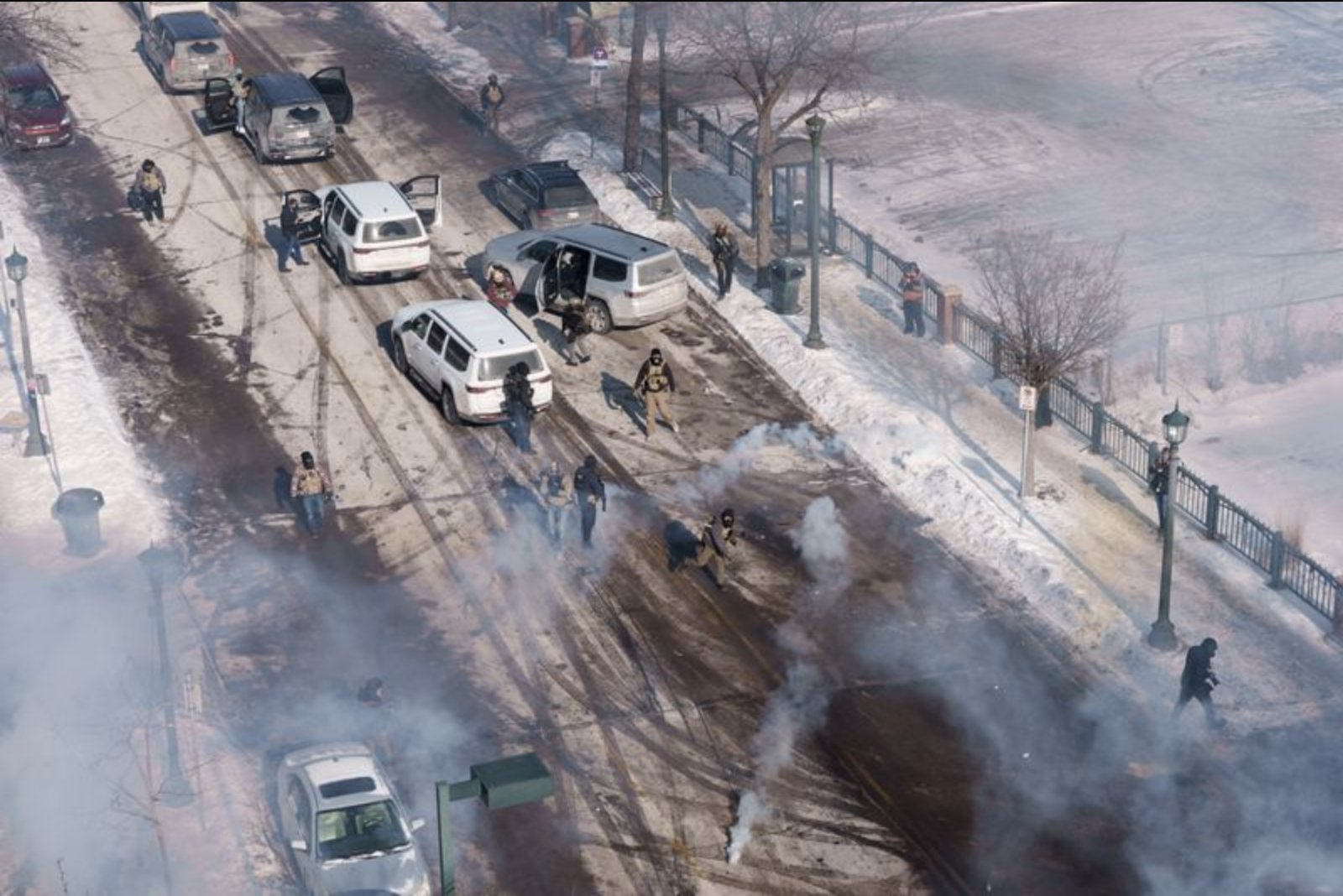
U.S. Immigration and Customs Enforcement agents shot and killed two U.S. citizens in Minneapolis in separate operations this month, and the incidents have triggered questions about possible criminal or civil liability for the agents involved. Local authorities have publicly contested federal accounts that described the shootings as defensive actions, pointing to bystander videos that appear to undermine those official narratives.
In the first incident, on January 7, a 37-year-old woman, Renee Good, was shot in her car by an ICE officer. The Department of Homeland Security said the officer fired "defensive shots" after the officer alleged Good attempted to run him over. However, online video footage of the encounter has been circulated and casts doubt on the government’s description of events.
The second fatal encounter occurred on January 24, when ICE agents shot 37-year-old Alex Pretti. DHS stated that Pretti approached officers with a handgun and resisted violently when agents tried to disarm him. Bystander video from the scene shows Pretti holding a phone and attempting to assist protesters after agents pushed some people to the ground. Minneapolis Police Chief Brian O’Hara commented publicly that Pretti lawfully carried a handgun.
Statutory and constitutional standards
Minnesota law permits law enforcement to use deadly force only when a reasonable officer would conclude such force is necessary to protect the officer or others from death or serious physical harm. Federal law sets a comparable standard, authorizing deadly force when a reasonable officer would have probable cause to believe an individual posed an immediate threat of death or serious injury.
State prosecution - obstacles and possible defenses
State-level charges face a significant legal barrier in cases involving federal agents. As a general principle, federal officers acting within the scope of their federal duties are immune from state prosecution. That immunity applies where the officers’ actions were authorized under federal law and were necessary and proper in the performance of their duties. If state prosecutors were to bring charges against the ICE agents, the agents could seek to remove the case to federal court and assert immunity from prosecution.
To overcome such an immunity defense, the state would need to establish that the agents’ conduct fell outside the scope of their official duties or was objectively unreasonable or clearly unlawful. If a federal court determines that an agent is entitled to immunity, the state prosecution would be dismissed and the state would be prevented from re-filing the same criminal charges against that agent.
Potential for federal criminal charges
Federal prosecutors retain the authority to bring criminal charges against law enforcement officers, including for fatal shootings, but that path faces a high legal bar and is relatively uncommon. To secure a conviction, federal authorities would typically need to prove that an officer knew their conduct was unlawful or acted with reckless disregard for the constitutional limits on their authority. Proving that level of culpability in court is difficult.
The current administration has publicly defended the actions of the ICE agents in these incidents.
Defenses available to the agents
Beyond any claim of federal immunity, the agents could present substantive defenses in criminal or civil proceedings. Those defenses may include arguments that their use of force was reasonable under the Constitution, that they acted in self-defense, or that they lacked intent to harm or kill the deceased individuals.
Civil remedies and the Federal Tort Claims Act
Civil litigation against federal agents and the federal government is constrained by doctrines such as qualified immunity and sovereign immunity. Qualified immunity typically shields federal officers from civil suits unless their actions clearly violated a clearly established constitutional right. That standard has been described by legal observers as a potent protection for officers accused of excessive force.
Separate from suits against individual employees, the Federal Tort Claims Act of 1946 permits plaintiffs to seek compensation from the federal government when its employees cause financial loss or bodily injury in the course of their duties. Under the FTCA, family members of someone killed by an ICE agent could file a wrongful death claim alleging negligence or other wrongful conduct by a government employee. While the FTCA provides a route to seek damages where other civil claims may be barred, these claims are subject to limitations and procedural hurdles, and legal experts commonly view the FTCA as an imperfect tool for addressing alleged misconduct by government officials.
Where the law stands
The combination of conflicting video evidence, competing official narratives, doctrines shielding federal officers from state prosecution, a high bar for federal criminal liability, and the restrictive standards governing civil lawsuits means that the legal outcomes in these Minneapolis cases are uncertain. Each potential legal avenue - state prosecution, federal prosecution, and civil suits under the FTCA - faces distinct procedural and substantive challenges. How authorities and courts navigate those challenges will determine whether criminal charges are pursued or civil compensation is awarded.